
We raised the poor victim and turned him over on his back. I dropped
upon my knees, and with unsteady fingers began to strike a match. A
slight breeze was arising and sighing gently through the elms, but,
screened by my hands, the flame of the match took life. It illuminated
wanly the sun-baked face of Nayland Smith, his eyes gleaming with
unnatural brightness. I bent forward, and the dying light of the match
touched that other face.

"Oh, God!" whispered Smith.

A faint puff of wind extinguished the match.

In all my surgical experience I had never met with anything quite so
horrible. Forsyth's livid face was streaked with tiny streams of
blood, which proceeded from a series of irregular wounds. One group of
these clustered upon his left temple, another beneath his right eye,
and others extended from the chin down to the throat. They were
black, almost like tattoo marks, and the entire injured surface was
bloated indescribably. His fists were clenched; he was quite rigid.

Smith's piercing eyes were set upon me eloquently as I knelt on the
path and made my examination--an examination which that first glimpse
when Forsyth came staggering out from the trees had rendered
useless--a mere matter of form.

"He's quite dead, Smith," I said huskily. "It's--unnatural--it--"

Smith began beating his fist into his left palm and taking little,
short, nervous strides up and down beside the dead man. I could hear a
car skirling along the high-road, but I remained there on my knees
staring dully at the disfigured bloody face which but a matter of
minutes since had been that of a clean-looking British seaman. I found
myself contrasting his neat, squarely trimmed moustache with the
bloated face above it, and counting the little drops of blood which
trembled upon its edge. There were footsteps approaching. I arose. The
footsteps quickened, and I turned as a constable ran up.

"What's this?" he demanded gruffly, and stood with his fists clenched,
looking from Smith to me and down at that which lay between us. Then
his hand flew to his breast; there was a silvern gleam and--

"Drop that whistle!" snapped Smith, and struck it from the man's hand.
"Where's your lantern? Don't ask questions!"

The constable started back and was evidently debating upon his chances
with the two of us, when my friend pulled a letter from his pocket and
thrust it under the man's nose.

"Read that!" he directed harshly, "and then listen to my orders."

There was something in his voice which changed the officer's opinion
of the situation. He directed the light of his lantern upon the open
letter, and seemed to be stricken with wonder.

"If you have any doubt," continued Smith--"you may not be familiar
with the Commissioner's signature--you have only to ring up Scotland
Yard from Dr. Petrie's house, to which we shall now return to disperse
it." He pointed to Forsyth. "Help us to carry him there. We must not
be seen; this must be hushed up. You understand? It must not get into
the Press--"

The man saluted respectfully, and the three of us addressed ourselves
to the mournful task. By slow stages we bore the dead man to the edge
of the common, carried him across the road and into my house, without
exciting attention even on the part of those vagrants who nightly
slept out in the neighbourhood.

We laid our burden upon the surgery table.

"You will want to make an examination, Petrie," said Smith in his
decisive way, "and the officer here might 'phone for the ambulance. I
have some investigations to make also. I must have the pocket lamp."

He raced upstairs to his room, and an instant later came running down
again. The front door banged.

"The telephone is in the hall," I said to the constable.

"Thank you, sir."

He went out of the surgery as I switched on the lamp over the table
and began to examine the marks upon Forsyth's skin. These, as I have
said, were in groups and nearly all in the form of elongated
punctures; a fairly deep incision with a pear-shaped and superficial
scratch beneath it. One of the tiny wounds had penetrated the right
eye.

The symptoms, or those which I had been enabled to observe as Forsyth
had first staggered into view from among the elms, were most puzzling.
Clearly enough the muscles of articulation and the respiratory
muscles had been affected; and now the livid face, dotted over with
tiny wounds (they were also on the throat), set me mentally groping
for a clue to the manner of his death.
The Net (Part-1)
Jun 05, 2021

Recommendation for you
-
Recommendation
Silence | book 1
LGBTQ+ 27.4k likes
-

Recommendation
What Makes a Monster
BL 76.8k likes
-
Recommendation
Silence | book 2
LGBTQ+ 32.4k likes
-
Recommendation
Secunda
Romance Fantasy 43.4k likes
-

Recommendation
Primalcraft: Scourge of the Wolf
BL 7.3k likes
-

Recommendation
The Last Story
GL 71 likes
-

Feeling lucky
Random series you may like
The Devil Doctor
3.1k views7 subscribers
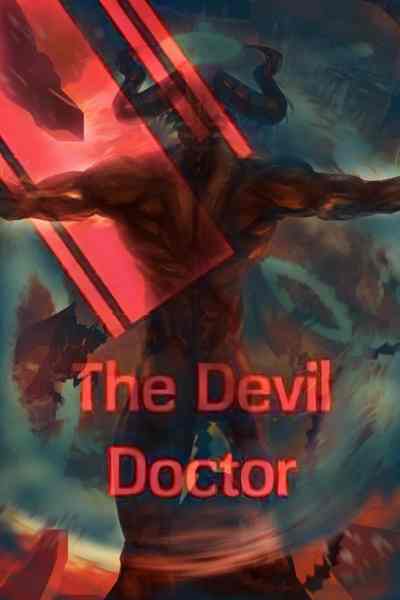
A supervillain, Fu Manchu's murderous plots are marked by the extensive use of arcane methods; he disdains guns or explosives, preferring dacoits, thuggees, and members of other secret societies as his agents armed with knives, or using "pythons and cobras ... fungi and my tiny allies, the bacilli ... my black spiders" and other peculiar animals or natural chemical weapons.
Imagine a person, tall, lean and feline, high-shouldered, with a brow like Shakespeare and a face like Satan, ... one giant intellect, with all the resources of science past and present ... Imagine that awful being, and you have a mental picture of Dr. Fu-Manchu, the yellow peril incarnate in one man.
'Project Gutenberg'
Imagine a person, tall, lean and feline, high-shouldered, with a brow like Shakespeare and a face like Satan, ... one giant intellect, with all the resources of science past and present ... Imagine that awful being, and you have a mental picture of Dr. Fu-Manchu, the yellow peril incarnate in one man.
'Project Gutenberg'

Comments (0)
See all