
Summary:
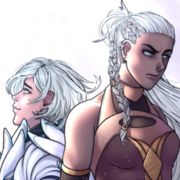
Horse/human creatures, with the body of a horse and torso, head, and arms of a human.
Reproduction:
Centaurs mate and get pregnant just like normal horses, the female's womb in the same place as a normal horse, the baby taking between 10 to 11 months to come out. The child will feed exclusively on milk for the first year of their life, after which the mother's breasts will drain any remaining milk and deflate until her chest is flat just like before the pregnancy.
Biology:
The baby will be able to walk on their own a week or two after being born, but they take around a couple of months to be able to keep their torso straight and head up without the help of a body brace.
When centaurs reach adolescence, the males and females will both develop thick body hair in their armpits and arms, the males growing chest hair and beards, and the females growing hair around their necks and belly.
Centaurs have a life expectancy of 65 years (as this is being written), reaching their prime around the age of 20, and beginning their fast decline in health and performance around 60. Most of them don't get to "die of old age", it's actually a rarity for a centaur to die "peacefully", they mainly die due to complications, wealth problems, the spine collapsing under years of strain, or accidents caused by loss of sight and hearing.
Additional facts:
When creating them, Fauna decided to give the first centaurs greek names and thaught then all about greek culture. As such, when it came the time to get out into the world and build their own cities, the centaurs used architecture similar to the one of ancient Greece, began using variations of the classic toga adapted to their bodies, and talked Greek as well. And even though they developed their own culture, cuisine, customs and variation of the language with the centuries, visiting their cities is still the equivalent of taking a trip back in time to ancient Greece. Fauna never taught any of his creations the origins of the myths that inspired them ever again, seen as he wanted them all to create their own cultures from scratch, to grow into their own identities, but he never used this as an excuse to treat centaurs like they were less than his other creations.
They, unlike normal horses, are omnivorous, but many follow a vegan diet because it's easier for them to digest.
Personal experience:
Contrary to what one might think, they do not feel offended by normal horses being used to pull carriages or transport, which was good. It meant I didn't have to hide Christopher and my caravan outside the city, and hope that it would all be there once I came back, even though at that point, he wasn't much of a typical horse anymore. In fact, centaurs see themselves as being superior to normal horses, and also see unicorns and pegasi as inferior to them. This little one even teased Christopher calling him "dumb", "freak" and other stuff. She and her friends ended up learning that not all horses are "submissive dumbasses incapable of fighting back".





Comments (0)
See all