Please note that Tapas no longer supports Internet Explorer.
We recommend upgrading to the latest Microsoft Edge, Google Chrome, or Firefox.
Home
Comics
Novels
Community
Mature
More
Help Discord Forums Newsfeed Contact Merch Shop
Publish
Home
Comics
Novels
Community
Mature
More
Help Discord Forums Newsfeed Contact Merch Shop
__anonymous__
__anonymous__
0
  • Publish
  • Ink shop
  • Redeem code
  • Settings
  • Log out

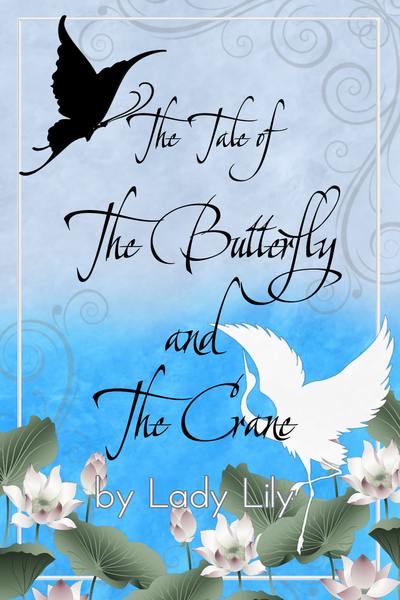
The Tale of The Butterfly And The Crane

RESEARCH: The Four Mythological Creatures

RESEARCH: The Four Mythological Creatures

Sep 02, 2021

Hello, readers! 
I wanted to share a bit of information on the significance of the rug in the banquet hall. Below, I have copied and pasted the meaning of the Four Mythological Creatures from this website: CITS.net (hot link is in description at the bottom) 

For a more detailed explanation, I highly recommend visiting this site: Baike.baidu.com (hot link is in description at the bottom). It is in Chinese, so you'll have to translate it. If you don't have a browser extention, Google Translate does an excellent job of this. I tried it and it seems flawless. There is a LOT of information, however, and I didn't want to copy and paste it all here. It is much more informative than the summary I'm sharing below.      
 
Enjoy! 
Lady Lily 💜 🐇


Four Mythological Creatures in China

In Chinese Constellations, there are four mythological creatures guard the world in four directions, which are named ‘Four Symbols’ or ‘Four Mythological Symbols’ (‘Si Xiang’ in Chinese). They are the Azure Dragon, the Vermilion Bird, the White Tiger, and the Black Tortoise. 

As recorded in Shan Hai Jing (an ancient book of mythic geography existed since the 4th century), each one of them represents a direction and a season, and each has its own individual characteristics and origins.

These mythological creatures have been synthesized into the 5 element system. The Azure Dragon of the East represents Wood, the Vermilion Bird of the South represents Fire, the White Tiger of the West represents Metal, and the Black Tortoise of the North represents Water. In this system, the fifth element Earth is represented by the Yellow Dragon of the Center


Azure Dragon (Qinglong) 

According to the theory of Five Elements, the Azure Dragon is a holy beast representing the east. In ancient times, the dragon enjoyed a much higher status in China than in India, as the Chinese believe dragon is supreme holy animal, the symbol of the emperor. Among the many dynasties China has been through, some rulers have taken the Azure Dragon as their reign title, such as Emperor Ming of the Wei Kingdom in the Three Kingdoms Period.


Vermillion Bird (Zhuque)

Vermillion Bird, also called ‘Zhuniao’, is the god of south. “Zhu” refers to the vermillion color, like the fire, so “Zhuque” also refers to the phoenix. It is said to have the ability to reborn from the fire, just like the immortal bird in the western mythology, so it is also named fire phoenix. In Chinese legend, Zhuque is said to have chicken’s head, swallow’s chin, snake’s neck, fish’s tail, and five-color feather. 


White Tiger (Baihu)

The White Tiger is a holy beast representing the west, and the season it stands for is autumn. It is also a symbol of force and army, and so many things entitled White Tiger in ancient China are related to military affairs. For instance, the white tiger banner in ancient army and the white tiger image on Commander’s Tally. In the Han Dynasty, the White Tiger was usually carved on the stone relief of a tomb door, or on the lintel of a tomb passage with the Azure Dragon, to ward off evil spirits. 


Black Tortoise (Xuanwu)

At the very beginning Xuanwu referred to the tortoise giving divination: the tortoise has black back, and is said to have the ability to enter the nether world to inquire forthcoming things. After getting the answer, it would come back showing the answer with some certain signs. Later on, it is usually depicted as both a tortoise and a snake, specifically with the snake coiling around the tortoise. As the tortoise lives in water, it becomes the water god; and the tortoise enjoys a long life, so Xuanwu becomes the symbol of longevity; the nether world is said to be in the north, as people in the Shang Dynasty would face north when practicing divination, thus Xuanwu becomes the god of north.

support banner
LadyLily
Lady Lily

Creator

⿓ 🐉 ⿃ 🦅 ⾌🐅 🉈 🐢

Credit for research and Links to more information:

http://www.cits.net/china-travel-guide/four-mythological-creatures-in-china.html

http://baike.baidu.com/view/40198.htm (translation necessary)

Thank you for reading! Please like and subscribe! 💜 🐇

Comments (0)

See all
Add a comment

Recommendation for you

  • Primalcraft: Scourge of the Wolf

    Recommendation

    Primalcraft: Scourge of the Wolf

    BL 7.3k likes

  • Secunda

    Recommendation

    Secunda

    Romance Fantasy 43.4k likes

  • Primalcraft: Sins of Bygone Days

    Recommendation

    Primalcraft: Sins of Bygone Days

    BL 3.5k likes

  • Arna (GL)

    Recommendation

    Arna (GL)

    Fantasy 5.6k likes

  • Touch

    Recommendation

    Touch

    BL 15.6k likes

  • The Last Story

    Recommendation

    The Last Story

    GL 59 likes

  • feeling lucky

    Feeling lucky

    Random series you may like

The Tale of The Butterfly And The Crane

14.2k views106 subscribers

The Yīng and Zhāng kingdoms are engaged in a 200 year war. In order to survive a terrifying enemy with a sinister motive, both kingdoms must set aside their feud and form an alliance through marriage, much to the ire of their people and the Wáng Píng clan.

After Princess Yīng Mîn Jíng's mother dreams she will unite the kingdoms to destroy a deadly foe, she is sent away to cultivate her mind and body. She is a gifted healer loved by all, known for her kindness and compassion...until her family is threatened.

Prince Zhāng Jié Qiáng has a reputation as a heartless brute and womanizer. He believes diplomacy is a waste of time and prefers a swift, violent end to dissidents. Citizens fear him, officials ridicule him, and the king believes he will never understand honor or empathy...until he is transformed by his one true love.

In a coincidence scripted by Fate, Mîn Jíng and Jié Qiáng meet at a festival in her kingdom. Donning masks, he and his companions rescue her from a perilous situation. In her own mask, she guides them through the village, not realizing they are spies of the enemy kingdom. Jié Qiáng becomes intrigued by the kind and carefree girl and vows to make her his wife.

Soon after, both find their way onto the battlefield: Jié Qiáng to fight, Mîn Jíng to heal.

When the political marriage alliance is announced, Jié Qiáng refuses to forget his Little Crane. Dreams of her kept him alive while imprisoned by the Wáng Píng, and he will never allow anyone to take her place.

Mîn Jíng loses all hope of reuniting with her Black Butterfly, fated by her duty to her people. Only dreams of him could dispel her nightmares of war, and she feels this enemy prince will never love her as only her one true love can.

Will their alliance be enough to defeat the cruel and bloodthirsty Wáng Píng? Can their love overcome dangerous attempts to destroy them? Will she succeed in saving their kingdoms, and will he succeed in protecting his beloved wife?
Subscribe

153 episodes

RESEARCH: The Four Mythological Creatures

RESEARCH: The Four Mythological Creatures

55 views 4 likes 0 comments


Style
More
Like
71
Support
List
Comment

Prev
Next

Full
Exit
4
0
Support
Prev
Next