
“You doin’ alright, sugar?”
The slow, honeyed drawl laced with concern pulls Quynten back to the present, snapping the thread of thoughts that had bound him in silence. He blinks up from the dog-eared book resting open on his lap, its spine bent beneath the weight of his idle hands. Cross-legged at the small wooden table, he leans back against the creaking chair, the legs groaning softly beneath him.
Leola stands nearby, a figure of warmth framed in the shop’s cozy amber lighting. Her skin, a deep, rich brown, glows like polished mahogany—smooth and ageless, the kind of beauty that doesn’t ask for attention but commands it all the same. Her hair crowns her head in a perfect halo of tight coils, peppered with silver like stardust woven through night. And her eyes—dark, warm, endless—watch him with the patient attentiveness of someone who has lived many lives and learned to read the quiet in others.
Leola is one of Anita’s most beloved aides here at the shop. Most know her as The Bookshop Grandma, and the name fits—more than an affectionate nickname, it’s a title she’s earned. She’s the one who welcomes regulars with nicknames, greets newcomers like old friends, and fills the corners of the store with easy laughter and gentle advice. A walking hearth.
Quynten offers a small smile. “Yeah… just a long day.”
She hums knowingly, a soft sound that settles in the air like the last sip of sweet tea.
He remembers the first time he met her grandkids—her granddaughter in particular. Leola had nearly pushed the girl into his lap, cooing, “Ain’t he the cutest thing?” while her granddaughter, beautiful and visibly uncomfortable, shifted under the weight of her grandmother’s matchmaking attempts.
“He is, Nana,” she said with a practiced grace, “but I’m seeing someone.”
Leola waved her hand like she was batting away a gnat. “That Howard boy? Mm. He ain’t no good, child.”
The girl rolled her eyes and shot Quynten an apologetic look. Sorry, she mouthed.
It’s okay, he mouthed back with a faint, embarrassed chuckle.
But it wasn’t, not really. These moments always left him hollow. She meant well—Leola always did—but her matchmaking stung in quiet ways. She assumed, like everyone else, that he liked girls.
But he never told anyone otherwise. He didn’t know what he liked, particularly speaking.
He hadn’t figured out how. Not completely.
He remembered once, when he was six, being dared to kiss a girl on the playground—Angelina Humphrey. Petite, blonde, all pink cheeks and hair clips. She had a crush on him, he was told. Maybe she did. He hadn’t noticed. He rarely noticed those things.
His friends—what few he had—goaded him into it. Peer pressure came down like a wave, and Quynten, not knowing how to say no, gave in.
Their lips met for a brief second. Soft. Innocent. A silly game masked as something deeper.
He didn’t like it. But he didn’t hate it either. Just a flicker of warmth that vanished too quickly to leave anything behind. Indifference.
They never became anything more. Angelina still played with his hair for a while after, still smiled at him. But eventually, her attention drifted to Asher Lee—louder, funnier, blonder. A better “catch,” Quynten thought at the time.
But what did a first-grader know about “catches” anyway?
All he knew was that he didn’t feel what he was supposed to. Not then. Not now.
And sitting here under Leola’s gaze, her affection brushing the edges of a truth she didn’t yet see, Quynten felt that familiar ache—of being known only in pieces.
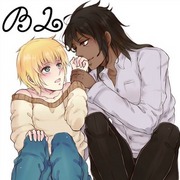
As he got older, his features sharpened in quiet, unexpected ways. He didn’t grow into broad shoulders or rippling muscles like the boys girls seemed to orbit in school hallways and locker rooms. He remained smaller in frame, softer in presence. His build was lean, his stature modest. But his beauty—undeniable.
His skin was smooth, his lashes thick and dark like inked feathers fanning over expressive light eyes. And his hair—long, wild, cascading in curls and waves down his back—nearly kissed his waist when it was loose. His face carried an effortless grace, the kind some might call “delicate,” though that word never sat quite right with him.
He was handsome in a way that didn’t need permission.
Leola had her own names for it.
“A doll,” she often declared with a fondness that walked the line between grandmotherly and theatrical.
And sometimes—if she was feeling bold—“My little Black baby doll.”
She’d grin from ear to ear whenever he walked through the shop door. “Look at you,” she’d sing, her voice rich with Southern sugar. “Lookin’ like a little Black baby doll, honey.”
If she was holding court with her usual group of older patrons, she’d gesture proudly toward him. “Ain’t he a doll? Just wanna dip him in my coffee and stir him in, sweeten the whole day.”
Quynten never quite knew how to respond. He’d learned to smile—tight-lipped, polite—even when her teasing nudged a nerve.
And in quieter moments, when it was just the two of them while she was behind the register or in the aisles shelving books, she’d lower her voice and say, “You’d have some cute babies, sugar. Just need the right girl.”
That was the part that made something twist inside him. But still, he smiled. Always smiled.
Even so, not all their interactions were laced with matchmaking. Leola had a genuine warmth that ran deeper than surface charm. She paid attention—not just to how he looked, but how he carried himself. She could sense when his mind had drifted too far away, when the silence in him grew heavy.
Moments like today, when he sat blankly staring through the haze of his own thoughts, the book forgotten in his lap—she noticed.
“Hm?”
“You look more spaced out than a deer in highlights,” Leola says, her Southern drawl thick as molasses.
Quynten blinks, a soft chuckle slipping out before he can catch it. Headlights, he thinks—but he doesn’t correct her. She’s always mixing up expressions, turning them into something entirely her own. He finds it oddly endearing, like watching someone dance just off rhythm, but with so much heart you wouldn’t dream of stopping them.
“I’m fine, Leola,” he murmurs, lips tugging into a faint smile. “Are you okay?”
He doesn’t know why he asks. Maybe it’s reflex. Maybe it’s the small desire to give back a sliver of the care she always shows him.
“Oh, I’m just fine, honey,” she replies, brushing the air with a wave of her hand. “I made some cookies this morning—left a plate out front. Help yourself. You look a little smaller every time I see you.”
She gently squeezes his arm through the soft sleeve of his gray crewneck. Her touch is kind, but the words settle heavier than she probably means them to.
Something twists in his stomach. His throat tightens—but he laughs anyway, even if it comes out shaky.
“How much are they selling for?” he asks, reaching for a change in subject.
“Child, please.” She scoffs like the idea itself is absurd. “Any excuse I get to bake, I take it. Just help yourself.”
“Leola, if they’re for a bake sale—”
“They’re not, baby.”
“Well... you should sell them. Everyone loves your baking.”
Leola places both hands over her chest and gasps in mock flattery. “My, my, I’m flattered, darling.”
Quynten snickers. “I’m serious.”
“And so am I, child. I’m seventy-eight years young with enough breath in my lungs to cook up a storm and enough strength to work the fields on a day so hot even Satan wouldn’t dare set foot—and that fool deserves the sweat. The Lord blessed me with these hands, and I use ‘em to spread joy. Not to make coin. I ain’t takin’ a dime from you. You’re too precious. If you were my grandbaby, you’d be my favorite.”
His cheeks flush, warmth blooming before he can stop it. He lowers his head and offers her a quiet smile, unable to find the right words.
Leola pats his arm one more time, then tells him again to grab some cookies—sugar and chocolate chip, still soft from the morning. With her usual smirk, she adds, “You’re as thin as a stick, boy. I need to fatten you up.”
Quynten lets out another laugh, but this time, it’s softer. Fainter.
He crosses one arm over his stomach, fingers absently rubbing his side where a familiar ache lingers beneath the surface. He doesn’t eat much—never has. Not because they struggle for food. There’s always plenty in the house. But food has always felt... foreign. Heavy. Off.
His mother’s cooking—comfort wrapped in flavor—fills the table when she’s home. Tilapia that flakes apart beneath the fork, collard greens steeped in flavor, or the occasional Samoan dish when she has the energy. He cooks too, more often now. Her long hours at the hospital mean someone has to, and he’s become good at it. His father’s cleaned plates say more than his mouth ever does.
Praise, though? That never comes. His father’s silence is the only kind of approval he offers, and it’s as lukewarm as day-old coffee.
Still, when Quynten eats, it never sits right.
Since he was ten, meals have come with a ritual. He waits—sometimes an hour, maybe more—then slips quietly into the basement bathroom. The cold tile greets his knees. He steadies himself, leans in over the toilet, and pushes two fingers past his lips.
Hot. Bitter. Relief.
Then shame.
The wave crashes quickly, and what’s left in its wake is silence—a hollow that coils beneath his ribs and settles like fog in his chest.
No one knows. He makes sure of it. He has to.
The thought of speaking it aloud feels corrosive, like the words would rot in his mouth before they ever found shape. He knows why he does it. Of course he does. But to name it would make it too real, too raw.
The guilt always comes after. Sticky. Heavy. Unforgiving.
Wasted food. Wasted effort.
He doesn’t deserve any of it.
They can’t know, he tells himself. They mustn’t.
He exhales slowly, the breath shallow and frayed, folding in on himself until the ache dulls into something distant. Something easier to carry.









Comments (0)
See all