
The first time Steve Jones saw the masks, something inside him shifted—something old and unsettling, like a whisper brushing against his soul.
It was a quiet day at his mother’s antique shop in Hollow Creek, Louisiana. Dust floated in the shafts of sunlight streaming through the warped, stained-glass windows. The air was thick with the scent of aged wood, faded paper, and long-forgotten memories. Steve wandered from the front counter, where he’d been half-heartedly sorting receipts, toward the back room.
His mother and Aunt Lillian were huddled around an old wooden crate they’d just pried open. It was from a recent estate sale—an impulsive, high-risk purchase, the kind of mystery box they loved. They always joked, “Could be treasure, could be trash, but either way it’s an adventure.”
The crate was rotting, its wood damp and splintered, almost as if something had been trying to claw its way out. Steve felt a chill creep up his spine.
“What the hell is this?” Aunt Lillian muttered, brushing away brittle straw as she pulled out the first mask.
Steve stepped closer, a strange tightness coiling in his stomach.
The crate was filled with masks—dozens of them, each more unsettling than the last.
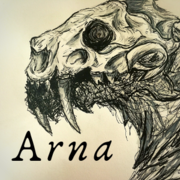
Some were simple, carved from smooth wood, their colors faded to muted echoes of paint long lost. Others were grotesque, twisted sculptures made of bone, tarnished metal, and cracked leather. Faces contorted in exaggerated expressions—grins filled with jagged teeth, hollow eyes seeming to drink in the light. Some masks still bore remnants of rotted fabric, as if the last wearer had been trapped inside forever.
His mother’s fingers lingered on one—a sleek, featureless black mask with only two narrow slits for eyes.
“These must be ceremonial,” she said quietly.
Steve wasn’t so sure.
The longer he stared, the more the masks seemed to move—not physically, but like something breathing beneath their surfaces, waiting, watching.
Then he heard it.
A whisper. Faint, almost swallowed by the ambient creaks and groans of the old shop.
He glanced around. No one else was speaking.
The whisper came again.
“Wear us.”
His breath caught. He took a shaky step back.
Aunt Lillian clicked her tongue, breaking the spell.
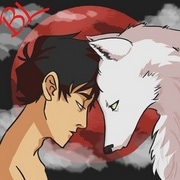
“We got scammed,” she muttered, pulling out another mask—this one shaped like a snarling wolf’s face, its silver fangs catching the dim light. “Creepy little things.”
Steve’s fingers twitched involuntarily toward the black mask.
“Don’t,” his mother said sharply, gripping his wrist.
“These could be worth a fortune to the right collector,” she warned. “And you’ve got a reputation for... less-than-gentle handling. Remember the Chinese porcelain plates incident?”
Steve rolled his eyes but kept staring.
That was the first sign something bad was coming.
He should have listened.
That night, Steve dreamed of the masks.
They floated in endless darkness, their countless eyes boring into him. One by one, they opened their mouths and screamed—a horrible, deafening sound that echoed in his ears until he woke gasping.
The masks weren’t just objects. They were alive.
He and his mother locked the masks inside a glass display case, but they never stayed put. Every morning, the masks had shifted: tilted slightly, turned a fraction, the glass smeared from something pressing from the inside.
Customers noticed. Some lingered too long, eyes fixed behind the glass as if they saw shadows moving beneath the surface. Others reported hearing faint scraping noises or distant whispers that sent chills down their spines.
Then the first incident happened.
Steve was alone in the shop when a man in his fifties wandered in, browsing aimlessly until his eyes landed on the masks.
Steve watched as the man’s expression changed—his pupils dilated, lips parted like he’d stopped breathing.
“They’re... beautiful,” the man whispered.
Before Steve could react, the man unlocked the case and pulled out the wolf mask.
He pressed it to his face.
The transformation was instant.
The man’s body convulsed, spine elongating, fingers stretching into claws. His teeth grew jagged, mouth pulled into a snarl. A guttural growl erupted as he dropped to all fours, fur sprouting where skin once was.
Steve found himself staring at a literal werewolf rampaging through the shop.
He acted on instinct, climbing onto the counter and leaping onto the beast’s back.
The wolf bucked wildly, crashing into displays, trying to throw Steve off.
Steve grabbed at the mask, pulling hard until the creature stopped abruptly, throwing him forward into a pile of leather purses.
The werewolf collapsed, flesh and fur retreating, bones snapping back to human form.
But the man’s eyes—yellow irises with thin, slit pupils—were no longer human.
He blinked, shook his head, chuckled weakly.
“What happened here? I could have sworn this place was neat and organized when I walked in.”
He helped Steve up and quickly left the store, excusing himself as if nothing had happened.
Steve stared at the wolf mask on the floor before flinging it across the room.
He knew something stayed behind in the man.
And the masks?
They had found a way out.
It kept happening.
People touched the masks and never left the same.
A woman who brushed a serpent-like mask scratched her arms relentlessly, complaining her skin felt too tight.
A teenage boy put on a mask as a joke and froze mid-laugh, mouth stretching too wide, eyes flickering black—before he yanked it off and ran out screaming.
Steve watched them change—how their shadows lingered unnaturally, reflections warped in mirrors.
They were still themselves, but not fully.
The masks didn’t just possess people. They corrupted them.
And Steve?
He started changing, too.
The whispers grew louder, twisting into his thoughts like smoke tendrils.
Wear us. Set us free.
He woke some nights standing in front of the display case, hand trembling over the latch, fingers aching to open it.
He saw faces in the glass—not his own. Not human.
Sometimes, just before sleep, he felt his bones shift.
One night, Aunt Lillian found him pacing, hands shaking.
“They’re waking up,” he said hoarsely.
She frowned. “What’s waking up, kiddo?”
“The masks. Something about them—it’s evil. They’re doing things to people.”
Aunt Lillian smiled, but didn’t question him.
Instead, she led him to the back, to the shop’s old computer.
“I did some digging on the estate where the crate came from,” she said. “Funny story, actually.”
“The place was built in 1735. Owned by Hattie Freedman, an African American woman known for witchcraft. Folks turned to her whenever supernatural trouble brewed.”
Steve rubbed his temples as Aunt Lillian clicked through dusty archives on the shop’s ancient computer. The screen flickered with old scanned newspapers, yellowed with age. Between the headlines and faded photos, a story emerged about Hattie Freedman—an enigmatic figure in Hollow Creek’s shadowed history.
“See here,” Aunt Lillian said, pointing at a grainy photograph of a woman with sharp eyes and an inscrutable smile. “Hattie was a healer, a midwife, and something of a local legend. People said she could speak to spirits, command the elements... and protect the town from dark forces.”
Steve frowned. “Sounds like a witch.”
Aunt Lillian leaned back in her chair, eyes glinting with a strange mix of fascination and wariness. “People said she had powers. They called her a witch because she could make things happen—good or bad if she wanted. When the town had problems, folks would come to her to fix it. But there were rumors... darker ones.
“Some said she trapped spirits inside objects—things she didn’t want roaming free. Others said she made bargains with... things that shouldn’t exist, things from beyond.”
A chill snaked up Steve’s spine. The masks in the crate suddenly felt heavier, more alive.
Aunt Lillian continued, voice dropping. “After Hattie died, strange things started happening. People went missing, livestock found mutilated, weird sounds at night. No one dared go near her estate. Then, one day, the whole place just vanished—no trace left.”
Steve swallowed hard, thinking of the masks—their hollow eyes, the cracked leather straps like remnants of the last souls who wore them.
“They say the masks came from her estate, somehow smuggled out, cursed objects meant to hold the darkness at bay.”
A cold wind brushed through the cracked window, rattling the loose shutters.
Steve glanced around the shop, suddenly feeling the air thicken, the shadows deepen.
A faint whisper curled in his ear, like dry leaves skittering across the floorboards.
Wear us.
He shook his head, trying to clear the oppressive feeling.
His mother’s voice interrupted the moment, distant but firm from the back room, reminding him not to touch the masks.
But Steve knew better now.
They weren’t just old relics.
They were something far worse.
The masks weren’t just objects.
They were waiting.
Waiting to be freed.
At night, Steve could hear them shifting in the display case. Their whispers were no longer fleeting—they pressed against his ears like breath on the back of his neck. The shadows in the shop began to stretch in unnatural ways, elongating with each hour past midnight, sliding along the floor like reaching fingers.
Objects moved when no one was looking. A porcelain doll turned to face the wall. An old music box began playing by itself, always the same four notes. A mirror in the hallway refused to reflect Steve’s image.
And then, one by one, people started coming in.
Some claimed they were just browsing. Others said they'd felt drawn in while walking past, as if something was calling to them from within. They would drift toward the case and linger too long, their faces slack, their eyes distant. Steve could see the masks reacting—quivering faintly, vibrating in place like tuning forks struck by some unseen hand.
Each time, the masks reached back.
And each time, Steve stopped them—barely.
He locked the case. Nailed it shut. Once, in a panic, he even tried to bury the entire collection in the basement beneath loose bricks and forgotten tools.
But the masks always returned.
No matter what he did, they found their way back to the case.
They weren’t just seeking him anymore.
They were hunting.
One evening, desperation clawing at his sanity, Steve searched online for anything—cursed artifacts, haunted objects, mask rituals, you name it. The computer screen flickered as he scrolled. He could feel the air thickening around him again, the familiar electric charge of their attention.
And then—the crate rattled.
He turned just in time to see it tremble once, then violently collapse. Planks splintered outward, thudding across the floor.
Inside was a hidden compartment—a false bottom he hadn’t noticed before. Tucked carefully within it, wrapped in layers of dusty cloth, was a single mask.
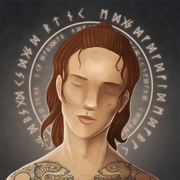
Unlike the others, this one was strikingly human—shaped like a woman’s serene face. Her expression was peaceful, almost gentle. Instead of sharp fangs or hollow eyes, it had closed lids and a faint, knowing smile. There was something warm about it. Something… good.
Steve didn’t know why, but as he held it, a thought—no, an idea—took root in his mind.
Maybe this mask could end it.
That night, the antique shop turned into a battleground.
The air grew heavy with an unseen force, pressing in from all directions. The walls groaned as if under the weight of something ancient and angry. Whispers rose from the shadows like a storm tide, unintelligible and furious.
The display case vibrated, then cracked.
Then shattered.
The masks dropped to the floor with wet, unnatural thuds. They pulsed, their surfaces undulating like muscle and flesh. Shadows rose from them, spiraling into twisted, grotesque shapes—wolves with eyes like dying stars, serpents with too many mouths, humanoid figures stitched together from ash and smoke.
Steve stood in the center of it all, clutching the woman’s mask.
The creatures turned toward him.
Their hunger was palpable.
He raised the mask, heart hammering.
A whisper—so clear it was almost inside his own head.
Put it on.
He hesitated.
Put it on, and they will be sealed.
His breath caught. Was this mask different? Was it truly a salvation—or just another trap in a different disguise?
He didn’t have time to wonder.
The monsters lunged.
Steve acted on instinct. He pressed the mask to his face.
Pain, like liquid fire, coursed through his veins. His limbs locked, his spine arched. It felt as if something ancient and immense was pulling him apart piece by piece.
Then—stillness.
The creatures paused, their forms flickering.
A great wind, invisible but deafening, swept through the room. It tore at the darkness, grabbing the monstrous figures by the limbs and dragging them backward. They shrieked, their voices distorted and inhuman, fighting against the pull—but it was no use.
One by one, they were pulled back into their masks.
Until there was only silence.
The air cleared. The floor stopped trembling. The display case—what remained of it—stood quiet.
The nightmare was over.
But Steve…
He couldn’t move.
Then the shop glowed faintly.
And from the place where the woman’s mask had once been hidden, she stepped forward.
Her dress shimmered like starlight, her skin an ethereal shade of black-blue, dotted with silver like constellations. She looked down at him with soft eyes.
“You did well, Steve,” she said, voice like wind through leaves. “But they’ve grown stronger than I. My strength has faded in this age of disbelief.”
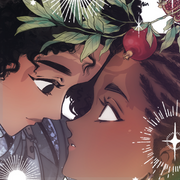
She knelt, pressing her forehead gently to his.
A warmth spread through him—soothing, deep, and impossibly old.
“This is the last of my power. Use it wisely. But be warned… they will return. Others will come, drawn to what you now carry.”
“I’m sorry for giving you my curse,” she whispered. “But someone must bear it now.”
She stepped back, smiling peacefully. she placed her own mask over her face. It shimmered once, then cracked down the middle. Her body dispersed like smoke caught in moonlight—finally free.
Silence again.
“Steve! Steve, wake up!”
His mother’s voice cut through the haze. She was shaking him—frantic, pale.
His eyes snapped open. He was lying on the floor of the shop.
“I’m up—I’m up,” he gasped, sitting up fast.
“You nearly gave me a heart attack, young man. Why were you lying there like—” she paused. “Wait, were you hugging that mask?”
Steve blinked, then tossed the broken remnants of the woman’s mask aside. He stood and hugged his mother tightly.
“It’s a long story,” he said, his voice still hoarse. “But it shouldn’t be a problem now.”
She blinked, clearly confused. But teenage boys didn’t hand out hugs easily, so she let it slide, patting his back.
“Alright, well… if you ever want to talk about it—”
Then Steve froze.
His arms dropped slowly.
All around them—lining the walls, crowding the aisles—stood transparent people. Dozens of them. Men, women, children. All eerily still. Each one holding a translucent replica of an item in the shop. A doll. A music box. An oil lamp. A mask.
Steve sighed.
“Spoke too soon.”





Comments (0)
See all