
He saw her now looking steadily at that same scar, but knew her mind was far away. She had probably drifted back to the time when there was no scar and their lives had lay unblemished before them. To a time, when there were no wounds to remember and their spirits were free. “What are you thinking about, Thankachi?” he asked. “Oh, nothing,” lied Usha. “Come on, you know that is not true.” “Yes, that’s not true. I was daydreaming. I was once again playing ‘Kokan’, the game you taught me.” “Did I teach you that, Usha?” “You did, Annan. You would have much rather been with your friends, but you suffered being away from them to play with me.” By this time, Usha’s eyes were full. Murali wanted to reach out his hand to her, but for a second, the thought went through his mind, Was it safe to touch her? But the next moment, his heart had overruled his mind; his hand went out to hold hers. “It will be alright, Usha; I just have not come prepared to stay today. Another day, we will all come: Shanthi, the children, mother and father as well.” Usha wiped her wet cheeks with the back of her hands and then they both sat, steeped in thought, watching the last glow of pink fade from the sky behind the hills. “Perhaps the game will be forgotten,” she said suddenly. “We must teach the children to play ‘Kokan’.”
A smooth stone rose into the air, while nimble fingers quickly reached for a few more from the sand. Each stone had to be snatched from the ground without disturbing any of the others. Eight-year-old Usha was playing Kokan, and she was playing it solitaire. Usha lived with her parents and an elder brother. They lived on an island. An ‘island’ makes you think you are never far from sandy beaches and pounding surf. But this was no ordinary island. At its broadest, it was almost 300 kilometres across. Usha and her family lived in a large inland village in north-western Sri Lanka. The population was predominantly Tamil in this part of the country. The sea was far away. In fact, she had seen it only twice during her entire life. This island nation had almost been paradise once; ‘Ceylon’ was what it was called then and it rested like an emerald pendant around the neck of the vast subcontinent. Things were different now; the British had left decades ago. Today was 12 August 1977. Marauding mobs of Sinhalese youth were at this moment running amok on the streets of its capital, Colombo. They attacked Tamil houses and chased down those who managed to escape.
They broke, pillaged and set on fire what was left. This riot and others that followed left at least a few thousands dead, and a hundred times that number homeless and destitute. Another band of exiles was born. Another refugee people, left to roam the earth in search of a place to lay their heads. The smouldering animosity between the two communities was soon to ignite into widespread armed conflict. This island would no more be the paradise it was. It would slip deeper into civil war and hang like another teardrop on the face of an aching world. Oblivious to all this, Usha continued to play. One more stone rose into the air; by the time it came down again, she had picked the rest of the stones off the ground and her hand was ready to catch the one coming down. Usha was getting good at it. Soon, she would be able to manage a whole hand (all eleven) in three throws. When Murali annan came, she would show him. How proud that would make him. Later that evening, Murali came back from school and she showed him her prowess at the game he had taught her more than a year ago. Then together, they went into their house. It was a small home with wooden rafters and a tiled roof. A ten-by-eight feet room for her parents, a similar one for the two children on the opposite side. A bigger room connecting the two served as the dining room, drawing room or whatever other room you wanted to call it. A tiny wood-burning kitchen jutted out like an appendage at the back. You could see that it had not been built along with the rest. With a tin roof and the floor at a lower level, it was an obvious add-on. There was a little more than an acre of land around the house, most of it taken up with coconut palms except for an open bit at the back, away from the road, next to the fence. This was where they grew yam and lentils. With the smell of fish wafting in from the kitchen, Usha could hardly wait for dinner. They sat around cross-legged on mats with stainless steel plates before them. Mother served the rice and Sodhi—a fish curry made with coconut milk and saffron. It would have been difficult for any of them to imagine life without fish and coconuts. After the meal, a few chores had to be done and then she said her prayers to the family deity before retiring to her room. The mats they slept on were rolled up in a corner; another corner held her brother’s possessions—a two-foot steel box and a large board that served as his desk. She went to her corner where a wooden shelf held their clothes, her slate and a cardboard box. She sat down and wrote a few pages from her textbook. Then she watched a gecko as it stealthily stalked an earwig on the wall. Then she daydreamed. Then she opened the box and took out her pencils with a contented smile.
She had her family, her Kokan stones, her rag doll with the coconut shell face; she even had her precious box of six colour pencils that had come on her last birthday. Yes, she thought to herself, she had everything. Usha’s father, Muthiah, was a driver in a private transport company and her mother a teacher. They were not rich, but they were happy. Her father augmented the family income by the bit of agriculture he undertook in their plot of land. They could not afford hired labour and so, the whole family pitched in for the work. Usha, being the smallest, was kept busy as an errand person. Her little legs would run willingly to fetch water, some rope and a box of nails or a jute gunny sack.
The coconut palms were their main source of income. In one ingenious way or another, every part of the palm came into use. Even the leaves could be woven into flat sheets, which could serve to make thatched roofs and rough enclosures. Weaving the palm leaves was something that Usha could do, along with the others, and just as well as them. Four years went by. Usha no longer played Kokan, but she still had her raggedy doll and her pencils. But there was one thing she missed. She missed Murali, who had gone off to join the rebel forces almost six months ago. They seldom heard from him. Ever since Murali had left, a pall of sadness had descended on the household. Her parents did not talk much anymore. Each carried their own secret fears for him and their faces betrayed the burdens that their minds carried inside them. Her mother would occasionally give her a weak smile and then quickly draw her close so she would not see it fade away. Every morning saw their mother with flowers at the temple, praying for her son, and today, 17 June 1980, was no different. She had two lessons to take for her primary school class before she came for lunch. She had taken leave for the rest of the day to catch up with some work around the house. Usha came in from school at half-past three. It was too hot to visit her friend two houses away, so she stayed inside and finished her homework. As the hot sultry afternoon wore on, dark pregnant clouds gathered overhead. Supper that night was accompanied by the steady rhythm of rain. After the cleaning, washing and putting away was done, she went and sat on the window sill and stared into the dark wetness outside. A bolt of lightning gave her the fleeting silvery images of waving branches and little rivulets.
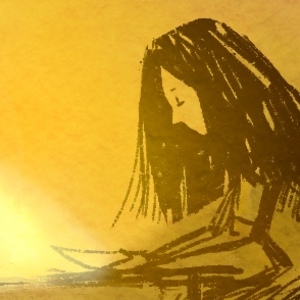
Her father was not religious and had little use for prayer, so she felt it was up to her to augment the petitions that her mother made to the powers above. She went to the little alcove in the wall that held the family deity. Her mother had lit the small earthen oil lamp at sundown before any other lights were put on. Nobody had noticed it go out. Usha carefully trimmed the wick again over its spout and lit it. The flame sprang up and then swayed with the draught from the window, catching her intense face in a wavering glow of gentle light. Her palms were pressed together in supplication, as she marshalled all the concentration that her young mind could generate. Bring my brother back, she prayed silently. Little did they know that tonight, they would have him back, but not in the way that they would have liked.






Comments (0)
See all