
Heirs of High Society
Chapter II: The Quiet Storms of Power
The LUXGEN Executive Boardroom was quiet, not because it lacked voices—but because it contained too many who knew how to weaponize silence.
The walls were sleek obsidian, reinforced with kinetic-absorbing alloys. The view stretched over Greyward's northern skyline—its pulse still industrial, still tired. Grey skies wept quietly over the glass as if the city mourned its own ambition.
At the head of the table, Victor Albrecht Lysander sat still as stone. His fingers steepled. His eyes calculating. Beneath the tailored suit and salt-threaded hair, he was a living relic from a world that didn’t exist anymore—a man who had seen power born in laboratories and buried in graves.
Across from him: Kai Kincaid.
Tech mogul. Billionaire. Rumored singularity-grade Gifted. In this world, the only thing more volatile than power was electricity, and Kincaid had mastered both.
His executive assistant, Selene Voss, stood behind him with the practiced stillness of a soldier. Her eyes scanned datapads, glassboard projections, and expressions with the same efficiency.
Victor's assistant, a silent man in grey named Harwin, took notes without sound or emotion.
Kai leaned back in his chair. "Stock dips on material tech. Spikes on psychic adaptation programs. The shift isn’t subtle anymore. Investors are no longer betting on tools. They’re betting on people."
Victor nodded once. "They’re betting on minds."
Kai gestured to the glass interface. A series of market overlays flickered.
PSIONICS - +11.2% CHRONOTICS - +9.6%
SOMATICS - flat KINETICS - slow decline TECHNOPATHY - suppressed, flagged for sovereign control
"Arbiters of Veyra," Kai said, nodding toward Psionics. "We both know where the market’s going. Mind over muscle. Illusion over brute force."
Victor replied calmly, "And it’s no accident that over 68% of new noble initiates in the past six months have declared resonance with Psionic branches."
Kai raised a brow. "Almost like someone's guiding the stream."
Victor didn't smile, but the corner of his mouth flexed. "LUXGEN observes trends. We do not manufacture them."
Selene spoke up then, her voice clear, cool: "You observed the girl? The intern?"
Victor's fingers paused.
Kai turned his head slightly. "What girl?"
Victor said nothing for a beat too long.
Then: "A low-tier applicant. Internal scholarship. Graded high in cognition, low in aggression. But... something's off."
Selene pulled up a profile. The hologram shimmered above the table. Leiéa Coven. Age: 18. Unregistered family line. No public Gift signature.
Victor's voice was even. "She corrected a Tier-3 revenue model on the fly. Mid-briefing. She wasn't meant to be in the room. But she was... right."
Kai read the metrics. "This wasn’t a math prodigy moment. This was... algorithmic instinct."
Victor nodded. "Or intuition mapped to an unseen pattern."
Kai's eyes narrowed slightly. "Which branch?"
Victor exhaled slowly. "We don’t know."
The room stilled.
Kai looked up. "Are you telling me there's a wildcard running around my city with undefined resonance potential?"
Victor: "I’m telling you... she might be Obscura."
Selene blinked.
Kai didn’t.
He tapped his finger once on the table. Lightning snapped through the tip, barely audible, just a crackle of restrained power.
"Keep her close," he said. "Don’t cage her. Don’t scare her. If she’s what you think she is, she won’t stay hidden for long."
Victor nodded.
Kai stood. "When it breaks—and it will break—I want to be on the right side of the breach."
He and Selene exited. The rain hadn’t stopped.
Victor watched the hologram of Leiéa flicker once.
The world didn’t know her name yet. But it would.
Flashback: A Quiet Rebellion (5 Years Earlier)
Mars Armitage had never been the type to ask for help. But when the adoption decree arrived—sealed with biometric authorization and sovereign registry marks—he’d signed it with hands that wouldn’t stop shaking.
It had taken three years of appeal, inspection, and fiscal proof for the High Society’s custodial board to grant full legal guardianship of Leiéa Coven to him and Erisa Hearthrone. They were still considered “fringe-respectable”—a former orphan-turned-entrepreneur and a struggling B-list actress—until the approval went through. After that, everything changed.
The process hadn’t been simple. Or quick.
Under Ascension Law, only those with provable noble service, rising social merit, and financial sustainability could qualify to adopt children from sovereign orphanages. Mars had to prove all three—and Erisa, despite the prejudices against her acting background, underwent a year of cultural integrity vetting.
The Orphanage Director, a former House tutor named Cirelton Wex, had given a cold recommendation. “If the girl ends up broken, it won’t be from genetics. It’ll be from trust misplaced in hands too eager to play house.”
They signed anyway.
Leiéa was thirteen when she moved into the Armitage Estate. What had once been a compact apartment above a strip of junkyard shops was now a glass-and-iron compound tucked into the hillside, outfitted with AI shielding, stormglass panels, and imported stone. She didn't understand how quickly Mars had grown powerful—or why. Only that it happened shortly after she started having dreams about voices she couldn't place and numbers that moved like music.
What neither of them knew, even then, was that Victor Lysander had quietly helped Mars build LUXGEN’s first autonomous power-cell infrastructure—covert compensation for raising the girl he once vowed to protect.
By fourteen, Leiéa had entered a public institute where Gifts were beginning to emerge. Her records remained sealed. She was the quiet girl with untapped potential, the one who never tested positive for a Gift, but somehow still unnerved half her class by just being in the room. The teachers wrote her off as 'intellectually gifted but emotionally withdrawn.' She hacked the school servers twice. Just to see if she could.
She was ridiculed by Gifted students who saw her as "deadline-born," a term used for those without awakened Gifts. Even when she outperformed them in theory, no one gave her the benefit of the doubt. But she learned. She observed. She survived.
Erisa had stepped in as a buffer between her and the world. Their bond was never maternal in the traditional sense—it was forged in fire and silence.
“Your rage,” Erisa once said, “is a house. You can live in it. Or you can burn it down. But choose the one that lets you keep your name.”
They never talked about her mother. Not directly. But Erisa was the first to teach her how to walk in heels and how to mask a trembling hand before a room full of skeptics.
By fifteen, Mars had tripled his net worth and was onboarding into the lower High Society rings. His work with LUXGEN, and several closed-door innovation forums, gave him credibility. Leiéa, meanwhile, had begun to fracture in silence. She couldn’t name it, but something was waking up inside her.
Dreams bled into reality. Data felt like instinct. Sometimes she could sense moods before words.
Then came the headaches. Then the pull.
And somewhere in the static, the first signs of the Gift began to hum.
The Event — Present Day
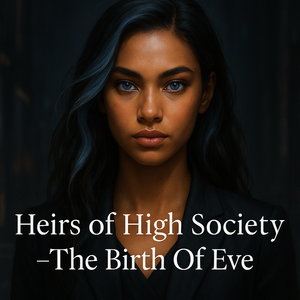
Rain whispered against the floor-to-ceiling windows as Leiéa stepped into the boardroom.
She wasn’t supposed to be here.
Technically, she’d been assigned to audit pre-briefing data sets for a minor logistics proposal. But there’d been a scheduling misfire, and the glass door hadn’t locked behind the last presenter. The table was still occupied. The air still charged.
Twelve senior staff. Two advisors from the Sovereign Liaison Office. And Victor Lysander himself.
Leiéa hesitated in the threshold, datapad clutched against her chest like armor. Her breath caught—but she didn’t retreat.
Victor’s gaze met hers. Brief. Measured.
“Coven, was it?” he said quietly.
She nodded.
“You’re not on the schedule.”
“I know,” she said. “But your model’s wrong.”
Silence.
All twelve heads turned.
Victor didn’t blink. “Explain.”
She stepped forward, her hands already moving. Her voice steadied.
“The predictive regression algorithm you're using for power-cell saturation assumes a flat-line decay curve. But that doesn’t account for compound entropy in neural-linked fusion environments.”
One of the advisors leaned back. “And you are?”
“Intern. Systems Analysis. Department B-4.”
“Who let her in?”
Victor raised a hand.
“Continue,” he said.
She did.
She rewrote the formula in the air with a few flicks of her fingers. The smartglass updated.
Lines shifted.
Projections rebalanced.
Four billion credits rerouted in a silent instant. Not earned. Not gained. But saved—from a predictive failure that would’ve shattered the upcoming quarter’s projections.
When she finished, she took one slow step back.
Victor stared at the projection. Then at her.
She expected reprimand. Expected removal. What she didn’t expect was the silence.
Victor stood slowly. Walked to the board. Tapped a command.
The room blinked.
“Miss Coven,” he said. “Do you know what you've just done?”
She swallowed. “No, sir.”
“You saved LUXGEN four billion credits. And revealed a foundational flaw in our flagship algorithm.”
He looked at the others.
Then back at her.
“You’ve just bought yourself a scholarship. And a war.”










Comments (0)
See all