
FOREWORD
For those souls once pushed to the margins of life.
I didn’t write this novella to seek pity. Nor to earn praise.
I wrote it because there were days when I could no longer speak.
I wrote it because some truths, if left untold, rot within us like unnamed wounds.
This book is not for those who seek happy endings, flawless characters, or tidy plots.
Because life—and people like the protagonist of this story—have never lived in such a world.
This work is an echo from bleeding memories.
It is a bell that rings inside the soul, though no one strikes it.
It is the confession of someone who once blamed their family, society, and even themselves.
But also, it is the gentle manifesto of a survivor.
This book is for:
- The children marked as “different,” yet never told why.
- The students expelled not for their grades, but because their very presence was unwelcome.
- The honest ones cast out because they were too gentle to be silent, yet too fragile to resist.
- And anyone who has ever asked themselves: “Do I deserve to be loved?”
If you find yourself in a sentence, a chapter, or even a single glance of a character—hold it close, as a reminder: You are not alone.
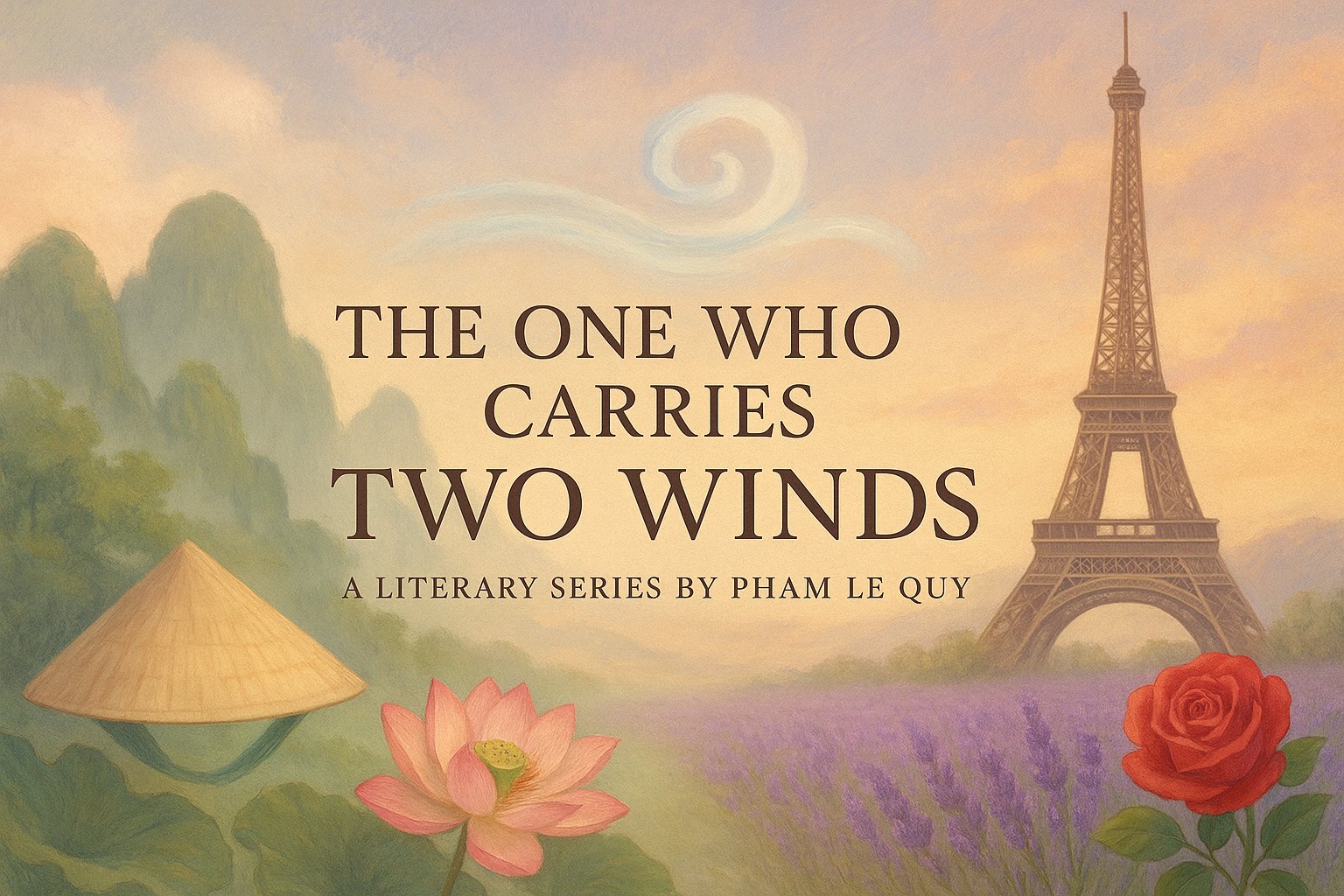
We are all “those who carry two winds”—
fragments of unnamed places, still breathing, still blooming in the swamps of life.
This is not a book to be rushed.
Read slowly. Breathe with it.
For some chapters will not be understood with the mind—but only felt by the heart.
Author: Pham Le Quy
DEDICATION
To those who’ve felt they never truly belonged,
who’ve been rejected, misunderstood, or torn between two opposing winds—
one of the past, and one of longing.
To the hybrid souls—
not only by blood, but by experience.
Those who’ve lived on the fault line between East and West,
between sacrifice and selfishness, between love and resentment.
This story is for you.
And for me—
someone who once had to learn how to forgive myself.
BLURB
"When blood is no longer pure, can the soul still have a name?"
Born in the body of a Vietnamese boy—with tan skin, black hair, and the wistful eyes of the East—
she (yes, she) never imagined that destiny would tear her apart.
A blood transfusion at age fourteen—meant to save her life—
becomes the beginning of a journey of possession, multiplicity, prejudice, and pain.
The soul of a Western woman—wife of a Vietnamese man from a previous life—awakens within her.
From that moment on, she is no longer one person.
She becomes a fragment of history, an echo of the past, a threshold between East and West, male and female, sinner and survivor.
Rejected by schools, abandoned by her own twin sister, scorned by a society that despises “hybridity,” and belittled for her intellect, gender, and origin—
she continues to live.
Not to be accepted.
But to prove: she is real.
She studies. She loves. She aches. She forgives.
She does not choose revenge—she chooses existence.
No one sees the tear in her heart,
but all see her rise.
No one hears her sob in the shadows,
but all witness her smile—
like a lotus blooming in the mud,
not as radiant as a rose,
but resilient enough to survive.
And if you’ve ever felt unseen,
if you’ve ever felt like you didn’t belong—
then this story is for you.
Not to pity you—
but to remind you that somewhere in this world,
someone has lived as you have.
And is still living.
Copyright Paper
© 2025 by Author: Pham Le Quy
All rights reserved.
No part of this publication may be copied, stored in a retrieval system, or transmitted in any form or by any means—electronic, mechanical, photocopying, recording, or otherwise—without written permission from the author or publisher, except for brief quotations used for critical reviews or academic purposes with proper attribution.
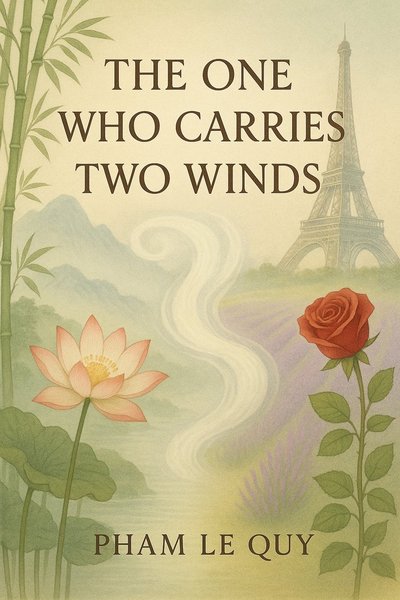
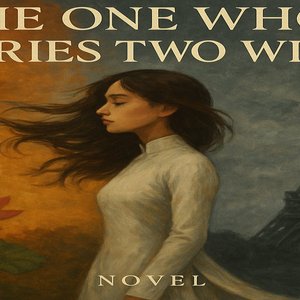
Title: The One Who Carries Two Winds
Author: Pham Le Quy
Editor: [if applicable]
Cover Design: [if applicable]
Illustration: [if applicable]
Publisher: [Self-published or Name of Publisher]
First Published: 2025
ISBN: [To be assigned if printed or registered]
Country of Publication: Vietnam
All characters, events, and places in this novella are fictional.
Any resemblance to actual persons, organizations, or events, living or dead, is purely coincidental.
Copyright Contact: qlpham0410@gmail.com
ABOUT THE AUTHOR
Pham Le Quy – a writer who does not claim to be an author,
but rather someone searching for words for the things that never had names.
Born at the crossroads of many cultures, Quy carries deep questions about identity, belonging, and the meaning of compassion in a world increasingly divided by prejudice, norms, and inherited wounds.
Out of that imbalance, The One Who Carries Two Winds was conceived—
as a deeply personal yet universally resonant journey of healing.
With academic backgrounds in language, psychology, and education,
Quy does not write from training, but from living.
For this author, writing is not a career—it is survival.
Writing to breathe. Writing to remember.
Writing to forgive—oneself, and those who unintentionally caused harm.
When not writing, Quy teaches, researches, and listens.
In the quietest moments, the author believes:
some stories can only be told through pain—and the courage to walk through it.
EDITOR'S NOTE (BY THE AUTHOR)
The One Who Carries Two Winds is not a conventional novella.
It is a blend of memoir, myth, biography, and literature.
Upon receiving the first manuscript, the author did not see this as a linear narrative,
but rather as the journey of a soul through three lifetimes, three layers of time, and three cultural landscapes—East, West, and the in-between.
The storytelling is intentionally non-linear, rich in symbolism and allegory,
unbound by traditional forms.
The chapters do not simply follow chronological order,
but rather unfold like layers of memory, reincarnation, and self-discovery—each peeling back the psyche of the main character.
A few notes for reading:
- The work employs frequent use of metaphor, personified souls, and ontological transformation. If read quickly, it may feel elusive. The author encourages slow, even repeated reading to absorb the layered meanings.
- At times, the protagonist undergoes shifts in gender, identity, even ego—these are not plot inconsistencies, but deliberate artistic choices reflecting the fragmentation and reassembly of the self.
- The chapters are constructed like spiritual psalms, each a step toward awakening—from trauma to understanding, from rage to forgiveness, from resentment to release.
- Elements like genealogies, reincarnation cycles, hidden histories, bloodline dynamics, and social exclusion serve not only as cultural metaphors but as reflections of the very real pain of being “othered.”
This novella may wound you—
but it may also become your medicine.
A journey of self-healing.
A voice for the silenced soul.
The author humbly presents this novella as something to be read—
not with the eyes,
but with the heart.




Comments (0)
See all