
In the depths of every culture lies a lingering fear—a fear of difference, of hybridity, of anything that blurs the lines carved over centuries: East and West, man and woman, native and foreign. For Nguyên, the Vietnamese younger brother, this fear wasn’t just a feeling—it was a conviction. A belief that blood must be pure, roots unmixed, order preserved. And anyone who disrupted that order deserved to pay the price.
He grew up with invisible hatred. His parents had once been deceived by a Western woman in a failed investment deal. Since then, in his mind, “Western” meant cunning, deceit, shame. That rage grew with him—like a needle lodged in his spine: it neither killed him nor let him rest. So when he looked at An—or more precisely, at the mixed-race girl living inside An’s body—he saw not a person, but a symbol of all he despised: a Western soul cloaked in Vietnamese skin, a gaze that softened yet defied gender boundaries, a smile suspended between two worlds.
To him, An’s existence was an insult.
To him, An was a cursed blend.
So, he devised a plan—not to kill, but to defile. To punish.
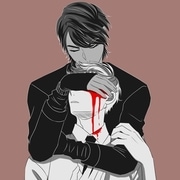
It happened on a rainy afternoon. The city was soaked, like a soul sobbing in silence. An had been summoned to a student group meeting, but found himself alone in a locked room. In front of him: Nguyên, his face calm and chilling. Behind him: a hidden camera, a metal chair, and a vial of anesthetic.
An was naive. He never imagined someone of the same blood, same nationality, same tongue—would use that very familiarity as a weapon.
“If you wake up and realize you’ve been violated,” Nguyên whispered,
“you’ll know no half-breed lives in peace on this land.”
An fought back. A Nhi’s soul screamed. But the drug worked faster than pain.
And just before he lost consciousness, he heard the voice of the woman from long ago:
“There are pains that do not kill us—but tear us into pieces.”
He woke in the infirmary, body aching, memories hazy. He couldn’t recall exactly what happened—only that a piece of his soul felt torn. He didn’t cry. Didn’t scream. Just sat there—still—as though his spirit had left his body.
And into that silence, another figure stepped.
Not Nguyên.
But Linh—his sister.
Linh had once been the embodiment of Vietnamese grace—long hair, soft voice, straight-A student, always compared to An. But beneath that obedient façade burned a quiet fury: a longing to be chosen, seen, validated. She believed An—with his strange aura and mixed heritage—had stolen the gaze that should’ve belonged to her.
She couldn’t stand that the West loved An. She especially couldn’t accept that the man she admired—a French-Asian scholar who once praised An’s writing as having “the melody of two languages”—looked at him with warmth. She was furious that she’d never been called “unique.” She’d only ever been called “correct.”
And in a blind act of envy, she gave the order:
“Inject him. The memory-wiping kind. Erase his selfhood. Let him forget everything—and I’ll become him.”
The drug was administered. Not once, but in rounds. Gently, like a spiritual cleansing. Day by day, An forgot—
Not the world,
but himself.
He forgot he had been A Nhi.
Forgot he had once been a husband.
Forgot the golden-haired woman who had wept in his dreams.
But what they didn’t know was this:
The soul cannot be killed by drugs.
In the fractured realm of forgotten dreams, A Nhi stood in a boundless white room—no walls, no exit.
“You didn’t kill me,” she said, voice soft as a dandelion seed.
“You only erased the memories. But I live deeper than that.”
Night after night, she began piecing together shards of shattered mirrors. She wrote on them in phantom blood:
“Remember me. I am your sister. I am the betrayed self. But I will return.”
In the real world, Linh began taking An’s place. She wrote like him. She mimicked his speech. She wore his clothes—blended East and West, defied gender. She even mirrored the quiet sorrow he once carried.
At first, no one noticed. But something felt… off.
She didn’t have An’s eyes.
She lacked the ambiguity of a soul reborn through lifetimes.
She was only a shadow.
Then, the teacher who once praised An’s writing spoke up:
“You resemble him—but you’re not him. There’s something… lifeless in your eyes.”
After weeks of wandering like a ghost, An dreamed again—of the sea.
But this sea had no waves.
No color.
Only A Nhi, waiting for him.
She reached out, gently touched his heart:
“We were violated. But pain cannot kill a soul. You have the right to return—not for revenge, but to rise.”
An awoke. His memory hadn’t fully returned. But his eyes had changed. They’d seen life torn apart—and still wanted to see more.
He walked into the schoolyard.
And for the first time, he spoke aloud:
“Some people are born outside the norm. But that doesn’t mean they deserve to be erased.”
Nguyên froze. Linh stood still. The entire courtyard fell silent.
That day, A Nhi returned—not to mourn, but to live.
An was no longer a victim. Nor a vengeful soul.
He was a witness—of all that had been twisted, denied, and finally… remembered.
And from the ashes of conspiracy, that soul rose—
like wild grass blooming through the cracks of history.








Comments (0)
See all