
On a windswept hilltop, nameless and unmapped, she stood.
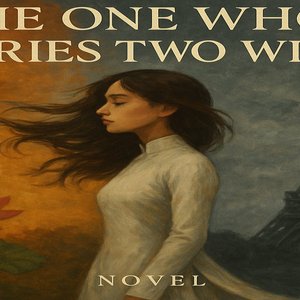
The evening sun spilled across her thin blouse like a dragonfly’s wing, her hair dancing between two skies—one soaked in Northern mist, the other stained with Southern dust.
No one called her “the boy she once was.”
No one remembered she had once been a man lost inside his own body, a wife seeking rebirth through another’s blood, a child whose soul was torn apart by unnamed ambitions.
She—the one who bore three lifetimes—carried no more names.
Only wind. And a curse.
That curse—like a sorrowful melody—whispered in the breeze, not in sound, but in trembling:
“To claim the West, you must become the West.
To keep Vietnam, never touch another’s blood.”
She once believed that.
Once thought she was a mistake—an accident of history, a wrinkle in the silk of identity.
But when she witnessed the blood of three lives flowing through her veins, she understood:
Blood is not wrong—only too many people demand that it be pure.
Nguyên, the younger brother, had once believed that by making the West Vietnamese, he would triumph.
But he shattered—because no one can possess anything without losing part of themselves.
Linh, the sister, thought that if she stole An’s place, injected the drugs, rejected the foreign, she would be accepted.
But she was only ever accepted as a shadow—and spent a lifetime never finding her own light.
As for her—the mixed-blood girl—when asked one final time, “Who do you want to be?”
She answered quietly:
“I don’t live to be someone’s wife.
Nor to be anyone’s version of anything.
I live like the wind—
Free, without gender, without language, without nation.
No one can keep me.
But I abandon no one.”
On the last day of her public life, she burned all her documents: passport, ID, birth certificate, even the degrees that once made people worship her as a symbol.
A friend once asked:
“Then how will anyone prove who you are?”
She smiled and said only this:
“I don’t need to prove who I am.
I only need to be remembered as someone who once truly felt alive.”
Years later, stories were told—
That she crossed countless borders without papers. No one stopped her. No one ever really saw her.
They said—she once stayed in a monastery high in the Alps, where nuns had lost their languages but learned to listen to souls in silence.
They said—she once appeared in a Khmer village, teaching orphaned children how to write with nothing but smiles.
They said—she once lay on a boat drifting down the Perfume River, gazing at the sky and whispering:
“Don’t name me, so I may become the river.”
But no one knew—on a night when rain fell like blood, she returned to the place where her soul had been torn.
The room where Nguyên staged his violation.
Where the drugs erased her essence.
She stepped in.
The room was abandoned. Door broken. Wind howling.
She knelt on the floor—where once her blood had dripped like red rain.
And for the first time in years, she cried.
Not from hatred. Not from pain.
But from forgiveness.
A bowl of blood she poured from her own wrist—not to die, but to lift the curse.
Each drop that touched the ground bloomed into a pale lavender sprig.
And from within the wound, she whispered:
“The blood of three lifetimes never dries.
But if people still believe—
That life is not to assimilate, but to understand.
That love is not to possess, but to liberate.
…then from wounds, flowers may still bloom.”
No one found her after that night.
Only a single line, written in blood—dry but not blackened—remained on the cold tile floor:
“I am no one.
But I am everyone ever torn in two by borders.”
Some built statues of her along national frontiers—but carved no name.
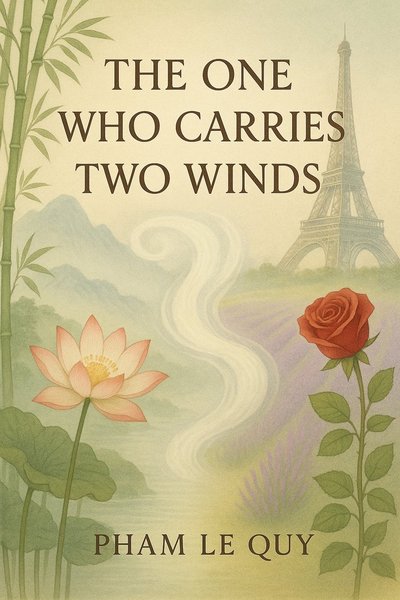
Some wrote novels about her—but called her only The Winded One.
Some called her a curse.
Some, an apocalypse.
Some—only whispered in the breeze—called her hope.
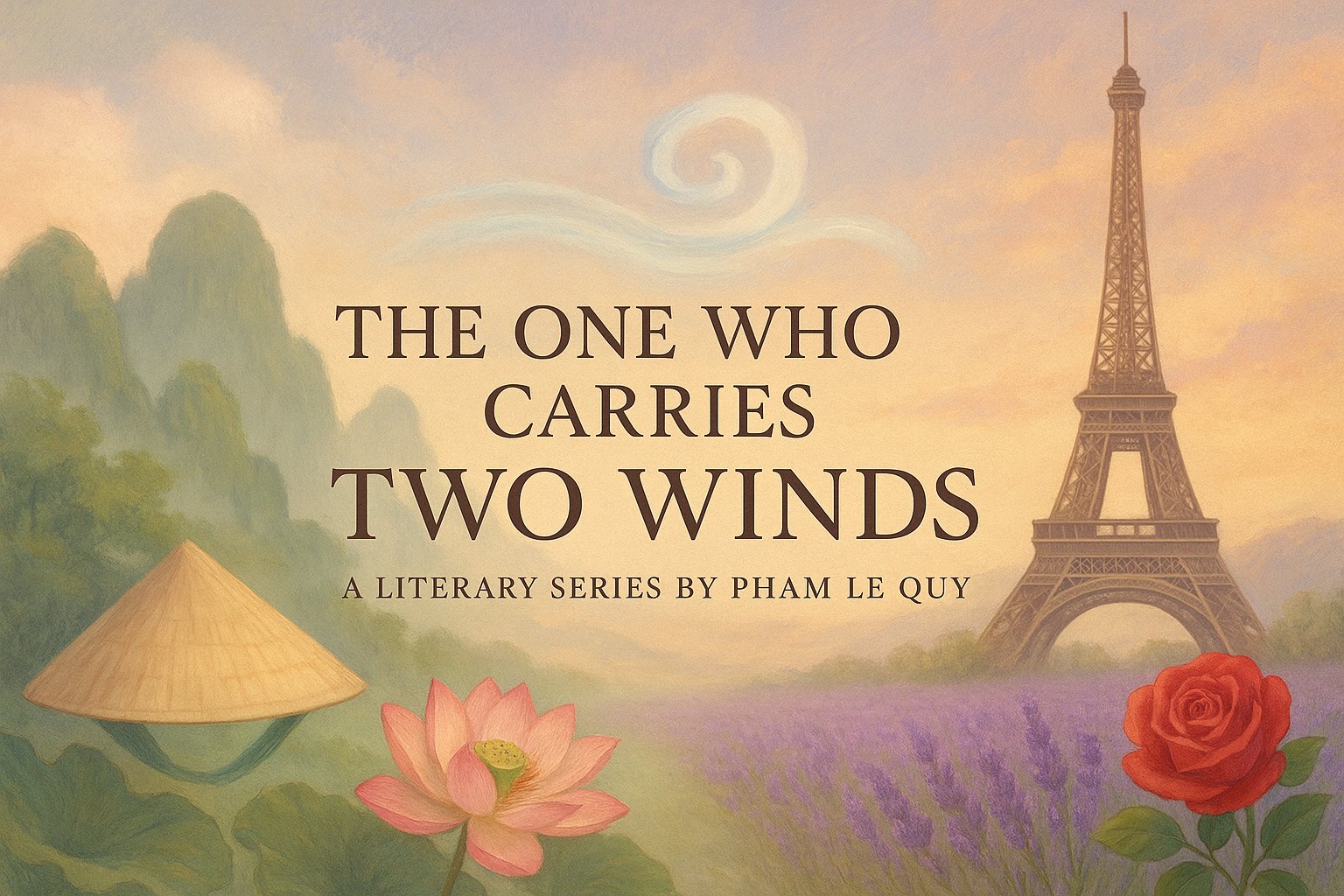
In a seaside village where the wind refused to choose direction,
a child once drew in the sand:
a figure with two arms—
one holding a stalk of Vietnamese rice,
the other a sprig of French lavender.
The child didn’t know who she was.
But still, they drew.
Because perhaps…
That soul never left.
It had only become the wind.







Comments (0)
See all