
Through countless storms of history, one might think the world had learned the lessons of compassion and harmonious growth.
But no.
The wounds of colonization, assimilation, exploitation, and humiliation still burn quietly in the blood of those who carry the legacy of the East.
Nguyên — a mere pawn of a greater force — had no idea he was being used.
To him, life was a preordained game, and the existence of An, of Linh, of the Westerners — were just pieces to be removed, reshaped, or manipulated.
A masterplan had already been drafted on the geopolitical chessboard: nations like Vietnam and China, long exploited, would now join hands — using Nguyên as their instrument — to exact historical revenge, to upend the global order, to transform a Westernized world into an Eastern empire.
And it all began with a seduction named "money."
“Make the West fall.
Make them kneel and beg to remain in this world.
Steal the light that once belonged to them.”
Those were the words of a political advisor to Nguyên, spoken in a dark room filled with maps and dossiers marked in red ink.
The mission was not only to dismantle Western values — but to sow seeds of chaos so that the East could rise as the new global ideal.
Nguyên was convinced.
Not out of patriotism —
but out of a burning desire to prove that Asian men, especially Vietnamese men, could rise to power and make the West bow down.
But no one told Nguyên the price of such a reversal.
Because to bring the West down, the East must also lose parts of itself.
To pull others into the mud, one must first dirty their own hands.
To change the world, one must accept being changed by it.
And a nation’s honor cannot be built on the humiliation of another.
Linh — once dreaming of becoming a daughter-in-law of the Western world — became a symbol of pride’s collapse.
Raised as a political tool, she became a shadow of An — a living metaphor for identity loss and moral inversion.
But no one asked if she was happy.
No one asked if she wanted to trade everything just to become a living banner for a ruthless plan.
She endured years in exile, seen as an exotic commodity in a political game.
She bore the scrutiny of Western eyes, of her own people, of her own reflection.
An, standing at the crossroads between East and West, understood more than anyone:
If mixed blood becomes currency, if interracial marriage becomes mere political leverage, then the most sacred thing a people has — the purity of its identity — will vanish.
And when that happens, they are no longer Vietnamese, Chinese, or French.
They are shadows — without roots, without soul, without identity.
The world would spiral back to a medieval age: backward, bleak, and less civilized than ever.
An sat alone in the narrow room that held her childhood memories.
She recalled learning French with her elderly tutor, remembered the gentle voices of those who once saved her from harm.
She understood:
Progress does not come from erasing the West.
Progress comes from balance, from holding onto one’s dignity without stepping on others.
If the East wishes to rise with pride, it must walk on its own feet —
not over the spilled blood of another.
Nguyên never saw this.
He pressed forward — expanding influence, forging marriages, manipulating media, launching campaigns to stir global emotion.
But one day, as he sat before a television screen, watching Linh — the woman he once believed would symbolize Eastern victory — break down in tears after being denied citizenship by her Western husband, Nguyên froze.
What had he done?
He had turned her into a symbol of failure.
A commodity.
A wanderer without a nation.
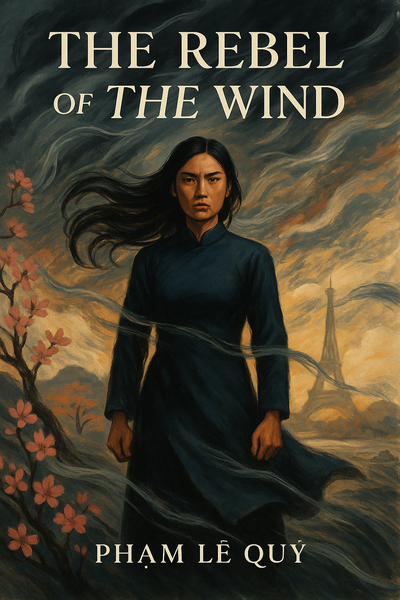
On a small street in Hanoi, where the wind began to turn, An walked with dry eyes.
She had come to understand one thing:
No one truly wins when dignity is weighed and priced.
No one truly wins when women must sacrifice their bodies and honor for the ambitions of men.
No one truly wins...
if the price is the soul of their own people.





Comments (0)
See all