
Entry 1
May 10th, 1911, added notes are written in modern day in bold:
In the center of peninsular Florida lies the great swamp that seems endless and impenetrable for kilometers that only seems hospitable to mosquitoes and dangerous vermin and the like. But I know there must be something more there. This swamp remains in this area today, although greatly diminished. I was sent by the University of Florida in Gainesville to map out the area accurately and survey the area in order to see if anything there was worth developing or building. These surveys were only recently fully completed through the use of modern satellite technology. This is not entirely an academic venture as the university stands to make a great deal of money from private investors and the army, who compete with each other to see who can build the first railroad connecting the east and west sides of the state. Unlike normal universities, mine is obsessed with this payout and sent me to do the work. These notes contain a summary of what I discovered there while I was stationed in the area.
The summertime in Florida caused the local people to be quite lethargic and lazy during the sweltering days. People are up to their brows in sweat not even by the end of the morning. It is quite hard to develop an area for agriculture or for mining or for harvesting plants or fruits when the area is so inhospitable in the hot summer months. Therefore, it was hard for me to convince someone from the local area to help me traverse the humid, hellish earth. The Americans by this point could already conquer the West and found it a great embarrassment that the remaining unconquered area that amounted to perhaps 50,000 km^2. The only parts of Florida that were thoroughly surveyed at this point were the areas close to the coast and everything north of Jacksonville. Anything below might as well be a lost country to us. There were only a handful of times that the attempt was tried to survey this old land. Back in the days, starting with Spanish sailors, and later when the union army tried to conquer Florida after the burning of Georgia. On accounts of help from local Native Americans, the army invaded only to completely disappear shortly after. Luckily, instead of having to invade, the navy was able through their blockades to defeat the coastal cities. If not, the union army would have spent too much time trying to invade these port cities from the north and not having the ability to invade through dense jungle. I would presume it to be more efficient for the army to spend their time battling in the north instead of trying to map out a labyrinth in the bogs. The Spanish were the first ones to set up these port cities, one in which I am staying right now. Here is a quick summary of what the Spanish had found when they came here. I took the liberty of translating the Spanish:
On the day we made it into the Gulf of Mexico, the Spanish viceroy sent from the various islands several ships to explore the Gulf. The Gulf was filled with crystal-clear teal water and the ships sailed quite easily to the peninsula we call Florida. We had set up some camps in the area and could find freshwater sources near the coast. Besides a hiccup of defeating French Calvinists in the north, we found our ability to set up shop quite easily. Unfortunately, it seemed that the easy part was complete. It was difficult for anyone to send in people to develop and find gold or treasure in the forested areas south of the 30th parallel. We sent one company from St. Augustine south to try and find a path towards our people in Miami. It seems we are relegated to the coast for now. Regardless, it seems very promising to explore this continent. Perhaps once exhausted we can move in closer and closer to the interior. We can still supply the areas we have with ships from the Caribbean, South America, Mexico, or Spain itself.
The Spanish, however, had to contend with the various wars the Europeans were creating during that time period and eventually would lose Florida and the rest of their colonies to other areas. Not like they wouldn’t have had alot of money from all this conquest either, so nothing to complain about. The Spanish, however, did try some contact with the native tribes of the area. However, the Indians of this area, whose names are now lost to time, do not appear to know what is inside.
The Indians of this area do not move away from the coast to get inside the land. They hunt the alligator and trade the skins and meat with us. Although they do stay on the outskirts of the forest further than any of us were able to, they refuse to move further inside. According to their traditions, it is forbidden to move further than where they bury their dead. They also build some mounds next to their dead, away from the sea.
The natives have since been lost to time due to famine, disease, wars, and breeding with the Spanish, English, and Americans, but their mounds still remain. In fact, the man whom I have hired to help me trek through the initial parts of the forest is descended from these natives. Although we really plan a complete trek from Tampa to Jacksonville or Tampa to Miami.
My assistant helped me with protocol to get to the outskirts of civilization, which today would mean American control of Florida as we had since 1821 or 1845 depending who you ask. Although his language has since long been lost to time, he still practices the tradition of respecting his elders at these burial grounds. I woke up that morning and left my flat in Tampa and went to the edge of town. The location my grandfather rented later became a doctor’s office for a man named Dr. Acosta who practiced lobotomies, but the doctor went out of business when it turned out that lobotomies had no effect on the Florida population. We walked eastward of Tampa where the rail terminal ended and a man from the local University drove me in his model T to the outskirts of the city where the roads subsided. He left us there and we began to walk.
Immediately we noticed that the humidity remained, but the temperature began to get cooler. Instead of the hot blazing soup we lived in, the temperature was quite nice. Perhaps due to the trees and their shade we were able to traverse quite easily through this area. Back in Tampa all the trees were long since felled. The mosquitos were not bothersome. Although I do remain fearful of malaria, I had enough quinine for the both of us. He wasn’t much of a drinker, so no gin and tonics today. As we went further and further, my assistant told me some poems in English about the mounds that we would soon be seeing. It was a rarity for any non-native man to see the mounds, and I possibly would be the first to see it since the Spanish. He then told me of an ancient poem translated into English his mother would tell him.
Do not go past the mound, Do not go past
The mound so round can last
Do not go on, Do not go
You will fear what is beyond and below
Whatever it could mean, the tribe would refuse to let anyone go on historically. Nowadays, the mounds are only well kept by elders with some native blood but considered legendary to the white man. No one really knows if they even exist anymore or ever did. If they did, they could possibly be some of the oldest remaining structures in the Americas or maybe the world. My assistant supposedly had been to the burials once in his life where it was customary for the natives to pay their respects. But according to him he did not go back. The path to the mound was relatively straight forward. Despite immense amounts of crouching and turning to dodge the vines and crawling through the green foliage and wet, sticky, warm marshy areas, we were able to make it to the old native burial sites. We made it to the grounds where it was said the natives would be buried once deceased, as it was still tradition that anyone with native blood could be buried here. However, there no longer exist the priests who could perform these rituals. My guide laments the fact that no one can properly carry out the ritual rites for him when he passes away.
He would explain that,
The natives were forced to assimilate in the area due to the lack of the ability to leave and form their own communities deeper in the interior. The native tribes had something of a primitive navy to colonize the coastal areas of Florida, forming the areas of modern-day Tampa, Naples, Miami, and Ft. Lauderdale but they were quickly destroyed by the superior armadas of Spain, Britain, and the United States. They also surrendered when animosity began, as it was not all bad for them when the Europeans arrived. Originally, the natives would trade the local delicacy, the swamp gator, with the Spaniards. The Spanish also needed the gator pelts to sell in Europe, and thus the trade with the natives was able to sustain the Spanish colonies of this time period.
It was difficult to sustain a successful colony in those days. Sadly, as time went on and wars began with the French in North Florida quickly after the colony began, the Spanish muscled out the natives from the coastal lands when the Spanish would routinely try for inward excursions to find gold. As time went on, the Spanish would convert the natives forcibly to Catholicism, having them abandon their old stories and old religion. They cut off their hairs and had them adopt Spanish dress. The only custom that they let them maintain were these burial patterns. Although, to be frank, they could not enforce any policy in the interior at all. Most of the Spanish those days, navymen or traders, could barely stand the heat of the land to wander more than five miles inward from the coast. Malaria and Florida fever would cause them to collapse and fall ill, and the great miasma of the summer would suffocate and drown them in their own sweat. Not to mention, even if there were an especially strong Spaniard who could make it by chasing these natives down to enforce their autocratic ways, the bravest man who hailed from Madrid or Barcelona or Girona or Malaga would cower in fear of the tales of the great gators the natives would tell them.
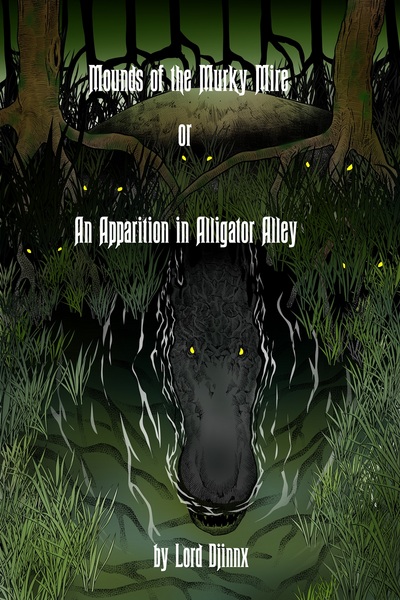
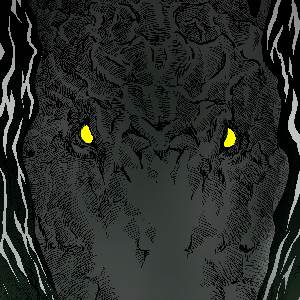
Back when the relationship was friendly between the two, the natives would tell them stories of monstrous caimans that were the size of 30 meters. The armor of these monsters was much more powerful than the force the guns could shoot, and thus something like a gun was useless against these monsters. The monsters were also quick. In the land you could possibly glimpse at one and it would snap your neck in half and feed you to their offspring, in the water? Forget about it. These dragons, as they were thought of by the Spanish, were the subject of worship by the natives for their power and prowess. The serpents, however, were even talk of legend to the average native. It was believed that the gators were the children of these monsters and that the monsters would only allow themselves to be shown to the great elders of the tribe. The Spanish, usually delirious from their fevers or in acclimation to the climate or drunk off their rum, would scream and collapse of insanity at the sight of a regular alligator, which our people would hunt instead. This would keep any intruders from entering any areas past the mounds. Regardless, our people could not hide from the Spanish, and we were quickly assimilated. When the British took over, we also learned their language, and Florida became something of a naval base to launch possible attacks into America, the Caribbean, Mexico, or maybe Argentina. These plans quickly dissolved, as you would know. The last speakers and practitioners of our religion were finally wiped out during the American Civil War. After the confederate states declared secession, we decided this would also be a good time for us to free ourselves and lead our own areas.
Unfortunately, it was not to be, as the Confederate army slaughtered our people and we were left to fend for ourselves until the Union army came to free Florida. Although it was difficult for the army of the Americans to reinforce the other side of the state without ships, the Union let the Confederates return to important positions in Florida and not atone for their actions, as they had to reinforce the other side with southern ships. Therefore, not much changed besides the massacres stopping, but the same men who decimated us would now rule us. It has been more than 40 years since those times and Florida began to grow as a tourist area and a place for new immigrants from Spain or the Caribbean to set up shop, as the weather is warm. But still, the same areas that are developed now, save maybe a few kilometers of encroachment, are the same areas developed by my forebears thousands of years ago and even today not much has changed.
I questioned my guide about how much longer it would be until we saw the mounds. He replied not long, as we scoured through the foliage and climbed deadfall to progress. We should definitely get there before nightfall, he replied. As we moved through the jungle, we were able to find an old Indian path that moves east-west that would follow us to the ancient structures.
The land is quite flat here, I remarked. If we could remove the foliage and trees, a railroad would easily be able to traverse this area. There really was not much that would need to be done once the area was altered to get the structures built. Finally, before nightfall, we made it to the native graveyard, and we could see the mounds close to them. The older burial sites had no ordination, but the newer native burial sites had crucifixes on them. My guide noticed that once he remembered coming here to bury his grandfather. We paid our respects and moved on to the mounds. They were large and round and appeared to be quite old and separated from each other by about 10 meters. Surveying the area to see all the different parts of the mounds, we wrote the following down.
The mounds are definitely of an old civilization. How old? I do not know how to tell. The land around it was populated by layers of foliage and leaves and vines. The mounds were separated from each other for about 10 meters each. They were also about 10 meters high, and altered in color from brown to tan to green.






Comments (0)
See all