
The village slept.
I didn’t.
I hadn’t closed my eyes since the moment the Velkar rode off. I didn’t need to. My body metabolized fatigue. My mind cycled in micro-rest states between actions—seconds of unconscious rest layered into hours of motion. Efficient. Continuous.
While they dreamed of safety, I worked. Quietly. Ruthlessly.
Because war wasn’t coming.
It had already started.
I moved through the night like breath through reeds.
My vision adjusted within seconds of dusk. The dim glow of torches and moonsilver on leaves became sharp outlines. Colors inverted in my mind. Warmth stood out like veins across a body. I could see the heat of an animal resembling a rabbit under a bush. The heartbeat of a villager sleeping too close to a wall. The sky was dark, but to me it was a map—clear, navigable, alive.
The forest didn’t fear the dark. I owned it.
By midnight, I had surveyed the southern approach, marked three high-ground choke points, and begun clearing space for traps. I didn’t use a torch. I didn’t make noise. My movements were too precise to stir birds from branches or snap a single twig. The creatures of the forest didn’t even flinch when I passed.
By the time the village began to stir—bleary-eyed, yawning—I had already:
-Dug two camouflaged trenches,
-Shaped sixteen sharpened stakes,
-Assembled a pulley-assisted rockfall trigger,
-And mapped an escape route should the defense collapse.
I stood in the center of the village as the first child rubbed sleep from his eyes.
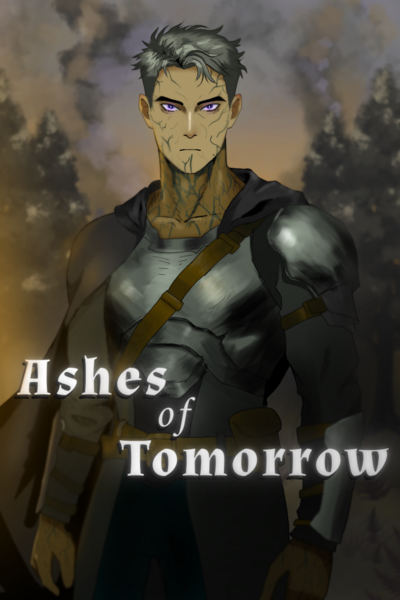
My hands were black with soil. My back slick with sweat. My eyes calm.
When Erek found me, I was hammering support spikes into a tree trunk for a makeshift signal perch. He stumbled as he approached, blinking in the morning light.
“You… you didn’t sleep?”
“I didn’t need to.”
He said nothing, just stared as I dropped from the trunk with a thud and began tightening the rope assembly. His breath was already labored from the walk.
More villagers arrived in groups—some with tools, others just watching. I gave orders without raising my voice. Measured instructions, simple tasks. I didn’t waste time with motivation. Most didn’t understand what was coming. I didn’t expect them to. They weren’t warriors.
They were assets—people I had to protect. Tools I had to sharpen.
They tried to help. They really did.
But their hands blistered quickly. Their cuts weren’t straight. They dug shallow, leaned too much on the wrong muscles. One man spent half an hour binding a rope that unraveled in seconds.
So I changed tactics.
I stopped assigning full tasks. Instead, I gave them fragments: tie this, lift that, move wood. One-directional labor. While they sweated through one pit, I dug three. While they braced a trap trigger, I built the mechanism by hand beside them—my fingers moving faster than their eyes could track.
I didn’t walk. I glided.
Action into action.
Calculation into motion.
No rests. No shakes. No breath wasted.
The old blacksmith said it aloud:
“He works like a ghost.”
They all heard him. No one disagreed.
That evening, I scaled the southern ridge again to place signal markers—small, mirrored shards arranged in spirals for reflection. I lashed one to the tallest tree, adjusted the angle precisely, and stopped to scan the distance.
Then I saw it.
Thin, rising, slow: smoke.
Not from a campfire.
From torches. Controlled burns.
The Velkar were clearing forest. Testing visibility. Getting closer.
A few hours. Maybe a day.
When I returned, I passed through the village in silence.
They watched me. The children didn’t play. The farmers didn’t look me in the eye.
They didn’t understand what I was. But they knew I wasn’t one of them.
I didn’t mind.
Let them feel that I was different. Let them wonder if I was a demon or god.
That uncertainty would keep them alive.
I sat near my forge, tools laid in a precise arc. My hands trembled—not from exhaustion, but from kinetic buildup. My body had more energy to burn, but no enemy to release it on.
Erek sat beside me quietly.
He offered a pouch of dried fruit. I took a piece and chewed, letting the sugars trickle into my system.
“You never stop,” he said.
“No.”
“Are you afraid?”
“Yes,” I said honestly. “But not for me.”
He looked down. Then back up. “Will we win?”
I didn’t answer.
I looked toward the forest.
And right then—a sound.
One sharp horn blast. From the trees.
The scouts were back.
Watching.







Comments (0)
See all