
Feb 8th, 3rd entry
I feel the need to apologize for my sloppy handwriting at the end of the previous entry, and for how abruptly my thoughts were cut off. I was under the mistaken belief that I was being assaulted by a pack of winged monsters, and I attempted to hastily scribble down an explanation instead of doing something more sensible, such as running for my life.
Thankfully, I was, in fact, mistaken. What descended from the behemoth’s back was not a pack of monsters, but a band of several Harpies. They seemed quite shocked to encounter a lone traveler on the steppe, and so they descended to ascertain my health, at first believing me to be comatose. After we exchanged some words, I found myself quite enraptured by the claims they made regarding their lifestyle and ended up accompanying them to their home.
This village’s name is Karryegeus. That is also the name of the behemoth I encountered. The reason they share a name is, of course, because the village sits upon the behemoth’s back. It consists of simple tent-like structures affixed to the behemoth’s back by ropes, hooks, and stakes. It seems the behemoth’s chitinous shell is so thick that they can fully wedge stakes into it without breaking through.
The harpies have formed a unique and harmonious relationship with the behemoths. They live on villages atop their backs and carefully track the behemoths’ movements, and have even learned how to influence the courses they take. They scavenge food from monsters and animals caught up in the behemoths’ movements and collect precious metals trudged up from their rampages.
The Harpies live off of a combination of scavenged meat, vegetables borrowed form Ovcharkan villages, and foodstuffs obtained from trade with the Ovcharkans and other travelers. Thanks to their flight, they can freely mount and dismount the behemoths without the monsters posing any real threat to them, and the behemoths’ massive size and absurd strength effectively protect the Harpies and their villages from other monsters, bandits, and the like. The Harpies seem to have formed a strong relationship with the Ovcharkan as well, as they help keep the behemoths from wandering through their villages.
This civilization is one that I believe may be completely undocumented, as it is one that has formed only very recently. While this is an unplanned detour, I cannot leave without dedicating further study to this unique culture. I shall remain with the Harpies for some time.
—Kirra
February 9th, 912
The Harpies hail from the nation of Ornishire, located in the southwestern-most corner of Kiyona. This nation has been the victim of several schisms throughout history regarding their involvement in the Holy Wars, and it seems that, upon the wars’ end, yet another schism occurred. Many of the Harpies were forced to flee their home; many went east, to the Valley of God, or northwest, to the mountains of Malmorr.
A third group planned to travel north along the Ovcharkan trail, headed for Gravalt and the Ciric Hills just as I am. Along the way, that group split, with some of the Harpies instead settling atop the behemoths and forming this unique lifestyle.
Harpies themselves are an interesting race of Demihumans. From halfway down the thighs and below, their legs are formed of keratin, similar to birds, and they have large talons in place of feet. In place of arms, they have large wings extending out from their shoulders.
Though Harpies take after birds, and indeed have feathered wings, the exact shape of their wings is actually more similar to that of bats. In particular, they have a single clawed digit atop each wing which can be used as a finger, though its practical applications are limited. Harpies can fold their wings together very efficiently; they stretch out to wingspans of upwards of four meters, but take up little more room than normal arms when completely folded.
It seems, in most cases, that Harpies primarily use their talons as hands, as opposed to the single digits on their wings. Harpy wings are quite tough and strong, and so when they need to stop and perform a more dexterous activity, they will usually rotate their wings upside-down and use them as sort of stilts, freeing their legs and allowing them to freely use their talons instead. I have worked with many Harpies in the past, but I never cease to be entranced by the way their bodies hang freely as they work with their legs.
The Harpies seem to be very deeply concerned with cleanliness, particularly when it comes to the ground; they have washed Karrygeus’s back several times today. I believe this is directly related to the fact that they must use their talons as both feet and hands. To aid in this, the Harpies have quite a few variations of unique shoes. The most popular variation is like a large sandal with a solid wooden pole suspended over the leather; their talons wrap around the pole like a miniature perch.
Harpy clothing is quite unique in general. Their wings and talons preclude them from using the same clothes as other races with more humanoid bodyplans, so they are forced to find more unique solutions. They wear shorts and skirts, but rarely seem to cover the keratin portion of their legs. It seems their talons are not as much of a hindrance as one might expect; their wings, on the other hand, are a significant complication.
Not only must they be able to equip their clothes over their wings, they also must still be able to unfold and flap their wings; this effectively makes it impossible for them to wear anything with sleeves. Many wear ponchos and dresses, similar to garments worn by Succubi; unlike the Succubi, however, their wings only extend from the shoulders, so they can also wear vests and other sleeveless garments.
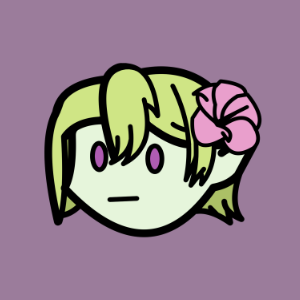
I ended up on a bit of a tangent regarding clothing, but I suppose I should also finish describing their appearance and abilities. In addition to their wings, some Harpies also have feathers in their hair, or entirely in place of hair; this trait seems to be genetic, to them something as simple as eye or hair color.
Harpies are rather unique among the races of the world in that some members exhibit different racial magic than others. Most scholars—myself included—believe that this is because the Harpies are actually two or more completely different races created by different Gods that were extremely similar by coincidence; their physical differences disappeared over time as the races intermingled, and now the only difference still passed down is the racial magic their children inherit.
Some Harpies are capable of manipulating their feathers to a certain degree. In addition to their impressive flight, they can will their feathers to harden into a metallic substance. If maintained for more than a brief moment, this hinders their ability to fly, but it is most often used in close combat to block attacks or to effectively transmute their wings into blades. They are also capable of detaching their feathers at will; this is often used in combination with the ability to harden feathers to turn them into lethal projectiles.
The other form of racial magic exhibited by some Harpies is a powerful voice. It is oft said that the scream of a Harpy can be heard for miles, and that is only a slight exaggeration. They are capable of producing incredibly loud sounds with their voice, and of condensing the area of the produced sound, to the degree that their voices can be used as blunt weapons. Some Harpies instead use their mastery of voice in a different way, producing soothing sounds that can put their enemies to sleep.
Karrygeus is inhabited by a roughly equal number of Harpies of both types, so it seems the conflict in Ornishire was not motivated by race or heritage. The two types seem to fulfill different roles; those who can manipulate their wings are generally hunters, while those who can manipulate their voice are the ones capable of influencing the behemoth’s movements, and as such are generally in charge of affairs in the village.
—Kirra
February 10th, 912
After spending around two days on one’s back, I have began to ponder about the fate of the behemoths.
According to the Harpies, they have established villages on eleven of them. They are unsure if there are any more across the steppe, but it is unlikely. That means the population of this species is under a dozen.
They are absurd, monstrous, and destructive creatures, yes, but I believe the behemoths have just as much a right to exist as any other. Nobody knows how the behemoths reproduce, or if they even can. Nobody knows their lifespan. One day, we could wake up and find that all of these massive creatures are simply gone. Is that not a little sad?
There have been a number of cases of creatures, particularly monsters, which simply ceased to exist throughout the Holy Wars. Some were driven to extinction by the calamities of the war—the scorching of Kiyona alone is likely responsible for at least half of the extinctions that have ever occurred—but in most other cases, the creatures died out because the Gods that created them simply didn’t grant them a method of reproduction. Once there was no longer a God to repopulate them manually, the last of the species grew old and died out.
I believe it is quite likely the behemoths are one such creature. They were initially created by one of the Gods around a century into the Holy Wars, designed to uproot cities and spread terror. As I mentioned before, there are no records of behemoths ever mating, and the creatures also do not appear to have genitalia—given their size, they would be difficult to miss. The Harpies have also told me that they go to great efforts to keep the behemoths away form each other; they seem incapable of recognizing their own kind and will almost always try to kill each other.
I cannot help but see it as a rather tragic fate. These creatures were created solely as beasts of war, and now that their masters are gone, the only thing keeping them from slaughtering each other is the grace of the very people they were created to kill. Their time on this earth is strictly limited by their lifespans, and once they are gone, we will likely never see one again.
My people, too, were created for war. In another life, could I have not been blessed with the ability to raise a child?
I will write to Cyrus, I think. I hope he is doing well, back at home.
—Kirra






Comments (0)
See all