
“Some people leave too early, others stay too long”
Jennifer’s notebook
Jennifer
Looking up at the sky between the trees, I listen to the soft, romantic chords of Nes’s guitar.
“You know, if you were a man, I would marry you,” I say, turning to her, watching her short chocolate curls catching the sun.
“You say that all the time, but I know if I were a man, I wouldn’t be your type,” she smiles faintly without missing a note. “You aren’t my type either.”
She never raises her voice. Her words always come out with the same soft confidence.
“Just let me dream.”
I stare at her. She looks like something out of a song herself, hearty, soft, calm. She’s wearing a thin white cardigan and a lilac sundress that flows around her like petals, snagged slightly on the grass. The color is beautiful against her olive skin, her almond eyes half-closed in that dreamy way she gets when she plays. The sun catches the faint freckles scattered across her nose.
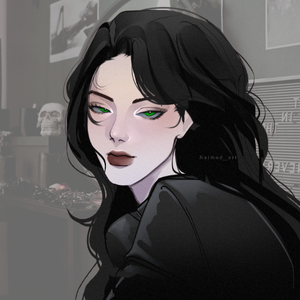
She is the kind of girl people write love songs about. Soft colors, lively, wholesome. The kind of beauty that shines without even trying. Next to her, I’ve always looked like a shadow. Quiet, black fabric covering my skin, dark circles under my eyes no matter how much I tried to hide them. Even so, my body never goes unnoticed. It doesn’t matter how much I cover it, what I say or do. Men never miss a curve, and they always try to reach, whether I allow it or not.
Her voice, steady and warm, pulls me out of the thought before it can spiral further.
“Thank you for coming. You didn’t have to,” she says, her amber eyes finding me.
“You hurt me,” I tell her, feigning offense. “I started this tradition. We’ve been doing it for twelve years now. How could I miss it?”
I glance at Mr. Solis’s tombstone. “Right, Mr. Solis? You would be mad at me if I missed it, wouldn’t you?”
She laughs lightly, her fingers never faltering on the strings.
The reason I believe in love is because I have seen it. Mr. Solis was ridiculous about it, always rehearsing cheesy songs just to serenade his wife.
An Argentinian music producer who lived like he was trapped inside a romance movie. He adored his wife and daughter. He and Nes practiced a new song each month and performed it in their living room.
Being in Inés’s house felt like oxygen after drowning. It gave me hope that maybe something better could exist.
“He would never be mad at you,” she says, as the song ends.
“I know. He was too good,” I let the words slip out, low.
He really was. And he left too soon. A heart attack. Since that day, her mother hasn’t been the same. She banned music from the house, as if silence could drown grief. Wouldn’t let Nes play. Wouldn’t even let her mention him. As if the pain would disappear that way.
They had been rehearsing a song for weeks. One they planned to perform that very day. But that song died with him.
At the funeral, Inés wanted to sing. Of course her mother forbade it.
“Miss Solis,” I said, voice soft, “my mom would pick me up in an hour. I’ll stay with Inés a little longer. We’ll take her home.”
A lie. My mother never had time for me.
“Okay. Don’t come home too late. Call me if anything happens.” Right. As if she’d answer.
Inés cried without stopping. I sat beside her, placed the guitar in front of her, and began to sing. I’m not a great singer, but good enough not to be booed off karaoke. I didn’t look at her. Just sang. After a moment, her tears slowed. Then, trembling, her voice joined mine. We spent the next hour singing all his favorites.
The following year, no words were needed. Same spot, same time. She sang all those cheesy, romantic songs in Spanish. It became our tradition.
In the distance, a car door shuts, the sound pulling me back to the present.
“What about the man over there?” Nes asks, her voice slicing through the memory like a bow across strings. I follow her gaze and find him.
Enzo leans against my car, smoke curling from the cigarette between his fingers. He looks like he stepped out of a black-and-white film, the kind of man who carries storms in his chest, too broken to save, but too magnetic to look away from.
The rolled sleeves, ink peeking out from the open collar, his throat bare in the sunlight, the sharp lines of his posture, the way the muscles in his forearms flex as he smokes, and the mess of dark hair falling into his eyes make him look too fucking good. I hate that I notice every detail.
He insisted on coming, so I asked him to stay in the car.
Of course he didn’t.
Our eyes meet for a second too long. He winks. Heat crawls up my neck before I can stop it, and I turn away instantly.
Inés nearly drops a chord, her eyes going wide for a beat before narrowing in playful mischief.
“Oh my God, you are blushing.”
I hate that I cannot control it.
“I think you are delusional. He is… a friend.”
“Claro.” (Sure.)
“It is true.”
“Por ahora.” (For now.)
“So how is your fiancé?” She shifts in her seat and absently rearranges the sleeves of her cardigan, something I find slightly off.
“Josh is fine, thank you for asking. But even if you change the subject, it doesn’t change the fact that you’re still blushing. And he looks exactly like your type.”
“Yes, he does,” I admit quietly. I bite the inside of my cheek.
“And his name is…?”
“Enzo.”
“And what gang did you steal him from?”
Even sweet Inés caught the danger in Enzo. To her, he must look like another mob guy, cut from the same cloth as Gino. But he stands outside of it, answering to no one. Strangely, it feels safer.
“I delivered a painting to his house.”
Her strumming slows, her amber eyes steady on me.
“Jenny, watch yourself. I did not like it when you were with that other mob guy either.”
“Gino and I never ‘were’ something. And Enzo is not a mobster.” I think.
She lifts her head slowly, letting silence gnaw at my words.
I have never stood up for anyone. No one ever mattered enough.
“Did you fuck him?”
“Classy as always. But no.”
“So, do you really like him?” It sounds more like a statement, soft but insistent.
I stay silent. The pause stretches, heavy. Inés narrows her eyes, that look she makes when she smells a secret.
I know she sees it. She knows me too well.
“Yes,” I say quietly. The music stops. She stares at me for a beat and smiles wide.
There is no reason to deny it. She glances toward the car.
“I don’t know what you are waiting for,” she whispers. “He is looking at you so intensely.”
I do not turn. I do not have to.
His gaze is a weight between my shoulder blades.
“He has to prove himself.”
“Prove what?”
“That I can trust him. That he will be…” I stop. I don’t dare say it out loud.
I know Enzo’s interest is not superficial. He looks at me like he truly wants. No, like he needs to see everything. It unsettles me, but I secretly crave it. The way he notices what everyone else ignores: the tension in my shoulders, the silence between my words, the shadows under my eyes.
His gaze strips me bare in ways I have never allowed, and the worst part is that I want him to keep going. I want him to look deeper, to tear away every layer until there is nothing left to hide. Everyone before him was just noise. Boring. Predictable. No one ever dared to peel back my masks.
Attraction clearly is not the problem. Wanting him is easy. But trusting him, letting him inside the walls I built to keep them from breaking me again. That terrifies me.
“Jenny, be careful,” she says.
I turn to her with a tired smile, the one people mistake for peace.
“As always.”
So careful it hurts. So careful I sometimes wish I could shatter, just to stop holding it all together.
Trust blindly.
Live without bracing for impact.
But I never can.
Inés watches me for a moment longer. Then, softly, she strums the first notes of Algo Contigo. They rise from her guitar, fragile and tender, curling through the silence like smoke.
“¿Te acordás? This was one of his favorites.”
I nod, grateful for the shift. Though Enzo’s presence lingers, heavy as a new ghost in a cemetery I already know by heart.
Eventually, I forget he is there.
I let myself fall into Inés’s voice, the guitar, the lyrics that speak the truths I never dare to say out loud.
Love without fear.
Without conditions.
Without doubt. I have felt it with my brothers. It has kept me alive.
But I secretly long for something else.
A love that stays. A love that chooses me. Unconditional. The kind of devotion that does not waver.
An hour later, I watch her drive away.
I stay behind. Still. Quiet.
I turn toward Mr. Solis’s gravestone and read the words etched in stone:
Amado Padre, esposo y hermano. (Beloved father, husband, and brother.)
And I ache.
For what I never had.
For the kind of father who held the door open as if I belonged.
For the man who saw the quiet sadness in me and called my mother so I could stay a little longer.
One single tear slips down my cheek before the pain behind my eyes commands restraint.
I breathe. Once. Twice. Steady. Controlled.
No breaking.
Not today.
I dry the tear with the back of my hand and force myself to move, gathering plates, napkins, silverware. Letting motion distract me from the painful knot in my chest.
The cemetery is silent except for the warm wind brushing through the trees, the air thick, heavy enough to cling to my skin.
But when I reach for a fork, a large tattooed hand gets there first.
“Let me help,” he says softly, his voice roughened at the edges but gentle in the way it reaches me.
My gaze falls to his hands, two engraved rings gleaming on his left, one circling his ring finger, the other on his middle finger. On his right, a heavy signet ring rests against the middle knuckle, silent and worn, a secret he carries everywhere.
Enzo gathers everything with the same care I would, placing each thing exactly where it belongs. Just the way I like it.
I stay seated for a moment longer, trying to steady myself while I watch him move. Calm, precise, as if he knows my need for order by instinct.
When he is done, he extends a hand toward me. I hesitate, then take it, letting him pull me to my feet. His hand is warm and rough. The contact is brief, almost cautious, as if neither of us knows what to do with it.
“Thanks,” I breathe out, pretending not to notice how quickly he lets go.
We walk to the car in silence, the weight of the moment still between us.
He loads the trunk and moves to the passenger side as always. He never seems to mind leaving the driver’s seat to me. But this time, I stop and offer him the keys. My fingers linger for a second before I let them go.
He takes them without a word. But I know he understands the weight of it.
He lingers for a moment after adjusting the seat, his grip on the wheel tightening for a second before he asks, “Can we stop somewhere first?”
I nod.
The music fills the car. Outside, the sunset paints the world in hues of gold and violet. He does not ask anything else. He just drives.
We stop at a small French bakery. Enzo disappears inside and returns with a box in his hands. The moment he opens the door, the scent of butter, chocolate, and fresh bread wraps around me like a blanket. Without thinking, I take the box from his hands and open it. Inside: croissants and chocolate bread.
“It was my mother’s favorite bakery,” he says and starts the car again. I hold the box like a treasure. I look out the window. We are not taking the way home.
“Where are we going?” I ask finally. He does not look at me, but there is a smile playing on his lips.
“You mentioned you had never been to a drive-in theater, because they never play those ridiculous movies you like.”
I turn to him, frowning, confused.
“Yeah?”
“You said going alone seemed depressing.”
My heart skips. “Well, it is,” I admit, my chest tight.
“I have never been to one either,” he adds, lighting a cigarette as we stop at a red light. “So I thought, why not kill two birds with one shot?”
I glance at him, biting back a smile. “It’s one stone, not one shot.”
He exhales smoke, unbothered. “Same thing.”
I sit up straighter, the corner of my mouth tugging despite myself. “There is actually a showing?” My heart beats out of rhythm.
“You would be surprised how persuasive money can be,” he says, letting the smoke drift out like it means nothing, as if he hadn’t just detonated something at the center of my chest.
I turn toward the window, hiding the smile, the blush I cannot fight off.
The radio hums low until Carla Bruni’s voice spills through the speakers. Quelqu’un m’a dit drifts in the air like smoke, curling between us like a secret I am not ready to face.





Comments (0)
See all