
The first thing I became aware of was warmth. Not comfort—comfort implies peace, and there was none. This warmth was heavy, cloying, wet, like being submerged in syrup. Something pressed to my chest, something soft beneath my back. I couldn’t see, couldn’t speak, couldn’t move beyond the twitch of new muscles still learning their limits. The world was too loud, too bright, and yet too far away. I was trapped inside flesh.
And then I heard her. A voice, raw and trembling, crackling like fire on the verge of death. Soft, but impossibly close. She was holding me. That much I understood even then. Her arms shook, her heartbeat fluttered like a dying bird’s wings, and every word wavered with her breath. “Be better than them…” she whispered.
I didn’t recognize her voice, but the desperation wasn’t new. I’d heard it before—in the lips of dying men in alleys, in the sobs of women who saw too late, in my own reflection once, if I stared long enough. There was no love in her voice, only fear. Not of me—but for me. She died before she could say anything else.
I didn’t scream. Babies scream. It’s expected. Needed. The servants waited with baited breath for that first sound. But I simply stared at them with wide, too-quiet eyes, slick with blood that wasn’t mine. I blinked. Once. Twice. They thought I was in shock.
They placed me in a crib lined with white satin and lace, as if softness could make rebirth less horrifying. A mobile spun above me, stars dangling from golden threads, turning endlessly to a lullaby with no melody. For days—maybe weeks—I did nothing but watch. I didn’t cry. I didn’t babble. I didn’t reach. I observed.
The ceiling beams. Flickering candlelight. The blur of hands feeding, cleaning, adjusting me. I cataloged them all by scent, by voice, by the cadence of their footsteps. One set I saw most often: a woman with neat fingers and a rigid smile. She never cooed, never called me sweet names. She spoke plainly, moved efficiently, as if I were a task. She was my nanny. Lady Ilyra, I would learn later. To her, I was not precious; I was a responsibility, and I liked her for that.
Time moved strangely in that crib. Days bled into one another like ink on damp parchment. Sometimes birds sang outside. Sometimes thunder rolled. Inside, there was always quiet, save for soft voices of women who never spoke to me—only around me. They whispered about my stillness, my silence, my lack of joy. “She doesn’t act like a baby,” one said. “She watches us.” “She’s too still,” another murmured. “Maybe something’s wrong with her head.” No, I wanted to tell them. Something’s wrong with yours. I was a man two months ago. A man with a favorite knife and a body count so high it stopped being poetic. But I had no voice. So I watched.
Let me clarify: I wasn’t a killer out of vengeance, desperation, or trauma. I killed because I liked it. Because it made things quiet. Watching someone’s eyes go still gave me a rush that food, sex, music, and books never could. The world was full of dull noises, but death? That was silence. Sweet, satisfying silence. They called me the Butcher of Black Hollow. Poetic. Stupid. I never used a butcher’s tools. I was precise. Eventually, they caught me, and death came by injection. No ceremony. No words. Just sting, and darkness swallowing me whole. But I didn’t stay dead.
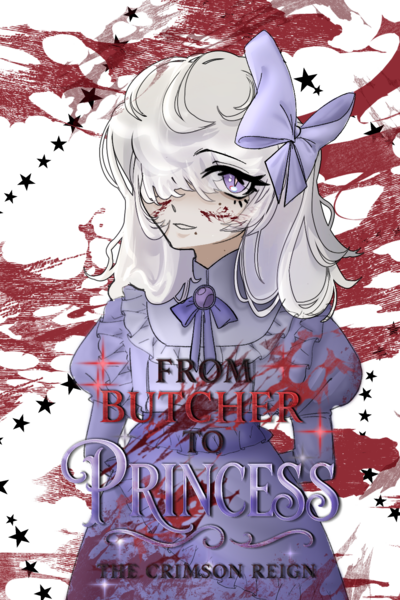
Weeks after I learned to sit upright, Ilyra brought a mirror to brush my hair. I met a stranger in the glass. Big pale violet eyes. Porcelain skin. Silvery-blonde hair that caught the light like frost. A little girl. I blinked slowly. You’re not me. But you are now.
When I was alone, I practiced moving—not like a baby, but with intention. Holding my fingers still. Reaching with precision. Mimicking maids’ smiles, the tilt of their heads, Ilyra’s sighs after long days. They thought it was cute. They thought I was learning to be human. But the truth was I was learning to wear humanity again. And I wore it well.








Comments (0)
See all