
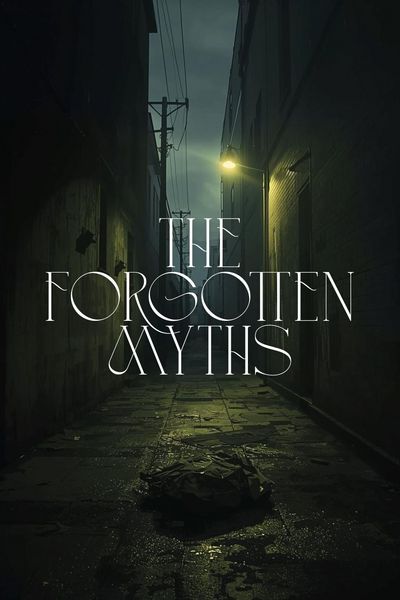
There’s a space in my city that shouldn’t exist—a narrow hallway wedged between two buildings that were supposedly built wall to wall. No official address, no entryway, just a crack that widens when it wants to be found.
I first saw it on a night when I was too tired to notice anything strange. I’d stayed late at work, missed the last train, and decided to walk home through the old commercial district. The street was mostly empty storefronts and scaffolding—construction wrapped in the illusion of progress. That’s when I noticed a strip of yellow light leaking from the gap between a pharmacy and an apartment complex. It wasn’t the cold white of fluorescents or the amber of streetlamps. It was warm, flickering, like candlelight reflected on glass.
I almost kept walking. But curiosity is a disease that pretends to be courage.
The gap was just wide enough to slip sideways. My shoulder brushed brick on one side and plaster on the other. The walls seemed to lean in slightly, as if sharing a secret I wasn’t supposed to overhear. The further I walked, the warmer it got. A faint hum threaded the air—something between an electric buzz and a heartbeat.
Halfway through, I realized the light wasn’t coming from ahead—it was coming from the walls themselves, glowing through hairline cracks in the mortar. I turned back. The entrance I’d come through wasn’t there anymore, just a continuation of the same narrow passage stretching both directions.
I took a step forward. The hum deepened.
When I reached what I thought was the end, the hallway opened into a small landing with a single wooden door. No knob, no handle—just a rectangular pane of frosted glass set into its center. Something moved behind it, like a shadow pacing.
I knocked, because that’s what you do when you forget every other rule.
The shadow paused. Then a voice, muffled but clear, said, “You’re early.”
I froze. The voice sounded familiar—too familiar. It was my voice.
I backed away, stumbled, and nearly fell against the wall. The floor vibrated once, a pulse that traveled up through my shoes. The light in the cracks flickered, brighter now, like a heart straining.
When I looked again, the door was gone. The hallway stretched ahead endlessly, a tunnel of dim yellow veins. Behind me, the way out had returned, but farther than it should’ve been—as if the distance between here and the street had grown while I blinked.
I ran. The light followed, keeping pace beneath the surface of the walls. When I finally emerged back onto the street, the air felt colder, newer. The city around me looked almost right but slightly off: the pharmacy sign spelled differently, the graffiti unfamiliar. My phone said it was 2:14 a.m. I’d checked the time before stepping in—it had been 11:48.
I’d lost two hours.
A week later, I went back.
It wasn’t there.
I walked the same block twice, then three times. Between the pharmacy and the apartment complex was nothing but a seamless line of brick. I even measured the distance on the city map app—it was exactly 4.8 meters, no void, no passage.
That night, I had a dream of walking through the hallway again. The same hum, the same glowing cracks, but this time I wasn’t alone. There were footsteps behind me, perfectly in sync with mine, like an echo made of flesh. When I stopped, they stopped. When I turned, the light behind me flickered out, one crack at a time.
I woke up with grit under my fingernails that smelled faintly of damp brick.
A friend of mine, June, works for the city archives. I told her about the place. She humored me at first, but the next day she sent me an old scan from a 1947 zoning map. In tiny, handwritten letters between the two lots was a label: **SERVICE CORRIDOR – TEMPORAL ACCESS.** It was crossed out with red ink.
June thought it was some planning joke. I didn’t.
That night, she texted me at 3:02 a.m.:
> “I went to see it. It’s there. Don’t come.”
Then her typing indicator blinked, stopped, and her messages vanished—unsent. When I called, her number gave a disconnected tone.
The next morning, she showed up at work as usual. Same face, same voice, same sarcasm. But she didn’t remember sending any message, or even me telling her about the hallway. When I insisted, she laughed and said, “You must be mixing me up with someone else.”
I checked her badge later—it listed her start date as **October 12, 1947.**
June is thirty-two.
Since then, people have told me similar stories. A courier who lost a package between two buildings that don’t touch. A homeless man who said he slept in a hallway that “smelled like tomorrow.” A woman who claimed her sister walked through once and came back knowing things she shouldn’t—birthdays, funerals, secrets still waiting to happen.
Some say it’s a glitch, a leftover scaffolding from when the city rebuilt itself after the war. Others say it’s a breathing space in time—a joint between realities that flexes whenever no one’s watching. But the old janitors in the district call it something simpler: **the returning corridor.** You can leave through it, but you never come back to exactly the same place.
Last night, walking home after a storm, I saw the light again. Faint, between the same two buildings, pulsing like a heartbeat under gauze. The urge to enter was almost physical, like gravity bending sideways.
I stood there for a long time. The air tasted metallic, the way it does before lightning. Somewhere deep inside, the hallway hummed.
I didn’t go in. I just raised my phone and took a photo.
This morning, when I checked my gallery, the picture wasn’t of a narrow gap—it was of an open corridor lined with dozens of doors, each glowing softly, each labeled with my name in handwriting I didn’t recognize.
The timestamp on the photo says it was taken **three days from now.**
If you ever find that narrow space between two buildings—the one that hums, that breathes—don’t walk too far in.
It doesn’t lead you somewhere else.
It leads you back—
just not to the version of you that left.








Comments (0)
See all