
Chapter I
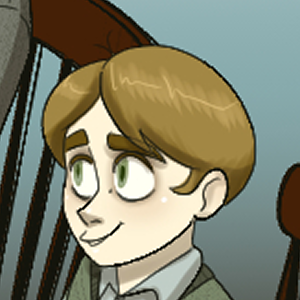
MILO
1937
Life before the Führer was indeed a time of chaos. Germany had just lost the Great War, and our economy was in a rut the likes of which had never been seen—ever—and I was born in 1921, right at the beginning of it all.
I was too young to remember, but I often heard the stories. Inflation skyrocketed, and folks really did have to take wheelbarrows full of Papiermark to buy one loaf of bread. It was the sort of absurdity that destabilizes an entire nation—the sort of thing an autocrat lies in wait for.
Then—as if it couldn’t possibly get worse—the crash of the United States’ stock market brought the rest of the world down with them. Soon, economic turmoil similar to ours was felt around the globe, and what was already happening to us became twofold. The Depression affected my family, of course, but a lot of what I remember from that time is—thankfully—not terrible.
 I grew up in Württemberg, on the outskirts of Reutlingen, not far from the Swabian Alps, where the people are still close to nature and live a simpler life. My father was from Baden, but before the War, he had moved to Württemberg to get some independence from his family and a job far away from agriculture. My mother spent her entire life in Reutlingen before she volunteered as a nurse for the War.
At the Battle of Verdun, my father was grievously injured, and his leg was amputated. This was when he met my mother. She was the one who nursed him back to health, which led to them falling in love, I suppose. It would seem my mother might think twice before marrying a crippled man with few prospects, but she wasn’t the kind of person who saw things that way. The two of them had much in common, namely their deep faith and dedication to the Catholic Church.
My eldest brother, Otto, was born in 1917. Then there was me, and following that, my sister, Lorelei, in 1925. Last was Max, who was born in 1929—right at the time of the big crash.
Before the War, my father had been a talented machinist at a factory, and despite his injuries, he tried to continue such work when the War was over. For a time, he used crutches and a false leg and went to work until he couldn’t any longer.
Then came the hardest times, when my parents went hungry so we children would have full bellies. Luckily, my father had always been a spendthrift and a saver, and my mother was a skilled seamstress. It wasn’t beyond her to get a job, and as she worked her way up at the local clothing factory, everything stabilized. This was how things were for as long as I could remember: my parents, my siblings, and I making ends meet, but not suffering as much as some did.
Lurking in the background, waiting to take advantage of the suffering of our country, however, was Adolf Hitler. As soon as any unrest was felt, which wasn’t long after the Treaty of Versailles had been signed, there he was, promising to right the mistakes of the Weimar politicians if he and his National Socialists could be in charge.
At first, they weren’t taken seriously. Many thought they were buffoons—crazy. Surely no sane person would let such radical nationalists have any place in a civilized government. But hunger and desperation change people, and this has been true for much of humanity’s history since the dawn of time.
 Eventually, many folks became fed up with the Depression and what they thought were empty promises from the Republic. How would they feed their children? Clothe them? Belgium and France continued to put pressure on us to repay for the damage we’d caused during the war, but our economy couldn’t keep up. Then the Depression continued the relentless suffering. We couldn’t seem to catch a single break, and it’s easy to see how people could become dissatisfied. Restless.
Meanwhile, others still—angry about the aforementioned grievances—agreed with Hitler’s ideas about Germans being superior. He leaned into the narrative that we were being unfairly persecuted and we needed to blame everyone else for our problems. After all, it’s easier to blame others than it is to take a long, hard look at yourself—especially when a devil with a silver tongue gives you the permission to do so.
Then there were moderate folks like my parents. They never forgot how years earlier, Hitler and his followers had unsuccessfully staged a coup during the Beer Hall Putsch. After that, how could anyone trust someone to lead a government after such a treasonous act against democracy? They told themselves there was no way such extremism could push out sanity and reason.
They were wrong.
Once Hitler gained control of the government and became the Führer, even people like my parents eventually relented to the new status quo. Many more were able to ignore things that didn’t affect them directly. As long as there was some improvement over the Republic, what was so bad about giving up on the rights of others?
Not to mention, it was exhausting to weather the barrage of crises after crisis. First, the Reichstag burned. Then the Communists were blamed for doing it. Then, in an attempt to keep order, the government had to be consolidated. Habeas Corpus suspended. All for our “protection”, of course. Always it was our so-called “enemies” out to get us. The Communists. The trade unions. The intellectuals. The Jews.
Pretty soon, people began to live from day to day. Focusing on providing for their families and existing became enough. And so came the complacency.
I hadn’t even turned twelve yet in January 1933, when the Führer became Chancellor. Complacency was perhaps all I knew how to feel then, and it was how I felt for years after. Politics aren’t something a young boy thinks about, after all. However, there came a time in my life where everything changed for me. It was 1937, and I was sixteen years old.
That year, my father died.


Comments (0)
See all