

Chapter II
The late November morning was cold, everyone’s breath a cloud of steam. Above us the sun was bright, but its warmth was weak and it was low on the horizon at that time of year. I stared up at the church before me. As long as I could remember, it had been like a second home, but now it felt alien.
Mama adjusted her hand on my shoulder, the slight movement bringing me back to the present moment. She stood to my left, clad in all black, and kept her handkerchief close. To my right was Otto. His face was paler than usual, and his expression was unreadable. It was a massive change from the smile he usually wore. Lorelei and Max walked in front of the rest of us, and I could hear Lorelei trying to hold back her tears, while Max allowed himself to cry.
Further down the funeral procession, the pallbearers carried the casket. They were my father’s five brothers and one of my older cousins. It was unreal to see them, faces solemn and dressed in black suits—and I could hardly even think about them bringing Father’s body to the church. I tried not to look at the casket and I even let Mama and Otto walk ahead of me to be further back. For the rest of the procession, I stared at the ground, focusing on my polished black shoes and the cobblestones beneath them as I walked.
Once inside the church, though, it was impossible not to acknowledge its presence. As the immediate family, we were seated in the front pew, and the casket was placed in the middle of the aisle next to us. Right there. Covered in a white shroud with a dark red cross. It felt like the placement was intentional, to force me to accept that he was really gone—but I didn’t want to.
Losing him that way was hard, even if it had seemed inevitable. We harbored no illusions about Father being the pinnacle of health. His injuries from the Great War were something he always struggled with, and began to exact a bigger toll on him starting in 1934. That was when he could no longer go to work, and became confined to his wheelchair. Then he grew weaker and weaker, until everything took a turn for the worst in the spring of 1937. It seemed that injuries unseen could lie dormant until there was nothing that could be done.
The doctor said it wasn’t tuberculosis, but rather a kind of lung cancer. Apparently, mustard gas still destroys the lungs despite wearing a protective mask, and over time that damage can worsen. The doctor had seen it with other veterans before. The sins of the War coming back to haunt us, perhaps.
It was a terrible way to go. Ensuring Father’s comfort was all that could be done for him. Then there came a time when even that was futile, and it wasn’t long before he was gone. Everything that happened after was like wading through a dense fog—like nothing was real anymore—and the guilt I felt was immense.
Father and I had never been particularly close. I was born sickly and with a hare-lip, which was expensive to correct, and although the surgery fixed the most debilitating parts of the condition, I was still left with scars and speech impediments I had to overcome, and I remained weak and small. My impairments reminded Father too much of himself, so that drew his attention more to Otto: the child who was strong and ambitious.
This, of course, built a resentment in me for my brother and especially Father. When I became a teenager, the resentment grew to the point where Father and I were constantly butting heads. I was soft-spoken and non-confrontational, so this manifested as passive-aggressiveness and—well—semi-deliberate indolence.
As I sat there in the front pew of the church, staring vacantly at the casket, I couldn’t help but think of a time when I was thirteen and I was sitting in our living room on a cold winter afternoon, drawing. From the time I was young, I had a fascination for birds. I can’t explain why, any more than I can explain why I was obsessed with memorizing city maps or the types of trees that grew in the places I liked to explore. All I know is I liked to draw all these things that fascinated me, and I needed to draw a picture of every species of bird I saw.
That time, it was a nuthatch that had landed on our window sill.
“Milo!”
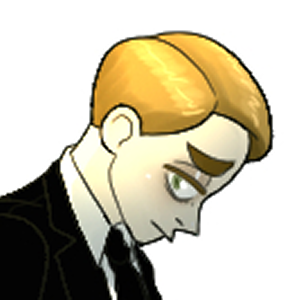
I flinched at the sound of Father’s voice, then turned to see him entering the room in his wheelchair. His hair, usually neatly parted down the middle, was falling in the front, and his face was flushed in anger.
“What are you doing?” he demanded. “Just sitting around in here, doing nothing?”
“I saw a bird on the window sill, and I wanted to draw it,” I explained, as if that would be a good enough excuse.
It wasn’t. Father was unamused and unmoved. “Your mother asked you half an hour ago to help your brother chop firewood!”
Then I remembered she had, and I—as usual—had forgotten. Maybe I could memorize every street and every species of bird, but things I needed to remember? Well—I had an opposite talent for forgetting things like that.
“There’s a storm coming,” Father went on. “Otto’s out there all by himself! And you know full well I can’t help him!”
“I’m sorry—I—I got distracted— ”
Father scoffed. “Distracted? You’re always getting distracted! Forgetting things! Being lazy! It’s time you grew up and took some responsibility around this house.”
And that’s how things went between us those days: Father yelling at me for having my head in the clouds and constantly comparing me to my brother. Otto is almost five years older than me, and the two of us couldn’t be more different. He’s the ambitious sort, driven, and always wanting to make people like him. On the other hand, my younger self was oblivious to the thoughts of others, and I only wanted to spend my time drawing out in nature away from people.
As I look back on this, I realize Father was just worried for me and didn’t know how to express it without being harsh. Growing up on a farm with five brothers and four sisters couldn’t have been easy for him, and I think these experiences made him rigid in his way of thinking. Compared to his upbringing, I had it much easier even with the Depression, and I had many opportunities he didn’t.
However, Father could see how bleak society had become so quickly. I was lazy and air-headed—and those were traits the Party despised, because they didn’t make for productive members of the Volksgemeinschaft. I bet it terrified Father that I’d have to leave the comfort of home someday to live on my own in the world they’d created.
At the time of Father’s death, though, I didn’t have the perspective to come to these conclusions. I thought I was nothing but a disappointment to him, and then he was gone—gone forever— without a way for me to ever make amends. Or that’s how it seemed at the time, anyway—and this made it difficult for me to even process what I was feeling.
As I sat there, with the colored light from the stained glass beaming down on me, the emotion that stood out the most was still the guilt. Then, for some reason I couldn’t explain, anger. Lastly and hidden the deepest, there was profound sadness.
I glanced over at Mama. She cried, her shoulders shaking, mascara running. Between Mama and I, Lorelei and Max both cried too as the priest proceeded with the requiem. For a split second, I thought I might join them—allow the emotions to exit me in sweet release—but something stopped me.
To my right, Otto sat, his grey eyes straight ahead. There was a solemness to the way he witnessed the requiem, but no tears. I had the choice then: to control my emotions or allow them to control me. To be a young man, like Otto—or a boy. And what sixteen-year-old wants to be considered a boy, even if that’s exactly what he is? So I decided not to cry. I saved that for later when we arrived home, after all the aunts and uncles and cousins had left.
Alone in my room, I tried to hold it back, but it ripped out of me anyway. A flood of painful, uncontrollable sobs wracked my entire body, and I cried until I thought, maybe, there was nothing left of me. I was relieved I had waited until no one could see me. It was the kind of thing that would’ve brought me unwanted attention. I already felt guilty enough. I didn’t want anyone to think I was being weak too.
 I decided then I would finally become responsible like Father had always wanted. In the days after the funeral, I observed Otto. Not once did he cry or feel sorry for himself. Instead, he concentrated on being there for others. Since he didn’t fall apart, it meant Mama had someone she could rely on, which helped her out immensely. So I started to do the same. I wasn’t social like Otto, so I didn’t join Mama to converse with relatives who were in town. Instead I picked up chores around the house, and I tried to make sure Lorelei and Max were doing all right.
This became my new normal, especially since Otto soon had to leave. Ever since he’d finished his tour with the Reich Labor Service the previous year, he had been living in Stuttgart where he worked Daimler-Benz. He sent money back to us, visited on weekends and holidays, but for the rest of the time, he was gone. The dynamic of this changed a few months after Father’s funeral.
One weekend when Otto was visiting after New Years, he announced to us that he’d gotten a raise, and had been moved to a better shift. Something about the foreman taking him under his wing, or whatever. He’d also been saving up and was looking to leave behind his flatmates to find a townhome on his own.
“Mama,” he began as we all sat at the dinner table, “how’s your work been going?”
She stared at him from across the table. Her hair was a mess, dark circles around her eyes, and and it was obvious all the extra shifts she’d been taking since Father’s death had been wearing on her.
“It’s fine,” she lied with a forced smile.
“Well, still—I had a thought.”
“What is it?”
We all leaned forward to listen and Otto smirked. “What if you all came to live with me in Stuttgart?”
“Stuttgart!” Lorelei shouted. “I don’t want to live there! It’s so big, and—and what about my friends? It’s too far away from them.”
While I couldn’t relate to all of my sister’s sentiments—I had no friends to speak of—I knew she was still like me in some respects, and change scared her just as much as it did me. I was about to chime in with my disagreement too, but then I met Mama’s eyes. There was a fresh light in them I hadn’t seen in months. She glanced around at our small house. It was the only one I’d ever known, but even I had to admit it was haunted by memories of Father. He’d suffered here, wasted away until he died here.
“Just think about it,” Otto said, his voice filled with his unwavering optimism, “wouldn’t a fresh start do us all some good?”
At first, Mama wasn’t sure about it, but as the month passed the idea grew on her. Then by February she’d already decided she didn’t want to spend another Easter in that house. By March, Otto had found the townhome he and Mama wanted and we were set to move in.
“I don’t want to move to Stuttgart!” Lorelei shouted. We were all sitting around the dining room table as we had been discussing the move in date. Mama gave Lorelei a look of pity, but she didn’t say anything. She hugged Max closer to her as he sat on her lap, trying not to cry into his large, round eyeglasses.
“I just can’t!” my sister went on.
Otto kneeled down to be level with Lorelei and placed a hand on her shoulder. “Don’t worry, Lori,” he said gently, “everything will be fine. Just think of it as an opportunity to make some new friends.”
“But, Otto,” Max said sheepishly, “what if we can’t make any new friends?”
Otto laughed. “That’s preposterous, Max. You both are kind and polite. You won’t have any trouble at all.”
“What if the people in Stuttgart are mean?” Max asked.
“There are mean people everywhere, but there are also nice people everywhere, too.”
Mama sighed. “I know this won’t be easy for all of us, but we’re a family and we stick together.” She smiled as she leaned forward to snuggle us all into a group hug.



Comments (0)
See all