
Suncrest’s training alarms slept in their cradles for once. Ootori had enforced a half-day—“You are not useful if you are sleepwalking and heroic,” she’d said—and the ops floor agreed by being quiet enough to hear vents breathe.
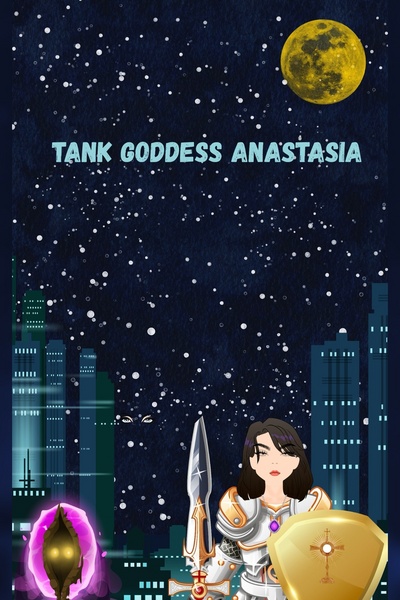
Anastasia Shimizu was not sleepwalking. She was standing in front of a locker mirror, debating between two versions of the same white haori: one with a gold edge (official), one with a softer cream thread (human). She chose the cream. The Aegis shield leaned against the bench like a patient dog. Strictly speaking, she didn’t need it for tea. Realistically, Tokyo had a sense of humor.
Her HUD pinged a gentle nudge.
“Soft voice is standard,” Kana said from the doorway, chewing an energy bar she didn’t need. She leaned on the jamb, all grin. “You’re pretty even when you’re trying not to be impressed with yourself.”
“I am precisely impressed with this seam,” Anastasia said, smoothing the hem. “It lies.”
“That’s what we like in fabric,” Kana said. “Also, I took the liberty of setting your status to ‘Do Not Disturb (Unless Mythic).’”
Raina appeared behind Kana, mug in hand, hair up, the universal sign for I’m not intruding, I’m just here now. “I have a scope grant meeting at four. Should I push it in case you need me to run interference on paparazzi?”
“I can handle polite,” Anastasia said.
“That’s the problem,” Raina said, amused. “The city believes you and shows up.”
Miyu texted: I’m out front, no rush. I found a quiet table. They remember you.
Anastasia’s shoulders loosened. “She’s early,” she said, as if that were a fact worthy of a smile (it was).
Kana mimed a courtly bow. “Go. Be romanced. If a Bronze pops, text me and I’ll suplex it somewhere considerate.”
“Do not suplex in front of children,” Raina said.
“I never do,” Kana protested, already suiting up for precisely that.
The tea shop in Ebisu used birch wood and dusk light to invite people to exhale. At the counter, the barista looked up and nodded like they had all agreed to keep the myth of normalcy alive. Miyu was at a window table, a book closed under her hand, a half-finished cup of yuzu matcha. She looked like a small, well-kept secret and then she saw Anastasia and stopped being secret, lit softly from inside.
“You’re early,” Anastasia said, because honesty is a good appetizer.
“I didn’t want the day to decide to be clever while I wasn’t looking,” Miyu said, then flushed, embarrassed by the poetry of it. “Also the chiffon sells out.”
“It won’t today,” Anastasia said, voice warm enough to convince pastries to behave. She ordered two slices, two fresh cups.
They began with small domesticities: was the hospital fruit basket safe, did Ootori eat the durian (no), would Raina’s silenced clappers make her bullets too quiet (“We still need consent from physics,” Miyu said dryly). The conversation did the good date thing: it convinced the air they’d known each other longer than they had.
At some point, the tea arrived. At some point, Miyu laughed in that gently startled way she had when joy ambushed her from a polite angle. And at some point Anastasia realized that the ache under her shoulder—the one that lived there since some January when a gate had opened over a kindergarten—was quieter simply because Miyu’s fingertips brushed the table close to hers.
Her HUD, traitorous and sweet, offered an overlay.
“Do you ever turn it off?” Miyu asked, eyes flicking to the faint reflection of numbers in the window.
“I pretend to,” Anastasia said. “But mostly I learn to let it be a caption, not the story.” She tilted her head. “May I ask you a question that is not about war?”
“Yes,” Miyu said.
“Why healing?” Anastasia asked. “You are very good at it. But you could have done anything. People with your hands end up building towers or playing piano in expensive rooms.”
Miyu sipped. “It’s not a sad story,” she said, warning gently. “My grandmother ran a clinic in Nagoya. She had a sign by the door that said: Please bring your own honesty. I thought that was rude when I was six. By ten I understood. By eighteen I wanted it in every room I entered.” She set the cup down. “Healing is a conversation with cells. They don’t lie. They tell you they are hurt or tired or confused. You answer. I like the honesty of that.” Her mouth tugged, self-teasing. “Also I am very persuasive with platelets.”
Anastasia’s laugh was small and real. “I like the way you talk about work. Like a craft and a kindness.”
Miyu’s fingers turned her cup. “Why tanking?” she asked. “Beyond the obvious ‘you can and that helps.’ Why stand there?”
“Because every city has children and bakeries and hospital atriums that smell like coffee trying its best,” Anastasia said without thinking about it. “Because someone told me once that a wall is just a promise with good posture. Because I am very bad at leaving when people think leaving is polite.” She exhaled. “And because I am, in an unsexy way, stubborn.”
Miyu made the soft sound again, the one that felt like sunlight on quiet shoulders. “It’s extremely sexy,” she said, and surprised them both.
Anastasia smiled, slow and grateful. “Thank you.”






Comments (0)
See all