
The morning harbor air sat heavy in the lungs.
It tasted of rotting kelp and old oil—a thick, wet paste coating the throat.
A rusted crane shrieked.
Market noise vibrated through the soles of boots as a low-frequency hum.
Cold water dripped from overhead pipes.
It hit the shoulder of a worn coat, the chill seeping through the fabric seconds later.
Thick clouds choked the sun.
The city sank into a wash of ink-spilled grey.
Two sets of footsteps ground against the pavement.
One rhythm bounced—rubber soles.
The other dragged—heavy leather.
The two shadows moved with a strange, tethered distance through the crowd.
The boy with the light step peered at flopping fish on a stall.
A hum vibrated in his throat.
Beside him, the man ran a thumb over the thin leather of a wallet.
The skin between his brows tightened.
"Hey, question."
The boy turned.
He swiped at the wet air.
"I want breakfast. Not the 'apologize to God for eating this' kind. The 'grateful to be alive' kind. Does that miracle exist in this rust-bucket country?"
The frivolous voice nearly tore apart in the market din.
The man exhaled the stale air from his chest.
His eyes scanned the perimeter.
"It exists. Check the back page of your brain’s fantasy list. Hunger is the world's most honest chef. And the cruelest."
The boy grinned.
He jerked his chin toward a stall at the end of the alley.
White steam spewed from it.
Herbs boiled in a cauldron.
Fish offal dissolved into a thick grease stink.
It smelled savory.
It also smelled like rot.
"...This soup is an archaeological mystery. One sip, and the ceiling might collapse on us. Nice. It smells like consequences."
The man pressed a palm to his forehead.
A dull throb pulsed there.
"Your appetite is terrifying. If you survive the meal, thank God then."
They sat.
The counter creaked under their weight.
The wooden bowls held a sludge that rippled heavily.
The boy swallowed fast.
The man tested the tip of a spoon cautiously, like a poison taster.
Silence lasted three seconds.
Then, throats spasmed.
Coughs hacked against the market noise.
Tongues went numb.
Stomachs contracted around a hot, heavy stone.
Eyes watered.
They reached for water.
A wind carried a scrape of noise from across the market.
Moo... ...spoke...
It was a vibration of air, not quite a word.
A laugh filtered down to its coldest sediment.
The man froze.
The spoon stopped halfway to his mouth.
Two gazes sharpened and crossed.
"Dead men talking? Fantastic. When I die, I'll curse the Prime Minister. I’ll recite your boring war stories to him for eternity."
"Perfect. I’ll throw you into the middle of the army, let you distract them, and retreat. Your mouth is a tactical asset."
Customers around them chuckled at the banter.
The sound froze instantly.
Someone looked up.
The wind died.
Laundry hung limp like surrender flags.
The laughter echoed, but the eyes were glass—cloudy, unfocused.
They looked through the two men, staring into the void.
"Laughing mouth, dead eyes. Did they borrow those eyes from hell? Is this the new fashion?"
"...Recession affects facial muscles too. Hell probably has cheaper rent."
The man’s tone was flat.
A dry laugh escaped the boy.
But their eyeballs moved, alert.
Attention snapped to a bulletin board across the street.
Fresh paper rustled there.
Royal Army Recruitment.
Northern Front.
Equipment loaned.
No return guarantee.
"Recruitment... I’ll pass."
"Good. I can already see you getting shot by a superior officer for insubordination."
Boots slammed behind them—hard impacts.
A soldier hammered a new notice over the old ads.
The paper pulled tight.
Thick letters read: Travel Restrictions to Mu Strengthened.
Silence suffocated the square.
"MPs. Nervous bunch."
The man spat the words.
The boy stared at the fresh paper.
His eyes narrowed.
"Mu, huh... I’ve wanted to go there."
"Hunting for dead storytellers?"
"That works."
The boy shrugged.
His laugh dissolved into the damp wind.
He tapped the ground with his toe and stepped toward a crack of sunlight.
The man smiled grimly at the back of the boy's head.
He turned up his collar against the damp and matched the pace.
The noise faded behind them.
The wind returned.
Flags swayed lazily.
People resumed breathing, their eyes still dead.
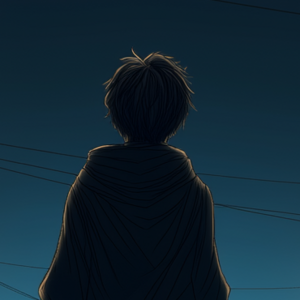
In the grey landscape, only two backs held a sharp outline.
Stride differed.
Sound differed.
But for one second, the wind blew through the gap between them, and the rhythm synchronized.
Without a destination, they moved forward.






Comments (0)
See all