
That afternoon bore witness to a truth: a human heart could be crueler than the Devil.
Kneeling at the boots of the towering man before him, Reymund lifted his face, meeting the man’s eyes without fear—even with his life at the cliff’s edge.
“Remember this day,” the man shouted. “The day Kamura swore eternal service to Ashira. This pact was signed by your own leader—the founder who saved you from ruin. Break it, and you spit on his sacrifice.”
Reymund’s fists clenched harder than the ropes that bound him. They had forced him to kneel like an animal. His eyes burned with hatred. He did not regret helping Ashira; he regretted being foolish enough to let the village he once saved become the hand that destroyed his home.
For years, Kamura and Ashira had lived side by side in peace. Reymund kept every promise. He gave generously to a people on the brink of extinction, and Ashira repaid kindness with kindness.
Even when Ashira learned to stand on its own, Reymund still sent Kamura’s bounty as a sign of friendship, and sometimes Ashira sent back a little of their harvest in return.
All that peace ended when Sodom fell gravely ill. Not even Kamura’s best healers could save him. The man Reymund had called brother died.
In Sodom’s place rose Mora, his younger brother. Under Mora, Ashira grew fast—too fast.
What Reymund never knew was this: Mora quietly bent Kamura’s knowledge and resources toward war.
They chose steel over seed. They forged weapons, drilled boys and grown men alike, and even made explosives from sulfur and charcoal taken from Kamura’s caves.
Reymund told himself Mora was young—merely shoring up Ashira’s defenses. Cold as he was, so unlike his brother, surely he had no evil for Kamura in his heart.
On Kamura’s festival night, Mora came—armed Ashirans at his back. Reymund did not know when the powder had been scattered through Kamura’s heart. He only knew that, by nightfall, the village was a sea of fire.
He watched with his own eyes as his wife and children fell to Ashira’s arrows. Elders he revered vanished in flame. Little ones screamed.
The long night refused to end. At dawn, Mora dragged Reymund like a beast and forced him to accept a senseless treaty.
It said Kamura must toil to deliver harvest at the start of every month; Kamura must not set foot in Ashira except to give tribute; Kamura would be Ashira’s subject forever.
That morning, Reymund had no strength left to fight. His soul still reeled at the bodies of those he loved. As if it were not enough, Mora ordered his men to torture Reymund and threatened to take Kamura’s daughters and children to Ashira as slaves.
Reymund knew the choice would scar Kamura, but he had none. What could one man do when Ashira burned his village to the ground?
When he asked Mora how he could betray Kamura, the man’s gaze was ice.
“The sky is unjust,” Mora said. “Ashira and Kamura are split by a single forest, yet the sky cursed us and blessed you. This is only a matter of who betrays first. Before Kamura strikes, Ashira must move.”
His words made Reymund shudder. Never once had he dreamed of attacking Ashira. Mora didn’t care. He called it protection for Ashira’s future.
To Mora, Sodom’s kindness had been naïve. What if Kamura changed its mind and refused to help? What if someday Kamura turned and yoked Ashira as slaves?
For years Mora had watched his brother and sworn that if he ever led, Ashira would never know hunger or pain again.
“Remember, this treaty was written with Reymund’s blood and life!” Mora’s roar snapped Reymund from the edge of his thoughts.
Reymund clenched his jaw, teeth chattering with rage. This was his fault. He should have heeded the elders and learned not only to survive, but to make Kamura strong.
Kamura was abundant, but weak. They could not loose an arrow; they could barely swing a stick. In his chest, Reymund screamed: Kamura’s ruin was his failure to protect it.
“Let Reymund’s death be Kamura’s warning,” Mora declared. “If Kamura breaks the pact or dares to resist, this night will return.”
Mora raised his hand and cut downward through the air.
At that signal, the executioner behind Reymund lifted a great blade and swung it at his neck.
To his last breath, Reymund made no sound. He looked to his people—wailing, weeping—and shaped an apology on his lips. He forced a smile. He wanted them to remember this, that to his final moment he loved Kamura, and that from the sky above he would keep watch.
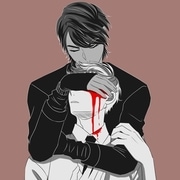
Screams split the air. The man who had been Kamura’s angel fell, blood pouring across the ground. His body stilled; only the red kept flowing from a neck nearly severed.
The executioner did not stop until the head came free.
Without a flicker of guilt, Mora seized Reymund’s hair and raised the head high. “Remember this day until the day you die.”
And that day, Reymund’s head was left hanging in the village square of Kamura, where the earth still stank of smoke.







Comments (0)
See all