
Ira entered the lecture theatre.
LT1.
It was currently empty—and that worked perfectly for her, considering her lecture was scheduled in LT2, directly beside this one. She could switch rooms quickly once it was time, no frantic sprinting, no awkward late entrance with a laptop and iced latte in hand.
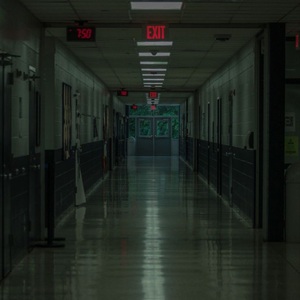
The room was dark.
Usually, even with the blinds drawn, enough daylight seeped in that the hall was never completely black. But today, with the sky hanging low and heavy and the weather determined to be miserable, the inside of the lecture theatre was pitch-dark.
She stepped inside, instinctively angling toward the switchboard by the side wall. She didn’t remember which switch controlled what, so she did what any reasonable person would do and flipped all of them.
The lights snapped on in uneven rows, illuminating the right side of the hall first, then spreading outward in a harsh white glow. The rows of seats emerged from the darkness, one after another, like something being revealed rather than lit.
She scanned the room and chose a seat in the first row. Close enough to the podium to feel official. Within five minutes, she was settled—laptop open, bag slung beside her, phone tucked neatly into the space beneath the table. She popped her earbuds in, aggressive pop already blasting into her ears.
Just like that, the world ceased to exist.
Ira had a bad habit. Once she put her earbuds in and got absorbed in something, she lost all situational awareness. She was the kind of person who, once fixated, wouldn’t notice if the building caught fire around her.
Normally, that was a liability.
Right now, it was an advantage.
She got things done when she was in her zone.
For a solid twenty minutes, she was the best version of herself—efficient, focused, uncharacteristically non-procrastinating. Slides assembled themselves with satisfying speed. A DSM-5 criteria table here. A concise definition there. A perfectly chosen meme about anxiety dropped right in the middle, tasteful but funny.
She was in the flow.
The kind of hyperfocused state where time warped and the outside world became irrelevant. She barely noticed her fingers moving across the keyboard, barely registered the glow of the screen against the dim hall. She was just deciding whether adding a short case study toward the end would push the lecture over time when her phone vibrated.
She frowned slightly and pulled it out.
An alarm.
3:50 p.m.
The safety alarm she’d set precisely because she knew this would happen.
Right. Time.
She exhaled and moved faster. The case study had to go. Too long. Just as she was searching thank you slide aesthetic on Pinterest—
She felt it.
Not a sound.
Not exactly.
It was more like… the air changed.
A shift. A subtle wrongness. As if the pressure inside the hall had suddenly adjusted, like something had entered the space and displaced the air around it.
She paused.
She took one earbud out.
The music cut abruptly, leaving behind a silence that felt thick, heavy, oppressive. The quiet rushed in to fill the void left by the screaming pop track, settling over the lecture hall like a weight.
She listened.
Nothing.
Her eyes drifted upward, scanning the rows of seats.
That’s when she noticed it.
The lights at the very back of the hall were off.
She frowned.
That was strange.
She was fairly certain she’d switched everything on. She distinctly remembered flipping all the switches at once.
A prickling sensation crept up her spine.
The remnants of the song she’d been listening to—Lotta True Crime by Penelope Scott—kept looping faintly in her head, the lyrics clinging stubbornly to her thoughts. The coincidence did nothing to help the sudden drop in temperature she felt, as if the room had gone colder by a few degrees.
“Hello?” she called out.
Her voice echoed, thin and small as it was swallowed by the rows upon rows of empty chairs.
Ira’s voice never sounded small.
There was no response.
Just silence.
And the faint ghost of lyrics still playing in her head.
As if on cue, a loose lock of hair slipped free from her tie and brushed against her ear. The movement triggered the touch-sensitive earbud.
The music exploded back to life.
They took our girls away from home,
they’re in the woods, they’re all alone—
“Shit—” she hissed, fumbling to pause it.
It didn’t help.
As if the hall itself had been waiting, the remaining lights began to flicker.
Once.
Twice.
Then, in rapid succession, the entire lecture theatre plunged into darkness.
“Fuck—”
She fumbled for her phone, flashlight flaring on as she simultaneously stabbed at the volume button. The beam of light cut through the dark, illuminating only a narrow slice of the room.
Then—
A thud.
Heavy.
Dull.
From the far, elevated end of the hall.
Something had fallen.
Or someone had stepped.



Comments (0)
See all