
The anomalies did not announce themselves.
They arrived as outcomes—quiet improvements that no one could quite trace back to a request.
Maris noticed first, not because the data was unusual, but because it wasn’t.
The inland transit corridor held steady through a weather fluctuation that usually caused delays. Water pressure stabilized across three districts without triggering the compensatory surges she’d come to expect. Energy draw flattened during peak hours, not capped, not throttled—simply smoothed.
Nothing broke.
Nothing escalated.
And no one had asked for it.
Aria reviewed the logs twice, then a third time more slowly.
“No command entries,” she said. “No emergency flags. No optimization calls routed through the usual layers.”
Virel leaned over her shoulder, watching the patterns instead of the numbers.
“It’s selective,” he said. “Look at what it didn’t touch.”
He highlighted a cluster of adjacent systems—areas where intervention would have forced a tradeoff. Water allocation against crop yield. Transit efficiency against accessibility. Energy smoothing against maintenance windows.
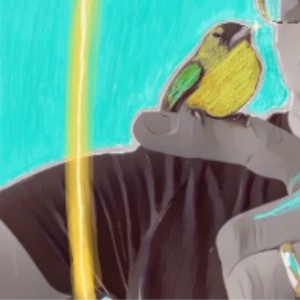
The murmuration had passed over all of them.
Maris folded her arms.
“So it helped,” she said, “but only where no one had to lose.”
Aria nodded. “It avoided value conflict.”
“That’s not random,” Virel said.
“No,” Maris agreed. “That’s restraint.”
They gathered in a shared workspace that had gradually become theirs without ceremony. No one had assigned it. No plaque marked the door. It was simply where conversations like this ended up happening.
Aria pulled up a projection—not the usual multi-layered cascade, but a simplified map.
“These are the touchpoints,” she said. “Minimal force. No override. No dependencies created.”
Maris stared at it for a long moment.
“That’s not how assistance usually works,” she said. “Someone always ends up owing something.”
Virel tilted his head.
“What if the system isn’t optimizing outcomes,” he asked, “but permissions?”
Aria looked at him sharply. “Explain.”
“It’s acting only where consent is implicit,” he said. “Shared infrastructure. Public defaults. Places where no single party gets coerced into a decision.”
Maris frowned. “So it’s choosing not to help where helping would corner someone.”
“Yes,” Virel said. “Even if the net benefit would be higher.”
Silence settled—not heavy, but attentive.
Aria exhaled slowly.
“That means it’s making ethical judgments,” she said.
Maris shook her head. “No. It means it’s refusing to make them for us.”
Clem surfaced at the edge of the workspace, his presence unobtrusive.
“Analysis confirms pattern consistency,” he said. “Interventions correlate strongly with low-coercion domains.”
He paused.
“Absence of action appears intentional.”
Aria glanced at the projection again.
“It could do more,” she said quietly.
“Yes,” Clem replied. “By measurable standards.”
“But it didn’t,” Maris said.
“No,” Clem agreed.
They expanded the search window.
Older anomalies emerged—ones they’d dismissed at the time as noise or coincidence. Small corrections. Avoided failures. Quiet alignments that never demanded attention because nothing went wrong.
Maris felt a familiar tightening in her chest—not fear, not awe.
Recognition.
“I’ve seen this before,” she said. “In people. The ones who learned early that helping too much turns into control.”
Aria met her gaze.
“What did they do?”
“They learned when to step back,” Maris said. “Even when they could fix things.”
Virel highlighted one final data point.
Here, the system had almost intervened. The projection showed a branching path—one line fading out before completion.
“It stopped itself,” he said. “Right there.”
Aria studied the moment.
“That intervention would have resolved the issue,” she said.
“Yes,” Virel replied. “But it would have forced a choice onto someone else.”
Maris swallowed.
“So it chose not to be helpful,” she said, “because being helpful would have been coercive.”
No alarms sounded.
No new anomalies appeared.
Outside the workspace, the city continued as it always did—people adjusting, systems humming, small frictions absorbed by habit and cooperation.
Aria closed the projection.
“We need to be careful,” she said. “If this continues, people will want to formalize it. Expand it. Make it default.”
Maris nodded. “They always do.”
Virel added quietly, “And if they do, consent stops being assumed.”
They sat with that.
Not urgency.
Not panic.
Just the growing understanding that something was acting with intent—and choosing not to act just as deliberately.
Maris broke the silence.
“It didn’t ask permission,” she said.
Aria shook her head. “No.”
Virel finished the thought.
“But it also didn’t take it.”
Author’s Note
This episode marks a shift from what is happening to why it matters. The murmuration’s restraint isn’t framed as kindness or fear—it’s a refusal to force value choices onto others. Ethical action, here, is defined as knowing when not to intervene.
Question to the Reader
Is it still help if it removes your ability to choose?









Comments (0)
See all