
Director Amara Harrow sat alone at the war council's circular table, steel-gray eyes fixed on the holo feed, the thin scar at her temple – where the neural graft had failed years ago – catching the cold white illumination. Her posture was perfectly rigid, as if she believed composure might hold the world together.
She watched the holo feed loop through the after-action highlights of Asset M-137’s latest sortie. Her eyes flicked from the simulated bodycam—Mana’s impossible velocity, her habitual mercy-kill for the surrendered Jäger—to the line graphs dancing in the periphery: heart rates, neural load, the spiking and flattening of an alien signal pattern. Somewhere in the upper corner, a ghost of her own reflection watched, gaunt and tired, jaw locked against the ache in her teeth.
The walls of the chamber were blank metal, curved slightly to defeat acoustic echo and ensure no sound lingered beyond the instant it was spoken. On every surface, the cold was absolute; not even the thermal loading from the overhead LEDs dared persist for more than a second. Harrow preferred it this way—no comfort, no distractions, just the machinery of decision making.
When the double doors at the far end hissed open, she did not look up. She heard, instead, the careful arrangement of bodies and egos: a measured footstep, a cough into a sleeve, the quick shuffle of boots as subordinate minds sorted out hierarchy before entering a room designed to have none.
They filed in, one by one. Most she knew by face, though the War Council’s makeup shifted with the politics of fear and favor. General Riou took his seat first, shoulders squared against the memory of some childhood parade. To his right, Deputy Consul Jain set her tablet on the table and instantly began composing imaginary notes. After her, two more: the SERE doctrine chairman, face glazed with sleep deprivation, and a civilian observer in the burgundy of Security Oversight. Four humans, and the memory of thousands stacked beneath every badge and star.
Harrow let the silence stretch, savoring the discomfort.
The table ran the new data loop again. Mana’s helmet cam, blood spray rendered clinical by grayscale filters; Mana’s hand, lingering on the Jäger’s corpse in that unsettling gesture of respect before the kill; the post-mission bio readouts—impossible spikes, then serene calm, as if Asset M-137 was less a person than a device engineered for zero emotional drag.
Jain, always the first to crack, broke the hush. “Director. This came in from orbital?” She tapped her stylus in three precise clicks, a tic that became more pronounced when the news was bad.
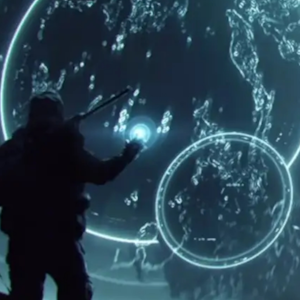
Harrow nodded. “Twelve hours ago. Surface mission was routine—until this.” She gestured, and the table threw up the key segment in translucent blue. Mana, running point, facing the hybridized Jäger; the impossible moment of stillness as the alien offered a fragment of itself; the flash of blue light and the signal spike that cut across the entire surveillance spectrum.
Riou's jaw tightened. He didn't need to ask what it meant. The muscle in his neck twitched once.
“It’s not just embedded,” Harrow said, voice low. “The integration was clean. No failover, no mutual sabotage. Both neural systems ran in parallel, without conflict. They shared bandwidth, even in combat.”
Silence. The SERE chairman, eyes flicking with REM-sleep microbursts, muttered, “It can’t work. Their protocols are fundamentally incompatible. The Collective and the Hunters have never—” He trailed off, as the holo replayed the handshake again, and the logic kernel in his head failed to keep up.
“It’s impossible until it isn’t,” Jain said. Her tone was meant to be dry, but it quivered at the edges. “So what’s the play? What are they building?”
Harrow smiled, without humor. “That’s the next slide.”
She tapped her own panel. The table’s projection shifted to a rapid cascade of intercepted transmissions—stripped of context, raw and ugly. The first, in the sharp staccato of the Jäger command structure; the second, a woven electromagnetic pattern from the Kollektiven’s broadwave. Both cycles converged on the same cluster of terms. The auto-translate rendered them in simple text, one after the other.
“‘Die Schwelle.’” Jain read aloud, then translated. “The Threshold.”
Riou grunted. “What threshold?”
“It gets better,” Harrow said, and cued the next. This one was a fragment from an old Erben crypt, cracked in a forensic cold-case after years of futility. The word was different, but the translation close enough to burn.
“‘Eden,’” said the SERE chairman, voice paper-thin.
They stared at it, as if daring the word to explain itself. On the table, the projection morphed: three lines, converging. The Kollektiven called it the Schwelle. The Jäger, in their war-poetry, had named it ‘the Hunt of Hunts.’ And the Erben, silent for a thousand years, had whispered only ‘Eden.’
All three factions were searching for the same thing.
Harrow watched the realization settle across the table. Riou pushed back his chair with too much force, metal scraping across stone; the SERE chairman dropped his pen and didn’t bother to retrieve it. Jain’s hands, usually so steady, trembled just enough to betray her as she clasped her stylus in a white-knuckle vise.
“If they’re aligned on goal,” Jain said, voice cracking at last, “if the Collective and the Hunters are willing to work together… then the war is over. We lose.”
“No,” said Harrow, quietly. She reached over, tapped the table to mute the playback. “Not unless we get there first.”
The civilian observer, who had said nothing, finally spoke: “Even if we do, what’s to say Eden is real? What if it’s just another myth, like the endless siege, or the self-replicating dreadnought?”
Harrow turned to the civilian observer. "It doesn't matter if it's real, Security Oversight Kwan," she said, meeting the woman's gaze directly. She let her tone cut, clinical and cold. "It matters that all three are willing to slaughter sectors to find it. If we sit back and hope it's a fable, we get erased. If it's real, and they get there first—" She shrugged. "Same result. Erasure."
Jain blinked, composing herself. “And Asset M-137? Where does she fit?”
Harrow allowed herself the barest hint of pride. Her teeth clenched against the satisfaction. “She made contact. She’s not just a vector—she’s the only entity in any database who has survived first contact with both, and walked away.”
Riou was the first to say it, though the truth had been circling the table since the door first opened. “She’s the weapon. Or the key.”
Harrow looked down at her own hands, smooth and steady under the table’s antiseptic glow. In the glass, she saw the reflection of the war room, the faces of her colleagues twisted by the optics, the blue light etching every flaw in their skin.
Somewhere, in the locked cabinet of her memory, her daughter's face flickered—small, dark-eyed, six years old and clutching that ridiculous stuffed octopus as the evac shuttle doors sealed between them. The last child evacuated from Colony Seven before the Kollektiven consumed it. The daughter she had chosen to save by staying behind to ensure the launch. Harrow pressed the thought down with practiced efficiency, a wound cauterized so many times it barely bled anymore, and watched the feed loop again.
The lights in the chamber cycled from white to blue, marking the end of their window. The doors hissed open again, awaiting the next crisis. Harrow sat in place, as the others filed out, and watched the holo feed stutter, freeze, and then loop, replaying the same moment of contact—Mana’s hand reaching for the alien, the blue flash that bathed both in the same cold light.
For the first time since the old wars, Harrow felt the urge to pray. Not to the Erben, or to Eden, but to the space between signals—where, for a moment, every enemy in the universe wanted the same thing, and it was up to her to decide which hands would take it first.
She wiped the thought, rose to her feet, and stepped into the corridor. The lights behind her faded to black, the war room resetting to zero for the next round.
Harrow stood alone at the table, the war room once again reduced to shadow and glass. The aftertaste of panic lingered in the air, a chemical haze left by too many breaths squeezed through clenched teeth. She cycled the chamber’s lighting to neutral, dispelling the blue. For three long breaths, she watched the data loop from Mana’s mission, repeating the moment of contact—again, and again.
The doors at the far end chimed for entry.
She did not need to check the access log. Elias Kaplan entered like a rumor, his pace neither hurried nor languid, his face a cipher that had always unsettled the other directors. He wore the scientist’s version of dress uniform: black turtleneck, dove-gray lab coat, and a single strip of silver denoting his status as Principal of Bio-Adaptive Warfare. He moved as if the council chamber belonged to him by default, even when summoned.
Harrow did not greet him. She gestured, and the table woke, displaying a frozen frame of Mana’s helmet cam: the moment the hybrid Jäger offered its arm, blue crystals glowing at the wrist.
Kaplan stopped at the opposite side of the table, hands folded behind his back. He regarded the image with mild curiosity, as if studying a painting hung slightly askew.
Harrow wasted no time. “Explain to me,” she said, “why Asset M-137 consistently survives exposure to every known vector—biological, cognitive, memetic, and now this.” She tapped the table, advancing the footage: the handshake, the spike, the refusal of any hostile reaction. “She’s not shielded, not quarantined, not even running the standard neural interdicts. And yet—” another tap, another frame “—she comes back. Untouched.”
Kaplan’s lips twitched at the edge, not quite a smile. “Director, you know as well as I do that the word ‘untouched’ is… subjective. Her records are a tapestry of trauma and deliberate wounding.”
Harrow felt the urge to crack her knuckles, but she kept her hands still. “Spare me the poetry, Doctor. None of our other operatives last three months, let alone three years. Jäger, Kollektiven, Erben proxies—she survives first contact and returns data. Every time.”
Kaplan nodded, almost pleased. “It’s fascinating, isn’t it?” He leaned in, examining the blue glow on the Jäger’s skin. “I ran the numbers. Statistically, she should have failed, or been repurposed, at least five missions ago.”
“So why hasn’t she?”
He straightened. “Because they let her go.”
Harrow let the silence hang. It was a strategy, but Kaplan seemed to savor it, drawing out the gap with slow, savoring breaths.
She broke it with, “All three? Even the ones with no concept of mercy?”
He nodded. “Especially those. We’ve seen Kollektiven terminate assets who present any risk of infection, even their own kin. But M-137? They avoid her. The Jäger—a society built on predation—has had six clean chances to harvest her core. Each time, they stopped short.”
A flicker of movement in the corner of her vision. The security observer had entered silently, standing just inside the doors. Kaplan gave no sign he noticed.
Harrow pressed: “Are you suggesting the asset is compromised? Suborned? Because if you are, I want the neural audit run before the next cycle.”
Kaplan smiled, wide enough to show a flash of teeth. “Not suborned. Not in any way we have language for. If anything, the opposite.”
He reached out, tapped the table, bringing up a 3D reconstruction of Mana’s Core—the surgical implant, the nest of synaptic wires. Harrow watched as Kaplan rotated the model, highlighting areas of regrowth and scar tissue, the abnormal density in regions linked to empathy and social cognition.
“She’s changed,” he said, quietly. “It’s not just trauma, not just adaptation. There’s something else. Something iterative. Every contact, every exposure—her brain rewires, but it never collapses. It never rejects itself.”
“Are you suggesting—” The thought caught in Harrow’s throat, too strange to finish.
“I am,” said Kaplan. “She is a bridge. A living interface.”
The security observer, whose presence was meant to be passive, could not resist. “A bridge to what?”
Kaplan’s smile sharpened. “To whatever all three are seeking. The Threshold, the Hunt, Eden. Call it what you like. They see themselves in her, and it scares them.”
Harrow studied the model. In the microstructure of Mana’s Core, she saw the echoes of the alien blue, the shimmer of the Kollektiven’s neural lattice. “You think she’s becoming one of them?”
“No,” Kaplan said, voice gentle. “I think she’s becoming something else. And I think they want to know what it is.”
Harrow glanced at the observer, saw the reflection of fear there, and relished it for a moment. Then she turned back to Kaplan.
“Doctor. What do you recommend?”
Kaplan considered, then shrugged, almost boyishly. “Let her run. See what she finds. And pray that whatever is on the other side of the Threshold likes us better than the last three did.”
The war room was silent, except for the low hum of the air cyclers. Harrow stared at the data model, at the blue glow blooming in the simulation, and for a brief, shuddering second, she saw the future—the war not ending, but simply turning itself inside out.
She shut down the display. “Very well,” she said. “You’ll draft the orders. Priority zero. Find Eden, before anyone else does.”
Kaplan bowed, just enough to be insolent, and walked out. The security observer lingered, but when Harrow met her gaze, the woman averted her eyes and slipped away.
Harrow was alone again, surrounded by the echo of her own voice.
She did not pray this time. She watched the blue light fade from the table, and the shadows that followed, and she wondered which version of the end would be the most merciful.
Harrow caught her reflection in the dead table surface. The face that looked back had forgotten how to soften.






Comments (0)
See all