
*** KAISENG PARK ***
“Kai,” Dr. Anderson said as she closed the door behind her. She crossed the room and settled behind her desk, gesturing to the chair opposite. “As much as I appreciate the dedication—if you don’t allow the ligaments and tendons to heal properly, you’re looking at long-term damage.”
Kaiseng gripped the fabric of his scrubs, fingers curling tight as his expression smoothed into something neutral.
“You’ll need to be off for four weeks.”
He exhaled slowly, dragging a hand through his hair. “With all due respect, I believe I can still be of use. Even with the boot.”
Dr. Anderson studied him for a moment longer than necessary. Then, evenly: “If my memory serves correctly, Nurse Park—you’re a dominant alpha.”
His jaw tightened.
“Given your current physical state,” she continued, “you’ll be under increased physiological stress. That makes you a liability. Not just to yourself, but to the floor.”
His eyes closed briefly as he absorbed it.
When he opened them, the polite smile was already in place. “I understand, Doctor. Thank you.” Kaiseng stood from the chair, his hand wrapping around the clasp of his badge as he turned his back to her. His other hand settled on the door handle, twisting before he stepped out.
Anger simmered beneath his skin.
Anger at Rian—for reappearing in his life and uprooting everything he’d carefully built. Anger at himself—for letting their lives entangle in the first place.
“Kai! Heading out—hey, what happened to your foot?” Bellamy was already pulling off his nitrile gloves, tossing them into the bin as he hurried to catch up.
Kaiseng tucked his badge into his pocket as he headed for the locker room. “I stepped off a ladder wrong.”
Bellamy frowned. “Is that why you were out for a week? We were all worried about you. You never just… don’t show up. And then your father called—”
“My father?”
Kaiseng’s hand paused on the latch of his locker before continuing.
He hadn’t spoken to his parents in nearly six years. Not because they hadn’t tried to fix what they’d broken—they had. Missed calls. Texts. Emails. Apologies that came too late and carried too many conditions.
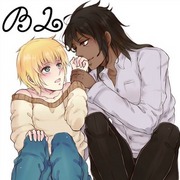
They didn’t know where he lived now. They didn’t know where he worked. They’d lost that right when they refused to accept his path. His education. His relationship. His… Rian.
“I was thinking,” Bellamy continued, oblivious, “since you’ll be off for a few weeks… I mean, not that you don’t have a life outside of here.” He laughed, rubbing the back of his neck. “Most of us don’t.” He glanced back at Kaiseng, confidence slowly returning. “If you get bored, we could hang out sometime. Movie. Food. Coffee. I can keep you updated on all the drama around here.” He smiled—hopeful, uncomplicated.
Kai shut the locker, pausing with his hand still resting against the cold metal. His expression gave nothing away.
He didn’t really have friends outside of work. Years ago, he’d stopped talking to the people he’d known in high school. It had been easier that way. If he disappeared, no one had to choose sides. He hadn’t made any in college—too focused on finishing fast, on getting through and getting out. But this was different.
But this was different.
He knew Bellamy wasn’t offering casual company. Not really. Bellamy had always been kind to him—attentive, gentle in ways that could be dismissed as professional courtesy if you didn’t look too closely. But Kaiseng did look. And the faint trace of pheromones beneath the suppressants told a quieter, truer story.
Interest. Hope. Patience.
“Yeah,” Kaiseng said at last, turning to him. His lips curved into a small, careful smile. “I’ll think about it. Thank you.”
Bellamy’s shoulders relaxed, just a little.
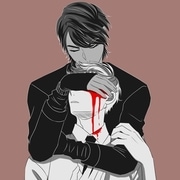
As Kaiseng stepped past him, that smile stayed in place—but behind it, his thoughts drifted elsewhere. Back to the weight of expectation. To blood and silence. To his father’s voice, long absent but never gone.
“That boy will bring you off your set path.”
Set path.
Not his own—but the one chosen for him.
And that begged the question: why had his father called at all? How had he known Kaiseng was missing? How had he known where he worked?
He hadn’t.
That much became clear as Kaiseng sank into the couch, phone balanced on the armrest, speaker on. He leaned back, eyes closing as the voice continued—measured, disappointed, relentless. A lecture on disappearing. On how worrying it had been. On how it looked. How his absence reflected on them.
Kaiseng said nothing. He didn’t interrupt. He let the words wash over him like static, familiar and dull, his jaw tight as he listened to concern dressed up as control. To love framed as reputation.
When the call finally ended, the apartment felt quieter than before.
And somehow, heavier.









Comments (0)
See all