
Almost two weeks had passed since that night in Montenegro. Enough time, Bea told herself, for a name to lose weight and become just an echo. That’s what I was trying to believe.
Routine helped sustain the lie. It smoothed the edges of things, made everything bearable by force, as if nothing had really changed. Bea went back to waking up early, crossing the city with the same weariness clinging to her bones, wearing the light apron from the Sorel Cafeteria as if she were wearing borrowed skin. There, at least, it was predictable. Coffee in, coffee out. Sugar solved more problems than it should.
The shift had barely begun when the doorbell rang.
She looked up reflexively – an old, almost instinctive habit of someone who has learned to measure risks in fractions of a second – and saw him. Rhodes. Too whole to be a memory. Too real to be a coincidence.
He entered with a calm gait, his shoulders relaxed, observing the space with genuine attention, not the empty curiosity of someone merely killing time. His dark coat contrasted with the warm light of the coffee shop, and for an absurd moment, Bea had the feeling that he was breathing the air along with her.
The body reacted before the mind. A subtle tightness in the chest, a familiar weight behind the eyes. It wasn’t panic. Nor joy. It was something more dangerous: recognition.
Rhodes didn’t look for her. He went straight to the main counter, where Emily was organizing the cash register with her usual affectionate concentration. Emily looked up and smiled automatically – that smile that appears before the customer is even assessed – and said something Bea couldn’t hear. She watched from afar as he leaned in to answer, his voice low and polite. Emily nodded, interested, frowned, curious. He took something out of his pocket, a card perhaps, and she laughed, surprised.
The laughter hurt more than it should have.
It wasn’t jealousy. Bea knew that. It was something else. It hurt because, once again, she was on the outside of the scene, even when the center seemed to be calling her by name. As always.
Emily stepped out from behind the counter, asked Marco to take over the cash register, and sat down with him at a table near the entrance.
Bea looked away and forced her body to move. She ground the coffee with excessive care, aligning cups that were already in place. She repeated silently: work, Bea. Just work.
Then Emily looked in her direction.
And she smiled differently.
Bea’s stomach sank slowly, like someone entering cold water without knowing where the bottom is. Rhodes followed her gaze. And this time, when his eyes met Bea’s, he didn’t look away.
He watched her for a few seconds before standing up and walking to the counter.
Bea felt it before she understood. A strange weight on her shoulders, as if the air had changed density. She continued wiping the wooden surface with the damp cloth, feigning attention to the routine.
When she looked up, he was already there.
She noticed the sudden hardening of his face – minimal, almost imperceptible. A microexpression that passed too quickly for anyone else to notice. For Bea, it stayed. It always stayed.
She must have looked different. Too tired to hide it.
Her worn apron hung loosely on her body, her hair carelessly tied back, deep dark circles under her eyes marking her pale skin. To any other customer, she would have been just another employee. To him, he felt otherwise.
He lowered his head.
“Good morning. What would you like?”
“A black coffee. No sugar.”
His tone didn’t match the rigidity of his body. It was softer than she expected. Almost careful. When she looked up for a moment, she noticed a smile too small to be mere politeness. Something about him seemed… relieved.
She turned to prepare the coffee, trying to ignore the feeling of being watched. She couldn’t. Every movement seemed heavy, deliberate. Her hands trembled slightly as she held the cup.
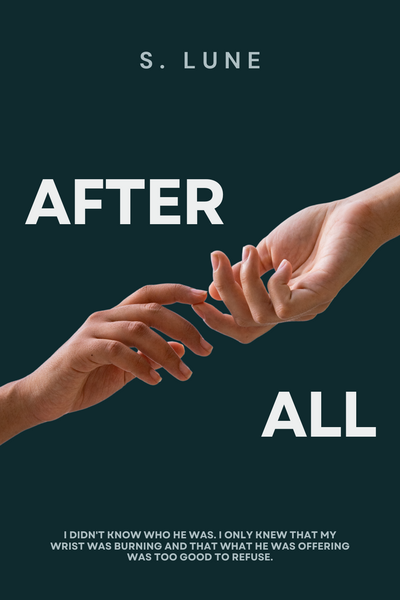
When she returned to the counter and handed over the coffee, he touched her fingers together on purpose.
It was quick. A minimal brush.
Still, the shock ran through her entire arm. Her wrist burned, as if she had touched something too alive. It took Bea a few seconds to understand what she was feeling. She was tired. Too exhausted to react in time.
She looked away.
“Thanks.”
His voice sounded different. Less controlled. Almost gentle. Bea nodded silently, feeling a shiver run down her spine. There was something wrong with this sudden familiarity. Something that made her strangely alert and, at the same time, safe.
She noticed Lili and Marco exchange a quick glance behind her. They had noticed. They always noticed when something was out of the ordinary – the pause that was too long, the heavy silence.
Rhodes took a sip of his coffee without taking his eyes off her.
“You look different outside of that place…”
The phrase came out low, too intimate for a stranger. Bea’s heart raced before she could muster a response.
She took a deep breath.
“You too.”
Only then did she realize how close he was. Too close. Too familiar. His presence occupied space – not just physical space.
He held the cup carefully and left some notes on the counter, too neatly arranged for an automatic gesture. There was an intention there. Attention.
“I’ll take that as a compliment.”
Bea took a while to reply.
Because something silent had just awakened inside her.
Lili called her before she could say anything more elaborate.
“Bea, I need you for a moment.”
The call sounded too casual for the havoc it caused. The small bubble between them burst, and the sounds of the coffee shop returned: the espresso machine, cutlery, overlapping voices. The world reclaiming its right over her.
“I’ll be right back,” she murmured, unsure whether she was talking to him or to herself.
When she looked up again, Rhodes was still there. He hadn’t moved away. Nor had he come closer. He was simply watching her, the cup still in his hands, as if weighing what to say – or what not to say.
“You seem… less distant here,” he said finally. Softly. Too precise.
The phrase struck a place Bea pretended didn’t exist. The space where she kept everything she couldn’t name. The urge to shut herself off came immediately.
“Different environments.”
The voice came out neutral, but with a sharp edge. There always was.
He nodded slowly, like someone accepting a rule without agreeing. The silence stretched for a second beyond what was comfortable.
“I know,” he said. “Even so…”
Lili cleared her throat behind her. Time was up.
Rhodes placed the empty cup on the counter with almost excessive care, as if the gesture attempted to compensate for everything that had been left unsaid. He left the money there, again too neatly arranged, and took a step back.
“Take care, Bea.”
This time, hearing her own name didn’t burn. There was a burning sensation, yes, but different. A strange, recognizable heat. Like something that doesn’t hurt because it’s already part of her.
He turned and left before Bea could find an answer that wouldn’t betray her.
She stared at the door after it closed, all too aware of the space he had left behind. It wasn’t an ordinary absence. It was a new, almost fresh void, unlike the one she knew she had inhabited.
The rest of the day passed like almost all the others: without memory.
Orders taken, glasses washed, smiles returned automatically. Lili commented on the weather, Marco complained about the grinder, Emily closed the register. Bea was present for everything and, at the same time, absent from herself. It worked. That was enough.
When her shift ended, she slowly took off her apron. That night, she was off from Montenegro. No overly brightly lit halls. No mournful violins. No powerful families taking up more space than necessary.
Only her.
Outside, the late afternoon hung heavy, a light gray, the kind that promises nothing. Bea walked to the bus stop feeling the weariness spreading through her bones – an old, familiar weight that needed no explanation. She got off two stops earlier than usual and walked home.
The apartment greeted her in silence, as always. She dropped her shoes near the door and let her bag fall onto the chair. The quiet inside wasn’t peace; it was suspension. A place where nothing hurt too much because nothing really happened.
She rested her forehead against the closed door of her bedroom for a few seconds, breathing slowly. There were days when that was enough to keep going. On that day, it wasn’t.
Still, she stayed.
Night fell too quickly – or perhaps Bea was oblivious to the passage of time. She only turned on the kitchen light, out of habit. The rest of the apartment remained in semi-darkness, as if some parts of her needed to remain invisible, even to herself. She took off her coat, hung it carelessly, and stood still for a few seconds, staring into nothingness. Her body was still moving. Her mind was not.
She opened the refrigerator. Too cold. Too empty. She grabbed something – a piece of bread, a glass of water – and ate it standing up, without tasting anything. Eating was just another task. Like breathing. Like existing.
Then she went to her room.
She sat on the edge of the bed, elbows resting on her knees, hands limp, useless. The weariness didn’t come from her body. It came from somewhere else. A dull weight in her chest, as if someone had left something there and never returned to retrieve it.
She lay down without changing her clothes.
The ceiling was familiar. There was a small stain near the light fixture that she had counted hundreds of times. Sometimes it looked like a map. Sometimes, just dirt. That night, it was just another thing that didn’t change.
She picked up her phone. She scrolled aimlessly, without interest. Nothing new. No one waiting. The digital silence matched everything else.
The hours passed like that.
Until the phone rings.
The sound startled her with a disproportionate jolt, as if she had been pulled back into a world she was already beginning to say goodbye to that night. He answered before he could think too much.
“Hello?”
“Bea, darling, it’s me, Martha.”
The convenience store owner’s voice was heavy with weariness and urgency. Bea straightened up slightly in bed.
“There’s been a serious problem. The guy who works the night shift had an accident this afternoon. He’ll be out for at least a few days.”
Bea closed her eyes.
The early morning hours. Long hours. Little movement. Complete silence.
“I know it’s last minute,” Martha continued. “But do you think you can cover today’s shift? Just today. In exchange, you get the day off tomorrow morning.”
Her body reacted before her mind. A new weight settled on her shoulders. Bea wanted to say no. She really wanted to. The idea of leaving the house again, crossing the city while the rest of the world slept, seemed too much.
“Mrs. Martha… I…”
She hesitated. She always hesitated. As if every decision required more energy than she had.
“I’ll pay extra, Bea,” Martha said, noticing. Her voice softened. “Way more than usual. You always help when you can. I wouldn’t ask if it wasn’t really necessary.”
Money pierced through the fog. Not as an ambition, but as a necessity. Hospital. Bills. Days when the future seemed like an impossible equation.
Bea looked around the room. The ceiling. The stain. The unmade bed.
Staying there meant facing all of that for hours. Alone. With my eyes open.
“Okay,” she replied, before regret could overtake her. “I’ll go.”
The relief on the other end of the line was immediate.
“Thank you, sweetheart. Thank you so much. Could you come in earlier? And take care.”
Bea hung up and let her phone fall beside her.
She remained motionless for a few seconds, feeling the weariness rearrange itself within her. She couldn’t tell if she had accepted out of responsibility or as an escape. Perhaps it was always both.
She stood up slowly.
Change clothes. Tie your hair up. Leave the house.
Mechanical, almost gentle movements, as if she were caring for someone who wasn’t her. Perhaps she was.
As she closed the door, she thought that the early morning hours had always been a strange place for her. A space where the world lowers the volume and people wear fewer masks.
Perhaps it would have been easier to exist there.
Maybe not.
But she was already leaving.



Comments (0)
See all