
Royoshi's dorm was quiet.
The lights dimmed to a resting cycle, the walls humming softly as the Citadel regulated temperature and sound. Royoshi lay sprawled on his bed, one arm hanging over the side, breathing slow and uneven.
Snoring softly.
His body was still recovering, circulation suppressed, muscles heavy from the previous day's strain. For once, his mind wasn't racing ahead of his body.
He was asleep.
Which was exactly why the door opened.
No alarm sounded.
No lock disengaged.
The panel slid aside as if the Citadel itself had decided nothing unusual was happening.
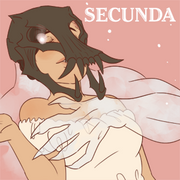
Maris stepped inside.
She didn't rush or hesitate.
Her boots made no sound on the floor. Her presence didn't disturb the room's sensors—because they had already been told she belonged here.
She looked at Royoshi for a moment.
Sleeping.
Unaware.
"Hmm," she murmured. "So this is him."
"Cute."
She moved closer, stepping beside the bed. Her gaze flicked to the clearance band on his wrist, the faint irregular pulse of his suppressed Shuryoku.
From a compartment at her wrist, she produced something impossible small—no larger than a grain of salt. It shimmered once, then vanished between her fingers.
She leaned forward and pressed it lightly against the seam of his neck.
The device adhered instantly.
Invisible.
Silent.
Persistent.
A soft pulse registered on Maris's internal display.
ANCHOR ESTABLISHED.
SIGNAL: STABLE.
She straightened slowly.
Royoshi shifted in his sleep, brows tightening for half a second as if something had brushed against a dream.
Maris watched closely.
No rejection.
No defensive spike.
"…Interesting," she whispered.
She glanced around the room once more. Training gear neatly aligned. Bed made with careless precision. No personal clutter beyond what routine demanded.
Minimal attachments.
Dangerous potential.
Maris stepped back.
The door slid open before she reached it.
Again—no sound. No alert.
As she passed through a threshold, the Citadel quietly forgot she had ever been there.
Royoshi snored once, rolled onto his side, and slept on.
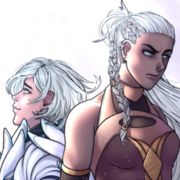
Down the corridor, Ishara Veyl stopped walking.
Not abruptly. Instinctively.
Her hand tightened around the small medical container she carried, fingers whitening just slightly.
The corridor was empty, yet the air felt… wrong. Not disturbed—edited.
She turned.
Royoshi's dorm stood at the far end of the hall.
Closed.
Silent.
Her pulse quickened.
Ishara moved without hesitation, stepping into the alcove opposite to his door.
A faint shimmer collapsed into nothing where the panel met the wall.
The door sealed.
No alarms.
No system response.
Her stomach tightened.
Someone had just left.
She waited.
Ten.
Twenty seconds.
Nothing.
The Citadel resumed its quiet hum.
Ishara stayed where she was, counting breaths instead of seconds. Her instincts told her not to move yet.
High clearance.
Higher than hers.
That bothered her.
She stepped out of the alcove and approached Royoshi's door, slowing her pace deliberately.
She raised her hand and tapped the chime.
Once.
Inside, there was a muffled thump, followed by a half-awake sigh.
"…five more minutes, please…"
Another pause. Footsteps, uneven.
The door slid open.
"Who's there-" Royoshi stopped after seeing that person's face.
His hair was completely uncooperative, shirt wrinkled, and collar slightly crooked.
He looked at her for a second longer than needed.
"Oh," he said. "Hey, Ishara."
She scanned him immediately.
Posture: sloppy, but stable.
Eyes: unfocused, but clear.
Shuryoku: suppressed—normal for recovery.
"You look terrible," she said.
He squinted. "Good morning to you, too."
"It's not morning yet, dummy."
"It is morning for people who sleep," Royoshi muttered, rubbing one eye. "You're just built different."
She didn't react to the joke.
Instead, she held up the small medical kit in her hand.
"Here, recovery pills," Ishara said. "Take one now. One tonight."
He blinked at it, then at her. "You came all this way to see me, terrible-looking, and give me medicine?"
"Yes."
"…Wow. That's sweet."
"Don't push it."
He took the container, fingers brushing hers for a second longer than necessary before he pulled back.
He popped the pill dry, swallowed it.
"Tastes like metal."
"It's supposed to," she replied. "Means it's working."
She stayed where she was, eyes drifting—not to his face, but to his neck.
Nothing visible.
No marks.
Still.
"You feeling dizzy?" she asked.
"Only when I stand up too fast. Or think too hard."
"Headaches?"
"Normal."
"Pressure? Static? Like your thoughts aren't fully yours?"
That made him pause.
"…That's oddly specific."
Her gaze sharpened. "Answer the question."
He thought for a second, then shook his head. "No, just tired."
She nodded once, but her shoulders didn't relax.
Good, she thought. Or at least not bad yet.
She glanced past him into the room—quickly. Everything looked the same. Bed slightly messy. Gear aligned. No sign of disturbance.
Which didn't reassure her at all.
"Did you feel anything or anyone while you were asleep?" Ishara asked casually, too casually.
Royoshi shrugged. "If they did, they didn't wake me. I was out cold."
She watched his face as he said it.
No hesitation. No flicker.
Truthful.
That was worse.
She stepped fully into his room now, letting the door slide shut behind her.
"You don't usually sleep this deeply," she said.
He leaned against the doorframe. "Almost dying does wonders to your insomnia."
She didn't smile.
Hey, eyes moved again—corners of the room, the floor, the bed. She wasn't searching for clutter. She was looking for absence.
Her gaze returned, once more, to his neck.
Still nothing.
"You're staring," Royoshi said lightly.
"I'm assessing," she replied.
"Listen," she said, lowering her voice, "If anything feels wrongs, you come find me. Immediately."
"Yes, ma'am!"
She shot him a look.
He smiled. Softer now. "I mean it. Thanks."
"Next time," she said, tone firm, "don't do that."
"I know," he said. "But I wanted to."
That was worse.
Her ears warmed—slightly.
She noticed it.
That annoyed her.
Ishara turned away before he could, stepping back towards the door as if the distance could reassemble her composure.
"That's not something you want," she said. "That's something you survive."
Royoshi shrugged lightly. "Sometimes it's the same thing."
She paused, hand hovering near the panel.
"You don't get to decide that alone," she said.
He tilted his head. "Then maybe next time… you decide with me?"
The words landed harder than he intended.
Ishara didn't answer right away.
Finally, she exhaled.
"…Just rest," she said. "And don't circulate early. I will know."
He smiled. "You sound scary."
She glanced over his shoulder. "I'm serious."
"I know," he replied. "That's why I'm listening."
That earned him one last look—before the door slid open.
She stepped, turning into the corridor, then stopped.
Without turning back, she added," And Royoshi,"
"Yeah?"
"If anyone strange comes near you—anyone you don't recognize—inform me."
Then she left.
Royoshi stood there for a moment, staring at the empty hallway through the panel.
"Rikishu?" he murmured.
Nothing answered.
He rolled his shoulders once, then rubbed the back of his neck absently—missing the microscopic anchor by millimeters.
"Guess I'll go sleep again," he said to no one.
He shut the door and returned to his bed.
Down the corridor, Ishara Veyl slowed her steps.
Her instincts were still screaming.
High clearance.
Someone had entered his room.
And if Royoshi hadn't noticed—
Then whoever it was hadn't wanted him to.
She clenched her jaw.
I don't like owing people my life.
But she liked even less the idea that someone else now had a claim on his.
Somewhere deeper in the Citadel, a quiet signal pulsed once.
ANCHOR: ACTIVE.
SUBJECT: ASLEEP.
OBSERVATION: CONTINUES.
And from far above, unseen, the Citadel kept pretending nothing unusual was happening.









Comments (0)
See all