
Episode 7: The Crooked Line
Jan 29, 2026
No calls.
No messages.
No instructions.
No clearly defined challenge.
That silence made one thing clear:
the test had begun the moment he disappeared.
On the fourth day, I was instructed to go down to basement level B2 — a place without offices, without glass walls, only small meeting rooms used for “field assessments.”
When I stepped inside, there was only one thing on the table.
A large roll of blueprints.
No project name.
No internal code.
Just a red stamp in the upper-right corner:
URGENT SURVEY – DO NOT ARCHIVE
The woman with her hair neatly tied back — the same one who had left me alone on my first day — was standing there.
“Residential Redevelopment Project C,” she said briefly.
“Mr. Trịnh wants an unofficial opinion.”
“Mine?”
“From someone who carries no legal responsibility,” she replied, looking straight at me.
“So you don’t have the right to be wrong.”
She pushed the blueprints toward me.
“Fifteen minutes.”
I unrolled them.
An old residential area: low-rise houses, narrow alleys tangled like aging blood vessels.
The current redevelopment plan was clean, beautiful, and logical —
if viewed from above.
But I wasn’t looking from above.
I focused on the details.
Ground slope.
Drainage direction.
Setbacks between buildings.
And then I saw it.
A very thin line, almost swallowed by the structural layers.
An old sewer line.
Missing from the new design.
If this plan went forward, three months into construction the central area would face localized subsidence.
Not an immediate collapse.
Not serious enough to stop the project.
But enough to trigger resident complaints and lawsuits.
A familiar scenario.
I swallowed hard.
“Has this plan been approved yet?” I asked.
“Technically — no,” she answered.
“Financially — almost.”
I understood.
This wasn’t a mistake.
It was a choice.
“Ten minutes,” she reminded me.
I pulled the blueprint closer and took a pencil from my pocket — the only one I’d always carried with me since my student days, drawing diagrams in class.
I drew.
Not much.
Just a curved line, slightly deviating from the main axis, adjusting the foundation direction and redistributing the drainage system.
A single line that would:
Increase costs
Extend construction time
But completely eliminate the risk of subsidence.
“Do you realize what you just did?” the woman asked coldly.
“I made this project less attractive,” I replied.
“And safer.”
She stared at the drawing for a long moment.
Then she nodded.
“Mr. Trịnh is watching through the cameras.”
I wasn’t surprised.
That afternoon, I was called up to the highest floor.
Not the glass office.
But a secondary study — a room Trịnh Nam used for reading, not for receiving guests.
He stood beside the table, looking at the unfolded blueprint.
“You know,” he said without lifting his head,
“if you had stayed silent, no one would have blamed you.”
“I know.”
“You also know,” he continued,
“this line you drew will cost at least two people a great deal of money.”
“I know.”
Finally, he looked at me.
“Then why?”
I met his gaze without flinching.
“Because if I learn to redraw plans through silence,” I said,
“sooner or later I’ll use that same silence to erase the things I want to protect.”
A pause.
Then Trịnh Nam nodded slightly.
“You picked up the pencil.”
He rolled the blueprint back up.
“And you drew exactly where it hurts.”
He walked past me and opened the door.
“From now on,” he said without turning back,
“everything you choose to protect must be paid for with real competence.”
The door closed.
I stood alone in the large, silent room.
For the first time, I understood clearly:
👉 Trịnh Nam wasn’t teaching me how to win.
👉 He was teaching me how not to become a tool in someone else’s design.
And today’s line—
was the first move I placed on the board with my own hand.
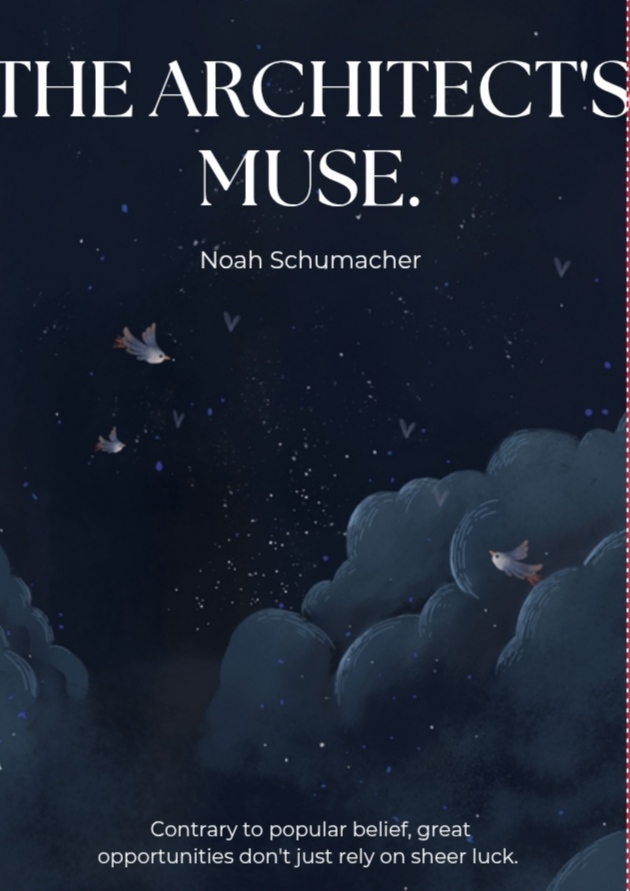

A single line can change everything.
In a system built on silence and compromise, she chooses to draw where it hurts — and pay the price.
Recommendation for you
-
Recommendation
Blood Moon
BL 48.2k likes
-

Recommendation
Find Me
Romance 4.8k likes
-
Recommendation
Primalcraft: Scourge of the Wolf
BL 7.3k likes
-
Recommendation
Silence | book 2
LGBTQ+ 33.2k likes
-

Recommendation
The Sum of our Parts
BL 8.9k likes
-
Recommendation
Silence | book 1
LGBTQ+ 28.5k likes
-

Feeling lucky
Random series you may like
The Architect’s Retribution
1.7k views0 subscribers
One night was enough to destroy everything.
A family on the brink of survival loses their home, their company, and their future to a man whose name should have stayed buried in the past.
As secrets resurface and power shifts hands, a quiet revenge begins to take shape—cold, calculated, and inevitable.
Some debts demand more than money. They demand the truth.

Comments (0)
See all