
Episode 8: The Price of a Line
Feb 01, 2026
They don’t knock.
They don’t warn you.
They don’t give you time to brace yourself.
They spread quietly—like a hairline crack in a wall.
By the time you notice, the entire structure is already leaning.
Three days after my drawing was submitted, an emergency meeting was called.
No invitation.
No official schedule.
Just a short message from coordination:
[8:30. Meeting Room C. Be present.]
Meeting Room C was located in the central zone—neither high nor low.
A neutral place, usually chosen when no one wanted to bear final responsibility.
When I walked in, the air was already thick.
The same faces from the previous meeting were there.
But this time, they weren’t looking at the drawings.
They were looking at me.
I took the seat at the end of the table.
No one invited me.
No one asked anything.
“We lost four billion.”
The voice was deep and cold, coming from the man sitting across from me.
“Twelve days of progress,” another added.
“And a ‘technical adjustment’ with no responsible signature.”
Their eyes pinned me down like needles.
“I propose,” the first man continued,
“that we clarify who redrew the foundation plan.”
No one answered.
No answer was needed.
I felt Trịnh Nam’s gaze from the head of the table—
not protective, not intervening.
He was simply observing.
Just as he had said.
No shelter.
“It was me.”
I spoke.
A sharp intake of breath rippled through the room.
“Who are you?” someone asked, contempt undisguised.
“I’m the one who identified the subsidence risk in the original design,” I replied.
“And I’m the one responsible for proposing the adjustment.”
“Responsible with what?”
“Where’s the signature?”
“What legal authority do you have?”
The questions piled up, not waiting for answers.
This wasn’t an inquiry.
It was pressure.
I turned toward Trịnh Nam.
He didn’t look at me.
“There’s no signature,” I said.
“Because that drawing should never have existed.”
A laugh broke out—short, sharp.
“Naive,” someone said.
“Do you think this project runs on ethics?”
I kept my voice steady.
“It runs on consequences.”
I stood up.
“If we keep the original plan,” I continued,
“after three months of construction, the central zone will sink.
Class-action lawsuits. Project suspension.
The losses won’t stop at four billion.”
Silence.
A few eyes wavered.
But not enough.
“Do you have proof?”
“Or is this just speculation from someone without standing?”
I opened my bag.
Took out copies of old survey notes—
unofficial, unstamped, but real.
“I don’t need you to believe me,” I said.
“I just need you to understand this—
if I’m wrong, you can push me out front.
But if I’m right, and you stay silent…”
I paused.
“Then I won’t be the only one standing here.”
The air grew heavier.
Only then did Trịnh Nam speak.
“The meeting is over.”
A few people tried to object.
He raised a hand.
“The increased cost,” he said,
“I’ll take responsibility.”
A brief pause.
“But from today on,” he continued, his gaze sweeping across the table before stopping on me,
“anyone who alters drawings for personal gain—
will leave the project.”
No one said another word.
They stood up.
And left.
Without looking at me.
That afternoon, I received a call from home.
My grandmother had fallen.
Not serious.
But serious enough to require hospitalization.
When I arrived, she held my hand tightly.
“People came asking about the house documents,” she whispered.
“They said it was just a routine review.”
I understood.
The consequences had found a path.
That night, I received a message.
No name.
[One line costs money.
One person loses patience.]
I didn’t reply.
I looked out the hospital window, where the city lights stretched endlessly—like a vast map.
For the first time, I understood clearly:
👉 Ability doesn’t save you from consequences.
👉 It only decides whether you have the right to face them.
And this game—
had started charging an entry fee.
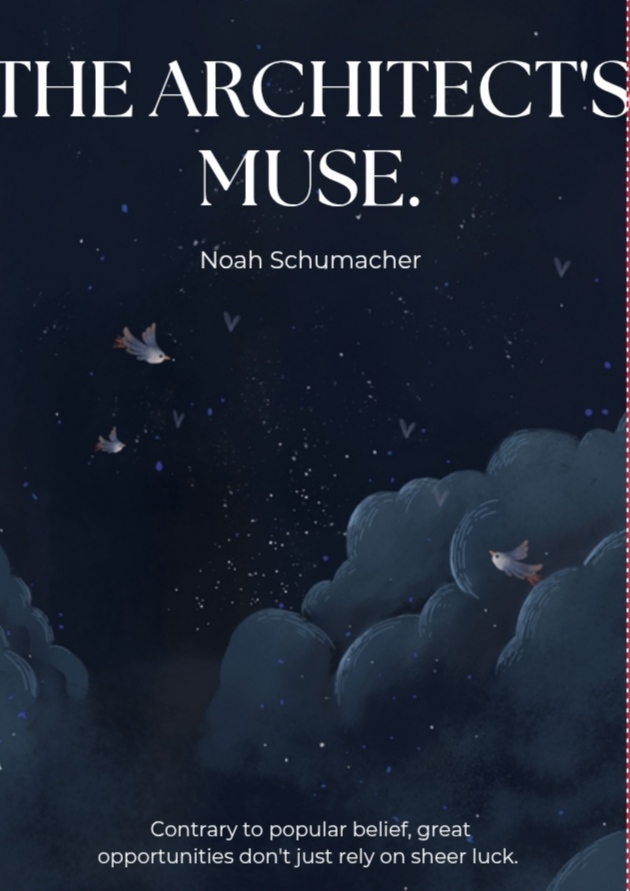

Episode 8 marks the beginning of real consequences. From here on, every decision will have a price. Thank you for staying with the story.
Recommendation for you
-

Recommendation
Blood Moon
BL 48.2k likes
-

Recommendation
Find Me
Romance 4.8k likes
-

Recommendation
Primalcraft: Scourge of the Wolf
BL 7.3k likes
-
Recommendation
Silence | book 2
LGBTQ+ 33.2k likes
-

Recommendation
The Sum of our Parts
BL 8.9k likes
-

Recommendation
Silence | book 1
LGBTQ+ 28.5k likes
-

Feeling lucky
Random series you may like
The Architect’s Retribution
1.7k views0 subscribers
One night was enough to destroy everything.
A family on the brink of survival loses their home, their company, and their future to a man whose name should have stayed buried in the past.
As secrets resurface and power shifts hands, a quiet revenge begins to take shape—cold, calculated, and inevitable.
Some debts demand more than money. They demand the truth.

Comments (0)
See all