
The water was cold. Too cold for the blood still burning beneath the Inquisitor’s skin.
He stood rigid, like a marble statue, while other hands—anonymous and diligent—performed the work his injured body no longer could. He did not close his eyes to the touch of the water, nor lift them to the sky in search of divine guidance he believed he already possessed. The ritual was brief, almost mechanical, stripped of any unnecessary mysticism: holy water poured over his brow to erase any trace of the witch, sacred words repeated without a hint of emotion to consecrate him, and a swift gesture to wash away the dirt, the blood, and that which was not to be remembered.
The assistants’ murmurs sought not the absolution of his soul, but the order of his form. When the icy water ran down his neck, seeping under the clean, heavy cassock they had just placed on him, an image forced itself into his mind unbidden: firm fingers, short clean nails, and precise, technical, painful contact on his open flesh.
He could not recall her face clearly; fever and smoke had blurred it. He could never retain her eyes. Only her hands. They were the hands of someone who knew life well enough to know how to take it. A thought, sharp and concise as a battlefield observation, cut through his mind: She escaped. Nothing more. No immediate rage—only the cold annotation of a mistake that demanded correction.
Miles away, in the thick of the forest, the world was pure physical torment. The linen gag scraped her cheek with every ragged breath, burning the corners of her lips. The knot around her wrists was poorly tied, a product of haste and the man’s own pain; she realized it with her fingers, numb from lack of circulation. She could not free herself entirely, but she could strain it, press the fibers of the cloth against her skin until the friction became unbearable.
Each step sent a fresh jolt through her ribs, a reminder of the struggle in the meadow. Her body begged her to stop, to collapse into the moss and let the forest reclaim her, but her mind refused. The river appeared among the trees like a cruel promise. The sound of running water was a melody reminding her of her burning thirst.
She fell to her knees on the bank, body finally overcome with exhaustion, but her will remained intact. She leaned as far as the gag allowed, neck strained, lips barely brushing the surface. The water teased her mouth without entering, a liquid mockery. A low, almost animal groan escaped her blocked throat.
She shook her head, striking the water in frustration. Not yet. Not like this. She crawled a little further, digging her fingers into the dark mud, forcing her face into the current just enough to drink, even as water flooded her nose and choked her.
The world shrank to the sound of the torrent and her own racing pulse in her temples. If anyone saw her in that pitiful state, let it be so: alive, fighting, refusing to die as a shadow.
Then she felt the presence. There were no footsteps, no snapping branches—only the pressure of eyes. She lifted her head just slightly, water dripping from her soaked chin. A woman stood on the opposite bank, motionless, a small child clinging tightly to her skirt.
They did not cry out. They did not flee. They watched her with that strange mix of pity and fear reserved for a wounded animal that, despite its guts being exposed, still has the strength to bite.
She tried to drink again, clumsy, desperate. The gag soaked completely, water running down her neck without reaching her throat. Her body trembled uncontrollably. The woman on the other bank, moved by silent compassion, crossed the river without a word. The hands that touched the fugitive were not rough. They hesitated for a second, fearing a violent reaction, but then acted:
“Calm… please, don’t move,” a soft voice murmured, tinged with reverent fear.
With a small knife, they cut the linen gag. They loosened the knots around her wrists.
“My name is Serafina,” the woman whispered as she freed her hands. “And this is Mateo.”
Air surged into her lungs—cold and purifying—and the water followed, urgent and choking. She drank as though the world might end in that instant, as if each swallow were a shield against the death pursuing her.
“Valerie…” she managed, her voice rough as sandpaper. “My name is Valerie.”
They brought her to their home as evening fell. It was a poor place, a silent cabin where hunger was etched into the walls. An old man raved in a corner, trapped between high fevers and fractured memories of a life long gone. They shared a small piece of hard bread between the four of them, an act of charity she accepted with a silent nod. Relief was fleeting. When she touched the forehead of the child who had watched her at the river, she felt burning heat. Too hot. Too fast. The shadow of plague flashed through her mind like lightning.
Serafina paled, clutching the child to her chest. “He’s been like this since noon. My father is dying in that corner, and now my son…”
“I can help,” she said, voice rough from thirst and disuse. “Let me try.”
She left the cabin before the woman’s doubt could stop her, venturing into the forest shadows. She returned with pockets full of herbs: elder for the fever, bark for pain, and one extra leaf. A dark, jagged-edged leaf. Just in case.
Returning, the silence of the house struck her first. Not peace, but violence. The door hung off a single hinge, the floor ransacked, the little bread trampled. The old man remained in the corner, but now each breath was a clumsy effort, every inhale an agony not quite relief. His eyes darted frantically beneath closed lids, trapped in a nightmare. He muttered shapeless words, except for a few that surfaced clearly: Men… men… and the name of his daughter, repeated like an ancient plea to an empty sky.
She knelt beside him and took his wrist. The pulse was fast, irregular—the gallop of a heart near its end. She knew what that meant. She knew how long that useless pain would last if she did not intervene. She drew the leaf she had saved—the one not meant for the child. She held it between her fingers longer than necessary, studying the fragility of the old man. She did not doubt the chemical result, only the moral right to act. No one had asked her. No one watched. In that room, there would be no witnesses, no judgment, no absolution.
She pressed the leaf carefully, regulating the dosage with her usual precision. Enough to calm the nervous system. A little more to ensure he would not awaken again to this world of suffering. She leaned over him.
“It’s done,” she murmured, unsure whether she spoke to the man or to the child she had once been.
She moistened his lips with the bitter preparation. She waited. The old man’s breathing slowed, deepened. His body relaxed against the floor. The furrow of pain on his forehead faded, like a promise fulfilled after a long wait. The pulse ceased without struggle, without fight. She did not move immediately. She closed his eyes with two firm fingers, feeling the weight of absolute silence settle over the room. This counts too, she thought with bitter chill. He died without a sound.
She rose and, without looking back, followed the fresh tracks in the mud. Soon, the screams tearing through the evening air reached her. She hid among the trees, heart hammering. She saw the woman struggling against the soldiers, the child crying in pure terror, and the men laughing with the dry, cruel humor she knew too well.
The world narrowed again. Her chest ached as though an old wound she thought healed had reopened. I must stop it. The phrase struck her mind like a hammer. Her hands trembled, air barely reaching her lungs as the past pushed from within, disordered and violent. She almost froze, almost vanished into the shadows, saving herself once more.
Then the child shouted a name. It was not hers. It was his mother’s. And in that scream of utter despair, she recognized herself, years ago, alone before the darkness. I must stop it. I must stop it. Her mind would not rest.
“It’s me,” she whispered, before realizing.
Then she screamed, her voice broken but loaded with a firmness that brooked no doubt, stepping from her hiding place straight toward the spears:
“It’s me! Take me!”
She ran, striking the nearest guard with all the weight of her body and her fury. The impact was clumsy and desperate, but enough to create a distraction.
“Serafina, run!” shouted Valerie.
The woman tried to flee with her son in her arms, but the soldiers were too many. She got no further.
“Take them both,” ordered a deep voice, freezing Valerie’s blood.
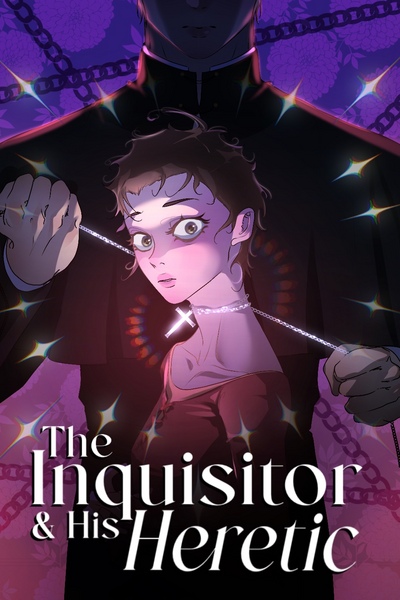
She turned, panting, dark hair falling over her mud-streaked face. There, wrapped in his immaculate cassock, brown eyes burning with molten darkness and the mark of her nails still pulsing beneath the fabric of his flank, was the man she had saved.
The Inquisitor watched her, and in his gaze was no recognition of debt—only the cold satisfaction of reclaiming his prey.







Comments (0)
See all