
Earlier, Benoît had removed the chain from her leg. She still felt its weight as if it were there, a phantom pull that tugged at her with every step. When she glanced down, the iron was gone, but a darkened mark remained around her ankle, tender and unmistakable. Freedom, it seemed, could leave scars even after the metal was taken away.
The estate was larger than she had imagined. Past the rotting walls and heavy drapes, beyond the overgrown gardens, there were green fields, a narrow lake, and walking paths cut into the soft earth by careful design. The land was not noble in the way Viktor dressed. It was patient. Older than the house. She wondered who had bled into it before him.
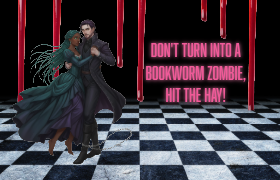
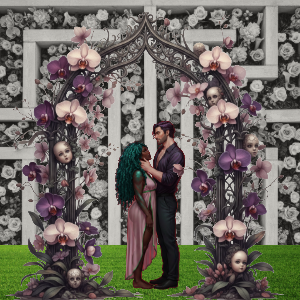
Beside her, Viktor walked with steady purpose. His presence was striking, dark and polished, rough in equal measure, like a mafia prince pulled from a logging camp and taught manners. His beard was trimmed with meticulous care, neat against the line of his jaw. His hair was a deep, unexpected purple that caught the light like bruised twilight. And his eyes, copper-bright and unblinking, watched everything with the calm certainty of a predator. When he smiled, there was the faintest flash of fangs.
They walked in silence for several minutes. Ayoka kept her hands folded in front of her while his cane tapped lightly with each step. He said nothing about her appearance, though Sabine had tied her corset tighter than necessary, lifting her chest to the edge of indecency, and had straightened her braids twice before allowing her to leave.
Ayoka began to catalog details out of habit. His words, the layout of the paths, the sounds beneath her feet. Every small fact felt like something she might need later. As they passed beneath a vine-covered arch, several servants crossed their path. Not slaves. She recognized the difference at once and blinked in quiet surprise.
Among them were two leprechauns in tailored vests walking beside a unicorn-horned woman with silvery skin and sandals woven from bark. They moved freely, but not with ease, like guests who had learned how to survive the moods of the house.
The sight unsettled her. Leprechauns and unicorns had once fought brutal wars in older realms, long before human history bothered to remember. Their peace, when it came, was delicate, more truce than bond. Both lived long lives and carried longer memories. To see them working together, especially here, felt like spotting frost beside flame.
The unicorn unsettled her even more. It was rare to see one in a place where chains rattled through hallways. Unicorns were known for their disdain of spaces shaped by servitude, especially the kind that twisted power into ritual and obedience. Yet here she was. Quiet. Walking. Serving.
Then again, Ayoka thought, this entire house was strange. It bent rules. It stitched opposites together. Nothing behaved the way it should.
After a long stretch of silence, Viktor spoke in a neutral tone. “I’ve noticed you memorize things. Details, names, routes.”
Ayoka did not answer right away. She weighed the danger of the observation. Most masters preferred their slaves simple, forgettable. Slaves were not meant to carry knowledge. They were meant to obey. Remembering too much had a habit of getting people hurt.
As a slave, you were only meant to remember what you were taught, nothing more and nothing less. Even that came at a cost. Ayoka considered herself fortunate to know as much as she did, to have words that formed whole thoughts rather than fragments.
She braced herself, expecting punishment to follow. Instead, Viktor surprised her.
“There are others in this house who do the same,” he continued. “The staff is permitted, encouraged even, to read and write. I believe in educated labor. Intelligent service. It leads to loyalty and fewer mistakes.”
Ayoka agreed with part of that statement, but not the loyalty. A slave’s loyalty was not earned. It was enforced from birth, and even then it remained fragile. The moment a taste of freedom touched your tongue, loyalty unraveled.
The part about mistakes, however, rang true. She had seen it too often. Masters setting traps and punishing slaves for not knowing how to read, count, or understand instructions they had never been taught. Ignorance was enforced, then condemned.
She drew the fan from her bodice and fanned herself slowly, using the motion to hide her expression. She could have spoken her mind. Viktor could have been lying like all the others who promised gentle ownership and delivered chains. Instead, she turned her face slightly and let the fan become a screen.
“Or more elegant betrayal,” she said.
Viktor smiled. “Perhaps.”
What he did not say, but what Ayoka understood all the same, was that knowledge carried a price. This was not a house where freedom was worn openly. The slaves here were taught to read and count, but they learned to swallow their words and dull their eyes the moment company arrived. Viktor could have been ruined for running a house like this, if he did not possess the power to protect himself.
And he did.
He wore that power easily. Close. Well.
The realization unsettled her, and to her irritation, stirred something she did not want to examine too closely. She looked away quickly, annoyed with herself. There were stories whispered behind laundry lines and between curtain hems, stories of power mistaken for intimacy, of control dressed up as desire. But Viktor’s power was not playful. It did not flirt. It did not ask. It simply existed.
And that, somehow, was what made it dangerous.
As they passed more servants, Ayoka watched them closely. Eyes lowered. Thoughts hidden. It was all a performance. When guests arrived, pages vanished and voices softened. Even here, liberation was theater, a careful illusion dressed in velvet and obedience.






Comments (0)
See all