
Episode 11: The Price of Delay
Feb 12, 2026
That was all I managed to buy for the house in Alley X.
Three days without enforcement.
Three days for the city to pretend it hadn’t already decided the fate of an old woman.
On the morning of the fourth day, I received a meeting notice.
No red stamp.
No threatening headline.
Just a single line: “Internal discussion regarding procedural matters.”
Signed: Lâm Khải.
The meeting room was in the basement of an old administrative building. No windows. Fluorescent lights bright enough to make your head ache.
Lâm Khải was already there.
Today he wasn’t wearing a suit. His sleeves were rolled up, but the expensive watch still sat on his wrist — an unnecessary detail in a room stripped down to cruelty.
“You’ve caused a few people to lose sleep,” he said without looking at me. “And when people lose sleep, they start calculating.”
“Three days,” I replied. “It was only three days.”
“No.” He turned to face me. “It was three days — enough for me to confirm you’re no longer a rule-abiding player.”
I sat down across from him.
“Did you call me here to pronounce a sentence?”
“No,” he shook his head. “To collect a price.”
He slid a thin file toward me.
“Renovation project for Elementary School Q,” he said. “You’re the one in charge of design appraisal.”
My heart sank.
School Q was right next to my grandmother’s neighborhood.
A small project. Low budget. But the only hope that area had to avoid being labeled “irrecoverably deteriorated.”
“If you sign it off,” Lâm Khải continued, “the project will overrun its budget, fall behind schedule, and ultimately… fail. When that happens, the entire area will qualify for reclassification.”
“And if I don’t sign?”
“You’ll be suspended from professional duties. At least six months.”
He looked directly at me.
“And the house in Alley X won’t be protected by someone still working within the system.”
Not a threat.
Just a presentation of consequences.
I brought the file back to my desk.
The drawings were familiar.
So familiar that I immediately recognized the original design signature — mine. From three years ago, when I was still an intern, naïve and proud to contribute something to the community.
They didn’t need me to sign blindly.
They only needed me to deny myself.
At noon, Trịnh Nam didn’t eat in the cafeteria. He stood leaning against the corridor railing, looking down at the traffic below.
“Khải is testing you,” he said, as if commenting on the weather.
“I know.”
“He doesn’t need to win,” Trịnh Nam turned toward me. “He just needs you to lose in a legitimate way.”
“I won’t sign,” I said.
“Then you’ll lose six months.”
“And if I do sign, I’ll lose the reason I’m standing here at all.”
Trịnh Nam was silent for a long time.
“Do you know why I’m not stopping Khải?” he asked.
I shook my head.
“Because this is the red line,” he said softly. “Once you cross it, you won’t be able to come back. And some people… shouldn’t be pulled back from there.”
That afternoon, I submitted a written refusal to approve the design.
Reason: The design does not meet updated safety standards.
Three lines.
Three lines that made my phone vibrate continuously for the next ten minutes.
I didn’t answer.
Evening.
The hospital called.
My grandmother was having trouble breathing. She needed to be transferred to another department.
Advance payment required: a number large enough for me to understand that the delay had expired.
I stood in the corridor, leaning against the cold wall. In my mind, the “Counterpart File” still sat inside my desk drawer.
Just one time opening it.
Just once.
My phone vibrated again.
A message from Trịnh Nam:
“I’m at the office. If you need… the door is open.”
I closed my eyes.
For the first time since stepping into this game, I was no longer certain which side I was standing on.
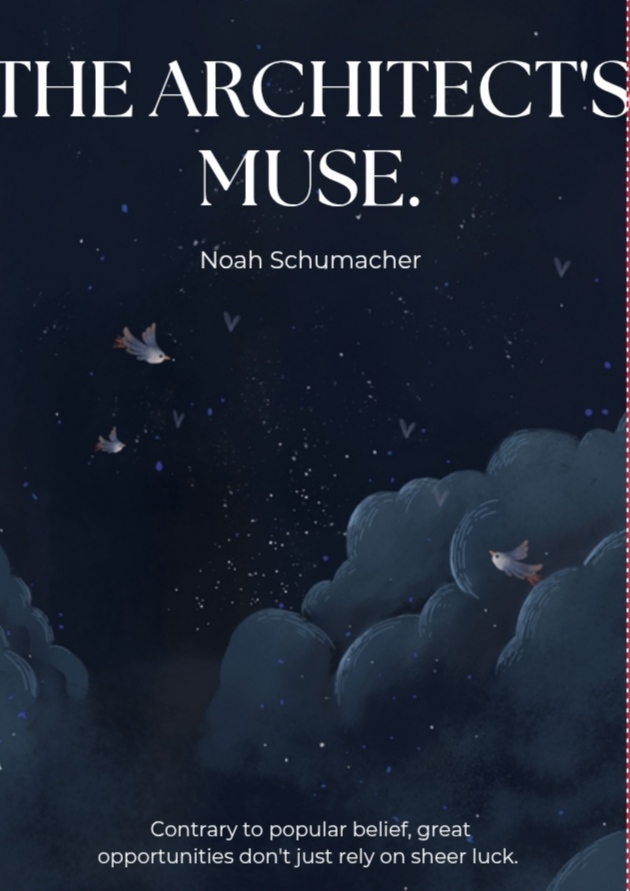

Three days can save a house.
But one signature can kill the person inside you.
If it were you, what would you choose?
Recommendation for you
-

Recommendation
Blood Moon
BL 48.2k likes
-

Recommendation
Find Me
Romance 4.8k likes
-

Recommendation
Primalcraft: Scourge of the Wolf
BL 7.3k likes
-
Recommendation
Silence | book 2
LGBTQ+ 33.2k likes
-

Recommendation
The Sum of our Parts
BL 8.9k likes
-

Recommendation
Silence | book 1
LGBTQ+ 28.5k likes
-

Feeling lucky
Random series you may like
The Architect’s Retribution
1.7k views0 subscribers
One night was enough to destroy everything.
A family on the brink of survival loses their home, their company, and their future to a man whose name should have stayed buried in the past.
As secrets resurface and power shifts hands, a quiet revenge begins to take shape—cold, calculated, and inevitable.
Some debts demand more than money. They demand the truth.


Comments (0)
See all