
Don’t confuse your colleagues with friends.
That was something José believed in firmly.
In his ten-plus years of career, after changing and passing through several companies, maybe not as many as his current manager Mark, he had learned that lesson well. Not because he had been hurt. He was grateful for the people he met along the way. But he also knew perfectly well that colleagues were friends only at work. A real friend cared about you outside of it. And a real friend wasn’t the one who came over to borrow an egg, or to watch a match together, or to grab a few beers after hours.
A real friend stood by you in everything. In the bad and the good. A real friend didn’t envy your successes, but celebrated them.
After leaving Portugal, José had kept two friends back home. But the little contact and the distance often built a barrier, and the things he said to them over the phone or in messages didn’t flow the way they would have without that damn wall between them. Even so, he was happy with what he had. Because back there he still had his family—and Anna, who had always been by his side, since they were kids.
Even that night when it rained with lightning splitting the sky, that damned night when the night refused to turn into day and, according to his mother, they had to hold the velório* Anna was there. Just his friend back then, she hadn’t left his side. On that rainy night, when even his two closest friends sent only a simple “I'm sorry for your loss” and “whatever you need, we’re here,” on that rainy night that turned into a filthy, muddy morning, Anna stayed up all night, still there, next to him.
The day his father died made him realize many things. He was old enough to understand then—fifteen. Now, twenty years later, the grief had faded. He still remembered his father: the mornings he woke up at five fourty, left the house at six fifteen, and caught the six-thirty bus to work. He remembered how, at fifty, he used to say he’d never grow old. He remembered how he ate with his left hand even though he was right-handed. How, every time little José played football with his friends, he’d say he’d never make it as a footballer—and smile. Or how every Friday he’d come home with a bag of ovos moles**, because José loved them.
The memories remained, good and bad. Like the time he scolded him for the terrible grade on that test. Or when he was running with that clique of “little delinquents,” as his father called them, and they caught a bee and stung that poor boy who was allergic, sending him to the hospital. He still regretted that, even though the boy turned out fine.
His father had tried to protect him from many things. Back then, he hadn’t understood. Now he did—completely, honestly.
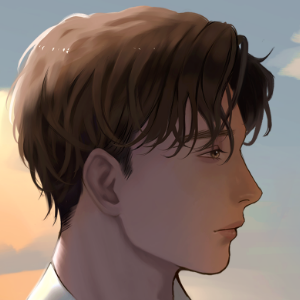
The memory of his dad was still there. Everyone said he looked just like him. He might have had his mother’s big brown eyes, but everything else was a carbon copy of his father, the relatives said. Sometimes, through himself, he imagined his father. But he didn’t cry anymore. He didn’t feel like crying. Even though that night he had held everything in, stood through the velório when all he wanted was to crawl into bed and cry quietly, the tears had finally come the very next muddy day, at the funeral.
He and Anna had been together since they were eighteen. They had broken up twice—once when she went to Spain for two years and eventually came back, and once when he asked for space after his mother found another partner and told him about it. Now he saw Roberto as his father. He even called him 'Dad'.
But apart from Anna, his family, and his few friends, none of them had followed him to the rest of Europe. His family couldn’t—his parents were elderly now. Anna was thinking about it, but she still had her job there. His friends had already built their lives in Portugal.
Many times, when Anna wasn’t in Belgium, something felt missing. Maybe someone. Colleagues weren’t friends—they were company—and he had made that clear to himself long ago. Even so, he found comfort in that company, even if it was limited to mornings. It was a good environment to work in.
The break room was packed, and those coming in could barely find a chair. During the engineers’ one-hour break, most of them gathered in the small cafeteria with its three large tables.
José opened his lunchbox and smiled. Anna had made him meat with rice and vegetables. And inside the bag he found his favorite sweet. Ovos moles. If he had a whole bag of them in front of him, he’d eat it in one go.
“Did you see the match the other day?” he heard Aaron ask Bruno.
“No. My girlfriend’s staying with me these days, I didn’t watch anything,” the young man replied.
José shook his head. “My girlfriend’s here too, and honestly, I feel like I’m eating proper food again after a while,” he commented.
Bruno smiled and lifted his hands lightly. “Tell me about it. Same here. Though my girlfriend can’t really cook.”
The people around the table laughed softly.
“Anna says she’s alone and doesn’t know what to do when I’m at work. She’s gone into the city, but I don’t really trust her. She doesn’t trust herself either. We both know that even with GPS, she’ll end up on the wrong train or metro,” José said.
“Why don’t you tell her to go out with mine?”
José lifted his gaze from his plate and looked around the table. When he found the face the voice belonged to, he raised his eyebrows.
Carlos bit into his sandwich and chewed with his mouth open. “Mine works from home most of the time—at least four days a week—and only does four-hour shifts. They could meet up, keep each other company,” he said through a full mouth.
“You and yours live in the middle of nowhere in Wallonia. How many hours would it take José’s girlfriend to get to yours, genius?” Michael shot back. And if Michael said it, he probably knew.
“They could meet in Brussels. In the center.” Carlos shrugged without taking his eyes off his sandwich.
José stirred his food. “Thanks,” he said, leaning slightly to look at the man four seats away in the same row. “I’ll mention it to her.”
“Just let me know if you want to exchange contact details.”
Silence settled for a moment. The buzz of conversations around them filled José’s ears. Sometimes all that noise felt suffocating. Aaron was still explaining the match to a very focused Bruno.
“Oh, by the way, has anyone heard about that company party?” Ruben cut in. “What company party and what kind of bullshit is that?”
José nodded. “Yeah, I heard. There’s a barcode on the fridge.” He pointed to the fridge on his left, next to the white kitchen cabinets. There were three fridges in the kitchen—two gray metal ones and a smaller white one between them, plus a machine for watery coffee. The barcode was stuck on the white fridge, with a sign above it: STREET IS ORGANIZING THE COMPANY PARTY FOR THE NEW YEAR 2024. Below, in smaller letters on a blue background, it said those interested had to register through the barcode by Monday, inclusive.
“I signed up. I’m going.”
The people at José’s table looked at the man who had spoken. Chris, a young Irishman, stared at the bread in his hands. Even though he didn’t speak Portuguese, he understood what they were talking about more or less. One year with these Portuguese guys and he’d be fluent soon enough. Only Aaron paid no attention, still explaining the match in English. “It’ll be fun, why not?” Chris took a bite of his bread.
“What the hell is this,” Ruben muttered again.
Bang.
Carlos jumped up from his chair, grabbing his phone, a piece of sandwich still in his mouth.
He unlocked it, walked over to the fridge, and held it steady with his left hand. With his right, he pulled the sandwich from his mouth. “Why not, actually,” he shrugged. “Could be fun.” He scanned the barcode and looked at the questionnaire he had to fill in.
The others ignored him. Most of them knew what Carlos was like—unpredictable, unreadable. Sometimes he acted like a child, other times like a serious adult.
Some said they’d go after all; others weren’t sure. Eight out of the ten at the table were considering it. Ruben kept muttering about parties and “nonsense” under his breath.
José thought about it. The party was strictly for Street members. He wouldn’t be able to bring Anna.
Or maybe he could?
*velório is the traditional wake held before the funeral.
**Ovos moles are a traditional Portuguese sweet made primarily from egg yolks and sugar.







Comments (0)
See all