
The map room smelled faintly of ink and old parchment, of wax seals broken and remade. Morning light bled through the mullioned windows, casting the tables in gold and dust. Across one of them lay a vast map of the realm—ink rivers winding through valleys, banners marking borders, pins and string tracing the fragile line between peace and war.
Aerion leaned over it, robe open at the throat, fingers glittering with rings that caught the light like small, defiant suns. “Tell me again,” he said, exhaustion nagging at his voice, “how many soldiers they’ve moved to the eastern ridge.”
Captain Thorne, a scarred man in the Archduke’s service, cleared his throat. “As of the latest report, my lord: five companies. Nearly three thousand men. Mostly archers and light cavalry.”
“And all of them gathered under the banner of Redmere.” Aerion’s gaze sharpened, following the crimson pin that marked the enemy’s border. “They haven’t dared this much movement since the Treaty of Silverspire.”
“Provocation, my lord,” Thorne said grimly. “Or preparation. Our scouts say they’ve built new fortifications along the river. They claim it’s for flood defense.”
Aerion’s mouth curled. “Ah yes, the yearly floods that require catapults and siege engines. I’ve heard they can be quite stubborn.”
The room’s laughter was nervous, fleeting. None of the men present—officers, aides, even the cartographer hunched in the corner—missed the tension beneath Aerion’s mockery.
He straightened, resting one hand on the map, fingers splayed over the borderlands. “If Redmere wants war, they’ll find our walls ready. My father’s bond with the king was forged on battlefields far worse than this.”
One of the younger aides shifted uneasily. “With respect, my lord, the Archduke’s health—”
Aerion’s eyes cut to him, sharp enough to still the air. “My father’s strength is not in question. Nor his loyalty. The king trusts him above all his lords, and by extension, his son.”
It was known, but not spoken of, that in the bloody fight between princes for the throne, Archduke Valemont, the second prince, slaughtered his brothers to place the current King, his younger brother and the fifth prince, on the throne.
Clyde stood at the far wall, silent as ever. His eyes tracked Aerion’s every motion, the tilt of his head, the restless way his hand lingered over the map. There was sharpness beneath the performance, a calculating mind hiding under the peacock’s plumage.
Aerion tapped the table once. “We’ll double patrols along the eastern watchtowers. Send word to Fort Halvern that they’re to keep signal fires ready. And recall the Third Cavalry from the southern border—if Redmere marches, they’ll strike north first.”
Thorne hesitated. “And the reports of… the creatures, my lord?”
The question hung strangely in the air. Even the torches seemed to flicker.
Aerion’s expression shifted—small, barely there, but enough that Clyde noticed. “Creatures,” he repeated. “You mean the demons.”
“I wouldn’t use that word, my lord,” Thorne said carefully. “But yes. Our men claim they’ve seen things in the forests. Wolves that don’t bleed. Boar carcasses torn apart from within. One patrol went missing two nights ago—no tracks, no struggle. Just gone.”
Aerion’s gaze drifted toward the window, where morning light struggled through the fog rolling down from the hills. “And this is nowhere near the border?”
“No, my lord. The sightings are west of the river, deep within our own lands.”
The silence that followed was thick as tar. Aerion’s fingers stilled on the table. When he spoke, his voice was softer, stripped of its usual mockery. “It’s not Redmere, then.”
“No, my lord.”
Clyde stepped forward, his tone low but certain. “Whatever it is, it moves like a predator, not an army. Your walls won’t stop it.”
Aerion’s eyes flicked to him. “And what do you suggest, Sir Clyde? I arm the gardeners with pitchforks and prayers?”
“If it kills soldiers, it’s a matter for knights, not farmers,” Clyde said evenly. “You should send a hunting party.”
“I should do nothing that risks a panic,” Aerion snapped back, then exhaled sharply, rubbing his temples. “If the people start believing the old stories again—demons in the woods, cursed fields—the harvest will rot in the barns before fear does the rest.”
Thorne exchanged a glance with another aide, but neither spoke. Aerion pushed away from the table, pacing toward the tall windows. Beyond them, the mist clung to the horizon like smoke, obscuring the far hills where the border faded into uncertainty.
“The east threatens war,” Aerion said quietly, almost to himself. “And now the west whispers of monsters. Tell me, Captain, are there any corners of this realm that don’t wish to devour us?”
“None that I’d wager coin on, my lord.”
Aerion laughed once, bitterly. “Then perhaps we should stop calling this peace.”
He turned back to the table, eyes bright and hard. “Keep watch on the border. But send a small company north of the forest. Discreetly. I want to know what hunts our men.”
Thorne bowed and began gathering the maps, murmuring orders to the aides.
When they were gone, the chamber fell quiet. Aerion leaned against the edge of the table, fingers tracing absent circles in the dust where the pins had been. “You think me a fool,” he said without looking up.
Clyde’s voice was level. “No.”
Aerion glanced over his shoulder. “Then what?”
“I think you’re afraid.”
The air stilled.
Aerion’s laugh came sharp and soft, like glass breaking. “Afraid? My dear Hound, I’m many things, but never afraid.”
Clyde met his gaze, unflinching. “You care for this land more than you pretend. That’s what frightens you.”
Aerion’s smile froze, faltered, then returned—tighter, brittle. “You mistake caution for care.”
“Do I?”
“Leave, Sir Clyde.”
Clyde inclined his head and obeyed. But as he stepped into the hall, the faint echo of Aerion’s laughter followed him; a brittle sound that cracked before it reached the door.
Night came late to Valemont that evening, the sky refusing darkness until the last streaks of gold had drowned behind the mountains. When it did fall, it fell heavy, thick with mist that curled around the ramparts and muffled the world to breath and shadow.
Aerion sat alone in his father’s solar, a single candle burning low beside an untouched goblet of wine. The great hearth crackled but threw little warmth. Maps still littered the table from the morning’s council; their edges curled with wax drips and the faint smell of ink. He traced one idle finger along the border marked in red, following it until the parchment ended and the uncertainty began.
The sound of boots echoed faintly from the corridor; guards changing post. Beyond that, silence.
Aerion leaned back, rubbing a hand across his eyes. His father slept fitfully these days, leaving the estate’s weight to him, and though Aerion wore it lightly in daylight, with laughter, mockery, and jewel-bright defiance, tonight it pressed down like chainmail. The laughter was gone. The mask was gone. Only the man remained, and the man was so very tired.
He rose and moved to the window.
Below, the courtyards lay drowned in fog, torches flickering like drowned stars. From somewhere in the distance came the low moan of a horn—one of the night watch, signaling nothing more than the passing hour. And yet the sound dragged through him like a warning.
He sipped his wine at last, the bitterness grounding him.
When he looked east, toward the unseen front, he thought of Redmere’s banners gathering like crows. When he looked west, toward the forest, he thought of the beasts the captain had spoken of—wolves that didn’t bleed, boars split open by something older than teeth.
“Not Redmere,” he murmured to the dark. “Then what?”
The candle hissed as its wax reached the end. Shadows crawled long across the floor.
Then— a sound.
Soft. Distant. But not the horn, not the sea-wind, not the restless cry of an owl.
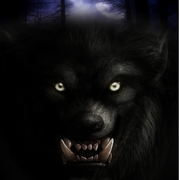
A howl.
Long, low, and unearthly. It rolled across the hills, threading through stone and silence alike until it touched even the highest tower. Not loud enough to rouse the guards. But Aerion heard it. He felt it.
Something primal stirred beneath his ribs, the faint, irrational sense that he was being watched. He stepped back from the window, heartbeat quickening despite the walls around him.
Another sound followed—fainter, like claws against stone. Then nothing.
Only the wind.
Aerion stood still for a long moment, gaze fixed on the darkness beyond the glass. His reflection looked back—golden hair, sharp eyes, the faintest tremor of breath. He lifted his chin, forcing calm, forcing arrogance, forcing himself.
“Wolves,” he said aloud, voice cutting the quiet. “Only wolves.”
But when he turned away, he lit another candle before leaving the room.






Comments (0)
See all