
The wedding was on a Thursday.
Seralyn had not chosen Thursday. She had not been asked. She had received notification of the date the same way she received most information about her own life — in writing, after the decision had already been made, delivered by a steward who kept his eyes on the floor and did not wait to be thanked.
That had been six days ago.
She was awake before Thessaly arrived. She had been awake since well before dawn, lying on her back in the dark with her eyes open, which was not a thing she did. She was not given to sleeplessness. She was not given to lying in the dark feeling the ceiling press down on her. She was given to solutions, to the disciplined application of reason to problems, to the identification of what could be changed and the acceptance of what could not. She had accepted this. She had told herself she had accepted this so many times over the past three months that the words had ceased to carry meaning.
She had not accepted this.
She got up before the light came. There was no use in lying there. She crossed to the window and sat in the window seat and looked out at the Vethian Sea, which was dark and flat and entirely indifferent, and she thought: today. It is today.
Her hands were in her lap. She looked at them. They were steady. She hated that they were steady.
Thessaly arrived at the customary hour with a customary efficiency and took in the situation — Seralyn already up, already dressed in her morning robe, sitting at the window — without comment. She set the tray down. She poured the tea. She placed the cup on the windowsill within reach and stepped back.
Seralyn picked it up. The warmth of it was the most real thing in the room.
"How long have you been awake?" Thessaly asked.
"Long enough."
Thessaly looked at her and did not press it. "The gown is ready," she said. "I pressed it again last night."
"You did not need to do that."
"I know."
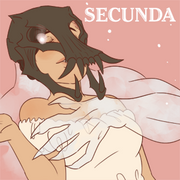
Seralyn looked at the sea. The light was coming up now, grey at first and then the pale gold that Aelundra did better than anywhere else in the world, and she thought: I will not see this light again. Not like this. Not from this window, in this room, as the person I am in this room. She pressed the thought flat before it could open into anything larger. She was extremely good at pressing thoughts flat. She had been doing it since she was fifteen years old and she had woken one morning with wings she had not asked for, and the two skills had developed together.
"Seralyn." Thessaly's voice was quiet.
"I am fine."
"I did not say you were not."
"You were about to."
"I was going to say that you are allowed to be not fine. Here. This morning." Thessaly moved to stand beside the window. "Whatever you are carrying in there, you may set it down for a moment. There is no one to see it."
Seralyn looked at her tea. The surface of it was perfectly still.
She wanted to run. It was not a rational want and she knew it was not rational and it did not help to know that. She wanted to go through the window and down the cliffs and into the sea and simply stop being the eldest child of King Orath Duskengrove — who was a woman and therefore not an heir, who was a woman and therefore a piece on someone else's board, who had read every dispatch from the eastern border and understood every argument for this arrangement and could not make any of that understanding touch the part of her that was furious. Quietly, precisely, immovably furious.
At her father, who had not asked.
At her mother, who had not argued.
At Orren, who would inherit without having done a single thing to deserve it beyond being born with the correct anatomy, and who would do it charitably and without cruelty and without ever once understanding what he had been handed.
At the war, which was not Vorrach's right to wage and was not her responsibility to solve and was being solved at her expense regardless.
At the whole long architecture of it — the way it had been built around her without her knowledge, signed without her signature, sealed with her name attached to a document she had not been shown until it was already binding.
"I want," she said, and stopped.
Thessaly waited.
"I want to not do this," she said. It came out very flat and very quiet, and the flatness of it was worse than if it had come out any other way, because it was true and she knew it was true and saying it changed nothing about what was going to happen in four hours.
"I know," Thessaly said.
"I am going to do it anyway."
"I know that too."
Seralyn set the cup down. She sat with her hands in her lap for a moment, looking at nothing in particular, and let the anger be exactly as large as it was without doing anything about it. Suppression did not make things smaller. It made them denser. If she let it be as large as it was for a controlled interval, it became slightly more manageable afterward. Not gone. Never gone. Simply organized.
She gave it two minutes.
Then she stood up and said: "Let us begin."









Comments (0)
See all