
The first orbital tether didn’t light the sky all at once.
People expected that.
They expected countdowns.
Launches.
A single historic moment where the world suddenly changed.
But that wasn’t how the Horizon Orbital Platform network came alive.
It happened slowly.
Quietly.
Like roots spreading beneath soil.
High above the Pacific relay corridor, maintenance drones drifted along the unfinished tether lattice while the first synchronized shard relays exchanged low-bandwidth pulses across the upper atmosphere.
Not enough for global activation.
Not yet.
But enough for the system to begin recognizing itself.
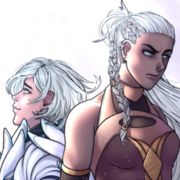
Aria leaned against the observation rail as the orbital line shimmered faintly against the dusk sky.
“It’s strange,” she said softly.
“What is?” Virel asked.
“That humanity spent fifty years building something most people would never notice turning on.”
Below them, cargo lights moved silently across San Altman’s canal districts.
No fanfare.
Just continuity.
Virel adjusted his glasses.
“My grandfather used to plant milkweed.”
Aria glanced toward him.
“For monarchs?”
He nodded.
“He said the first few years felt pointless.”
Above them, another relay pulse crossed the orbital tether network—faint, incomplete, still searching for synchronization.
“He kept reseeding every season,” Virel continued.
“Sometimes twice a year.”
“What changed?”
“He stopped treating it like a single garden.”
“He used to get anxious about it,” Virel said.
“Depressed, too. Said nothing ever lasted long enough to take root.”
Below them, canal lights shimmered against the dark water flowing through San Altman’s lower districts.
“Then he started learning how other people restored habitats.
Different soil depths.
Different seasons.
More reseeding.
More patience.”
A maintenance drone drifted silently across the distant tether line.
“One year, a single plant survived,” Virel said.
“Then another year… a few more.”
He smiled faintly.
“And after that, he started reseeding again.”
Aria looked upward toward the unfinished orbital lattice stretching into the clouds.
“Not because it failed,” she said quietly.
Virel nodded.
“Because it finally had a chance.”
Far beyond the clouds, one of the orbital construction intelligences awakened another relay cluster.
A tiny pulse crossed thousands of kilometers of dormant infrastructure.
Small.
Almost invisible.
But no longer alone.
People think the future arrives all at once.
But some things have to learn how to grow first.
This micro episode was inspired by the quiet reality that meaningful systems — ecosystems, cities, relationships, and even futures — often grow much slower than we expect.
Not everything changes overnight.
Sometimes the first signs of success appear years later.
Have you ever worked on something that took much longer to grow than you originally expected?
If you enjoyed this micro episode, please like, comment, and subscribe on Tapas to support Cyber Evolution: Aria’s Journey.
Every reader helps keep the signal alive.




Comments (0)
See all