
Views blurred into a haze; a distant train rang somewhere far off. Konin’s breath came in heavy, ragged pulls as he hit the ground. The world split into three—sinking and spinning—and lights stabbed at his eyes. He tumbled, rolled along the floor. Mud and water smeared his face; for a long moment he lay still, trying to breathe.
A low grunt—almost a growl—came from nearby. “Are you crazy?” someone snapped.
Konin lifted a hand to his side and pushed himself up. “Sorry,” he muttered, turning toward the voice. Faces swam; he couldn’t make any of them out. He wavered as he tried to steady himself. Another voice soothed the bystander, but before they could do more, Konin bolted.
He ran. He didn’t know where he was going; he only knew he had to get away. Wind tugged at his hair as he tore down the street. He ran until his legs burned and cramped; when he could go no further, he stopped.
“Hah, hah, hah…” He slumped against a wall and sat there, panting. Engines rumbled and people murmured nearby—proof he wasn’t far from home. He tilted his head back and let the cold air fill his lungs.
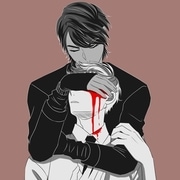
How long he sat, he didn’t know. When he finally opened his eyes, he found himself staring at his own feet: ants marching on the pavement, cars and buildings filling his view. He glanced down at his clothes—no uniform donned—and noticed dried red on his hand, veins of color dark against his skin. “What are you doing?” he asked himself, lips sucked in, an old habit resurfacing.
He pushed himself up and stepped into the nearest convenience store. The automatic doors beeped and folded open. He went straight to the counter. “Never do that again,” he scolded.
He fell into line and waited. “Everything. From class, to whatever you were doing on the bus,” he continued. Konin looked at the people around him; they stared strangely. At first he blamed the red on his palms, then realized his ears felt light—empty—without his EarPods.
He shook his head. You fool, he thought, peering at his hand. The redness seeped away as if sinking into the skin; moments later his hand looked ordinary again.
When it was his turn, the clerk began, “Hi—” but seeing him she went pale, recoiled as if the sight of him had drained her color.
“Emerald Ridge,” Konin said flatly. The clerk blinked, clearly lost. Konin pointed at the display behind her.
“Right—right.” The clerk reached, knocking a few items to the floor. Konin checked the clock besides her: nine PM. She scanned the pack and handed it over. He drew the last useful thing he had—his wallet—and set money on the counter.
The clerk watched him leave, not even realising she'd just sold cannabis to a minor.




Comments (0)
See all