
The road to the home seemed like an endless ribbon of gray dust and despair. The Berge estate greeted her with peeling paint, boarded-up second-floor windows, and the smell of abandonment. Her father gave her no time to cry. As soon as they crossed the threshold, Berthold announced that her fate had been decided.
“You will live on the border. Albert has agreed to take you without a dowry. What’s more, he will even pay.”
Berthold’s face twisted into a grimace. Amid this dreary house, Azalea looked out of place in her dress.
The wedding was quiet, almost secret. A small chapel, five witnesses, and Albert, a man she was seeing for only the second time in her life.
“I agree,” she whispered, without looking up. She didn’t agree. But what was she to do?
Over the past week, thoughts of escape had flashed through her mind dozens of times. However, she didn’t know where to go. Her mother’s relatives? There were none left. On her father’s side, she knew only his brother, who had no love for the fugitive who had taken control of his wife’s family and ruined it. The royal family hadn’t even crossed her mind.
The priest said something. Berthold didn’t even wait for the ceremony to end. She was left alone, surrounded by people of whom she knew only Albert.
The celebration ended quickly. And after that, a long journey to the border awaited her. Three days in a dusty wagon until they reached a small village where a garrison was stationed.
Small houses. A road that never dried out during the rainy season that had engulfed the region. Soot. The border beyond which the Eastern Empire stretched. And Azalea in the midst of it all. Alone. With a man who barely spoke to her.
When the carriage stopped in front of a dilapidated house with a crooked door, Azalea felt reality finally close in around her.
“We’re home,” Albert said dryly, picking up her bags. She didn’t have much with her. When she left home, she discovered that all the clothes that had been made for her at the palace were gone. As it turned out later, Berthold had sold those too.
Azalea went inside. A layer of dust on the floor, sparse furniture, and a cold that penetrated to the bone. There was no bright light here. Only the bleak, gray future of a woman who had to forget that she had once sat in Her Majesty the Queen’s garden and discussed with her what gift to prepare for the king.
Azalea stood in the middle of the gloomy room. This was the life that was now her reality.
Azalea’s mornings began with the acrid smoke from the stove, which refused to catch fire. Albert always left early, which meant that all the household chores fell on her shoulders. Her fingers were covered in small cuts and burns. The ointments she had brought from the palace had long since run out, and the local soap smelled of lye and mercilessly dried out her skin, leaving cracks in its wake.
Albert wasn’t a bad man, but he was a product of his class and his service. To him, his wife was a reliable support system. He didn’t ask her about her feelings. Their rare conversations were mostly about whether dinner was ready and what needed mending.
“You didn’t eat anything again today,” he remarked one evening, pushing away her empty plate.
“I didn’t feel like it,” Azalea replied quietly, wrapping herself in her shawl. The house was constantly drafty, and no amount of cleaning could banish the smell of old dampness.
“You need to toughen up. Winter’s coming soon, and it’ll be harsh here. This isn’t the capital. And it’s not Greyholm. Winter will arrive two months earlier than you expect. Don’t let it catch you off guard.”
She nodded, looking out the window. There, beyond the dirty glass that refused to clean, soldiers were training. Dirt, shouts, the smell of horses.
Azalea tried not to think about Gerhard. Not to remember the color of his eyes or the sound of his laughter. Every time the image of who she used to be surfaced in her memory, Azalea would set about the hardest work. She scrubbed the floors until her back began to ache, or washed clothes in icy water so that the numbness in her hands would bring her back to her senses.
She was physically erasing from herself a past that no longer belonged to her.
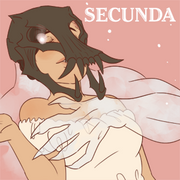
The months blurred into one endless gray day. Azalea learned to save every penny, haggle with the local peasant women at the market, and cook a stew from the cheapest ingredients. She had become a shadow of her former self. Thinner, her hair perpetually pulled back into a tight knot, her eyes dull and lifeless.
But sometimes, at night, when Albert slept the heavy sleep of a weary warrior, she would pull a book of poetry from the very bottom of her trunk. One she’d bought at a flea market with her saved money. She didn’t read it. She simply touched the cover, recalling how the light had streamed through the windows of the Royal Palace library. In those distant days, she dreamed that one day she would write herself. Perhaps not poetry, but short stories. Azalea had even read some to the queen, and she always gave her honest feedback. At such moments, Gerhard would usually joke that Azalea would have fared better than he did at the Royal Academy.
The girl smiled sadly. A single tear rolled down her cheek.
The day began deceptively calmly. Albert had left for work before dawn, mentioning some commotion at headquarters, but Azalea, lost in her own thoughts, didn’t think much of it. She needed to make her way to the market at the other end of the settlement. Rumor had it that some inexpensive grain had been delivered there.
She walked down a narrow street rutted by hooves, wrapped in a faded shawl. She carried a heavy basket in her hands. Her thoughts were occupied solely with how to stretch her remaining coins until the end of the week.
Suddenly, the familiar hum of the garrison gave way to the solemn sound of trumpets. The pounding of many horses could be heard from the direction of the main gate. Passersby began to press themselves against the walls, craning their necks.
“The prince? It’s Crown Prince Gerhard himself!” someone in the crowd shouted.
Azalea froze. The world around her swayed. Ahead, at the end of the street, horsemen in gilded armor were already coming into view. At the head of the column, in gold-embroidered armor, was His Highness the Crown Prince.
Gerhard sat atop a magnificent white horse, his cloak, embroidered with the family crest in gold thread, fluttering in the cold wind. He looked like a god who had descended from the heavens to this place. He was saying something to the officer riding beside him. People watched with a mixture of curiosity and admiration. Some whispered that the young heir would soon ascend the throne.
Azalea lowered her head in terror, hiding her face in the shadow of her hood, and darted into the nearest muddy alley. She ran until she tripped over a box someone had thrown away. The basket flew off. Her hands were covered in greasy mud mixed with the remains of rotten food. The girl tried to get up, slipped, but managed to keep her balance. She slowly got to her knees and finally stood up straight. Her shoulders were shaking. She pressed her back against the cold stone wall, breathing heavily. Through the gaps between the buildings, she saw the column passing by, just ten steps away.
And at that moment, pain pierced her. It wasn’t the pain of unrequited love or longing for a friend. It was a searing, suffocating hatred of herself. She looked at her hands: red from the cold, dirty, with broken nails. She smelled the scent of cheap soap and sweat emanating from her own clothes.
Azalea von Berge, who once debated history, politics, and poetry with the future king, had become this. A gray shadow hiding in a trash-strewn alley, so as not to offend His Highness’s gaze with her insignificance.
Azalea slid down the wall until she was crouched. The first sob escaped against her will, followed by a flood of bitter, uncontrollable tears. She wept aloud, covering her face with hands scarred by labor. She didn’t care that she would smear her face with stinking mud. She wasn’t mourning Gerhard. No. She was mourning the girl she had allowed to be killed. In that cry came all the bitterness of the last few months, all the humiliation of her marriage, all the dust of their dilapidated house.
She was so consumed by her grief that she didn’t notice a man wandering into the alley.
He walked with an uneven, unsteady gait, typical of those who spend too much time in border taverns. A worn raincoat, a hat pulled down over his eyes, an ordinary vagrant or a mercenary who’d gone broke. Noticing the weeping woman, he froze. His cloudy gaze cleared for a moment.
The man did not come closer. He did not offer help. He simply leaned against the opposite wall, hidden by a thick shadow.
In the silence of the alley, through Azalea’s sobs, a steady, barely audible sound could be heard.
Clink. Clink. Clink.
A man was tossing a coin. The golden disc would fly upward, catching a random glint of light, and fall back into his palm with a crisp metallic sound.
Azalea couldn’t see his face, but that sound, rhythmic and calm, became the only thing keeping her grounded in reality. The stranger stood there, in the shadows, like a silent sentinel. He watched over her tears until the last horseman from the prince’s retinue disappeared around the bend and the fanfare faded into the distance.
When Azalea finally raised her head, wiping her face with the edge of her shawl, the alley was empty. Only where the stranger had stood, in a muddy corner, remained a clear bootprint and a faint scent of expensive tobacco, which did not fit the image of a drunkard at all.
Azalea stood up and picked up the empty basket. Her eyes were dry, and her gaze was icy. That day in the alley, she had left her last tears. And a piece of her soul.
P.S. Gerhard stood in his study, hesitating to order that Azalea be found and brought to him. His mother had told him that his friend was somewhere in these lands. He would have been glad to see her, but there was something holding him back. He knew the girl better than anyone else. It wasn’t at all that he didn’t want to interfere in her life.
He walked over to the narrow window of the garrison tower, gazing out at the gray plains where a cold wind blew. Gerhard remembered her in a pink dress, pale and lonely amid the splendor of the Spring Festival. Back then, he hadn’t found the words, hadn’t found the time, blinded by Ingrid’s smile and the weight of his own crown. Now, however, when rumors reached him that Azalea had started a family before he had, a strange, almost shameful feeling stirred in his chest.
He wanted to walk in, laugh in his usual way, and joke about how quickly she had gone from being a young girl to the mistress of her own home. But most of all, he was afraid to see her happy. He was afraid to see in her eyes the peace and light she had found without him, without his protection, and without his “friendship”, which had proved so fragile in the face of court intrigues.
If she was happy with another, if she had truly found her place in these harsh lands, then what had he been in her life? Merely a brief episode, a shadow from the past that she had perhaps already learned to forget. The order to “Find Azalea von Berge” froze on his lips, unspoken and heavy. Gerhard understood. He hesitated not because of a strange tightness in his chest, but because he had to choose a different path. A path on which there was no place for someone close to him.










Comments (0)
See all