
After spending three hours deliberating upon the words, Amalia had sent a letter to Lady Margaret. It had read as follows:
Dear Lady Margaret. I hope this letter finds you well. As I continue to deliberate upon and carry out Euphemie’s punishment, it has come to my attention that you are the one in possession of her contract. As I am now her steward, I believe this contract would be most suited for my hands. Please send it my way at your earliest convenience. Best, Lady Amalia Elizabeth Christine von Mondlicht.
She had sent it to Silberwald whilst barely swallowing down her nerves and now waited on edge for a reply.
At least Euphemie seemed to have calmed down.
Something odd was happening. Euphemie kept showing up in the spaces around her. She would not directly address her, but neither would she ignore her. Instead she seemed to hover just in the periphery of Amalia’s gaze, steps softer than a cat, eyes just as focused.
Amalia did not know what to make of it. Nor did she understand how to respond. How could she make Euphemie comfortable?
On one particularly rainy day, she put out a plate of cookies in the middle of the library and sat there with her work, for a change of pace.
Euphemie strolled into the room not long after, wandering among the shelves and making a great show of selecting a book. She then carried it over to a chair nearby the table at which Amalia sat. Opening the book-- a rather dry history and overview of the Holy Empire’s regional cheeses, which Amalia regretfully had already read cover to cover-- Euphemie glanced over at Amalia, then the plate.
Amalia nodded at Euphemie in the least threatening way possible, and pushed the plate in her direction. Nothing happened at first. Amalia was treated to the sight of Euphemie staring intently at each page of her book, then flipping it. Over and over. This one at least had many pictures and diagrams for her to look at.
The cookies remained on the plate. Amalia sent for two cups of coffee, which Elizabeth dutifully brought into the library, in addition to a little pitcher of cream and a bowl of sugar.
Amalia poured a little into her coffee and stirred it.
She took a sip. It was very good.
“Euphemie--” she began, and then paused, loathe to interrupt the other woman’s grave concentration. But it was too late. Euphemie startled and looked up from her book.
“Yes, Lady Amalia?” She asked, voice soft.
“You are welcome to have some,” Amalia said.
Euphemie considered the plate before her, perhaps wondering if it was poisoned. Amalia took a cookie, dipped it into her own coffee, and bit it. The warm liquid had softened it; together the flavors of coffee and vanilla danced in her mouth. In the cold north that made up Mondlicht, this was a great delicacy.
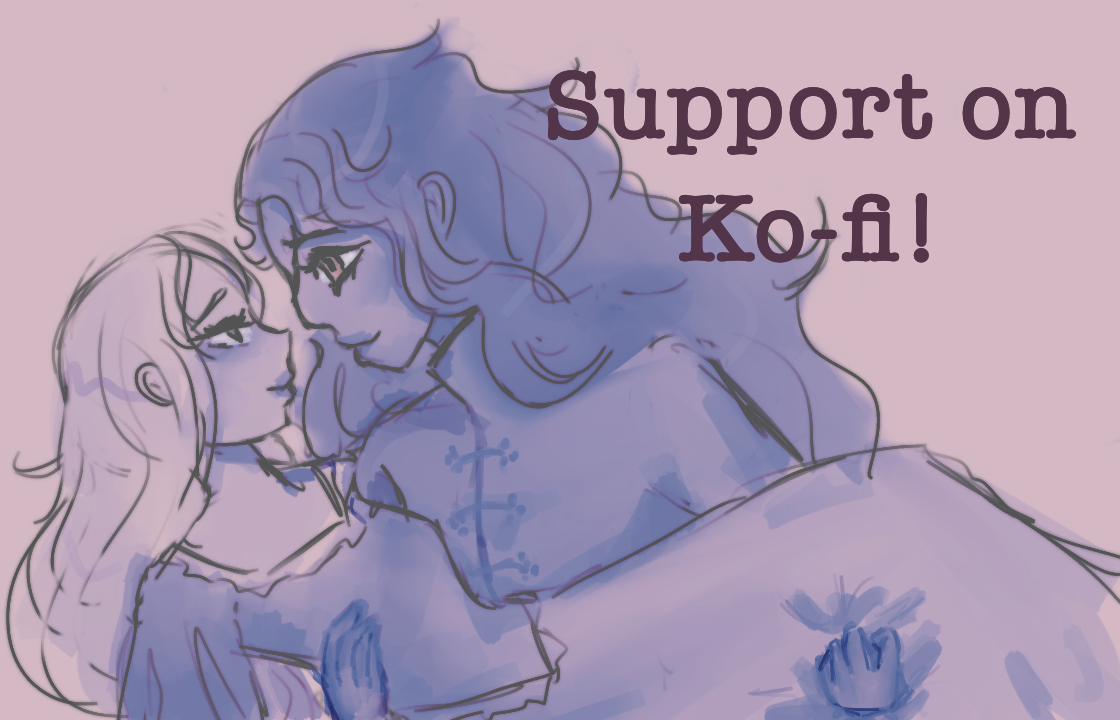
Euphemie glanced at Amalia, at the plate of cookies, and then her own cup. She reached out, then grasped one between a pale finger and thumb, and brought it to her mouth. As the cookie disappeared behind soft, pink lips, it occured to Amalia she was staring.
Euphemie was staring right back.
For a moment, neither said a word. Amalia felt like a teenager once more, sitting awkwardly at a tea party as the Duchess of so-and-so looked her up and down and found her lacking. Except that there was no judgement in Euphemie’s eyes. With furrowed brows she went about the steps to make herself coffee, pouring it, dousing it with sugar and cream, and drinking a sip. Then she dipped a cookie into the warm drink and brought it to her lips.
This time, Amalia noticed the pearly color of Euphemie’s nails, like soft shells. Yet they looked paler than they ought to be, and a little too brittle.
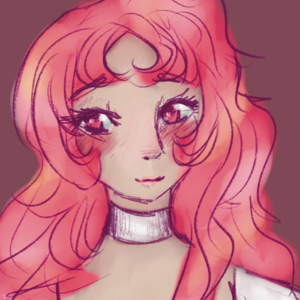
Amalia reached for her coffee and considered Euphemie before her. She was so thin and pale she seemed barely a wisp of a ghost, her hair brittle and scraggly where it ought to be lush.
“Will you come to dinner with me?” Amalia asked, and then frowned.
So far, meals had been taken to Euphemie wherever she deigned to be, usually her own room or the library. At this point, it was okay for Euphemie to be consuming more than a little porridge. Yet, despite the more complex foods being brought by the maids, the signs of malnourishment were there.
Amalia admonished her foolish self. She had been steering clear of Euphemie so as not to startle her, but in doing so had missed her obvious need! Had any of the maids noticed? Amalia would ask.
Euphemie was frowning at her. “It is barely three in the afternoon.”
“Later, I mean,” Amalia said. “I would ask how you are settling in.”
Euphemie cocked her head. “You may ask now.”
“I did not wish to break your concentration on the Holy Empire’s cheeses.” She was unable to stop the little quirk of her lips.
Euphemie blinked, then glanced down at her book. “Pay it no mind.”
“Then I ask again, how are you settling in?”
“As well as can be expected,” Euphemie sighed. “I am fed and treated well. But I am still a slave.”
When she glanced up at Amalia now it was with an entirely unreadable expression. Perhaps it was meant to be blank, but there was something in there. Cautious. Watching.
“I am working to remedy that,” Amalia said. “It may take some time, but you will be a free woman.”
Now Euphemie’s eyes widened ever so slightly. Amalia wondered what she might be thinking. Would this be enough to help her feel safe?
Euphemie lifted her teacup to her face and drank a long swig of coffee. It occured to Amalia that this was her way of hiding her true expression.
“What a gracious host you are,” Euphemie said after placing her cup on the table. She seemed once more every inch a regal lady. For more noble than Amalia would ever be.
“I hope you will feel okay staying here in the meantime,” said Amalia.
“It is better than a dungeon,” Euphemie huffed, leaning back in her seat. Her posture was looser than Amalia had ever seen it, but a tension remained in her shoulders.
One step at a time, Amalia reminded herself. Why should Euphemie feel safe when Amalia had the power? She could still get ahold of that contract and keep it from Euphemie, or use it to harm her. Would she even believe Amalia?
“I would hope this place is better than a dungeon,” Amalia finally said. “I know it is cold up here, and the manor is much smaller than you must be used to, but we try to keep things homely.”
“It is far greener than I expected,” Euphemie admitted. “I had thought that the north would be cold, and snowy.”
“It is,” Amalia stated, “in winter. There is some time yet before the snow.”
They read in silence for a while after. When she had finished enough work to be satisfied, Amalia found Jutte and informed her that she would not be having a working meal that night, but for once would be eating in the dining room, with Euphemie as her guest.
The smile that came to Jutte’s face was mildly concerning. “Finally, you are taking the time to eat properly.”
Amalia frowned. “I always eat properly.”
“A working dinner is no proper meal,” Jutte said. “You are focused on working, not nourishment. And working is all you ever do. I know I was wary at first, but I am pleased you have brought Euphemie here. It seems she will be good for you.”
Amalia felt vaguely compelled to argue that she was an adult and could do whatever she wanted. Actually saying so, however, made her feel monumentally childish. She sighed. “I’m certain she will be.”
The dining room often went unused, but when Amalia arrived there that evening after agonizing for an hour over the color of her waistcoat, it was free of dust and lit well. Euphemie waited there already, her hair braided into a crown upon her head, her gown one of the tea-dresses Amalia had failed to wear properly. On Euphemie, it seemed to sparkle.
She was standing by a window, staring out into the darkness. At least she was not alone; Marie accompanied her, chatting away. When Amalia arrived, Euphemie turned gracefully and offered a curtsey so textbook that Amalia’s childhood governess would have shed actual tears to see it.
“Thank you for coming,” Amalia said. She turned then to Marie. “Thank you for keeping her company.”
Marie, ever the professional, smiled. “No need to thank me, Lady Mondlicht. Euphemie is a lovely conversation partner.”
Marie and a few more maids diligently set two places at one end of the table. They had pulled out the good silver, and the dishes themselves were decorated with what seemed to be grilled sausage, roasted cabbage and potatoes, and a thick sauce. A hearty meal that would not be too difficult for Euphemie’s stomach.
There was wine too, of course, a deep red from the Southern Alliances, thank goodness. Amalia was well aware there was Lavendian wine somewhere in the cellar. Even if her store predated the invasion of the Kingdom of Lavender, many bottles had made their way eastward into the empire, and many vineyards had been burned. It would not do to remind Euphemie of such things.
Making a note to raise the maid’s pay for a job well done, Amalia pulled out a chair for Euphemie, the way a gentleman would. Euphemie expertly maneuvered her skirts into the proper position to sit comfortably, and allowed herself to be pushed in. Amalia sat across from her.
“I notice you’ve left the head of the table empty,” Euphemie said.
“That’s my father’s seat,” Amalia informed her. She could not bring herself to speak further on the matter, so she did not.
Euphemie stared unblinking at Amalia, perhaps waiting for her to say more. When Amalia cut into her meal, Euphemie did the same. The dinner began in earnest.






Comments (5)
See all