
Esther Holland was nearly sixteen years old, pretty, lively, and possessed of that happy disposition which allowed her to find almost anything delightful, provided it was new. She loved company, fashion, dancing, conversation, and every diversion which might rescue her from the intolerable monotony of country life. Her affections were easily won and freely given, though novelty had perhaps a greater influence upon their duration than she herself would ever have admitted. And at present, there was nothing at Holland House so wonderfully novel as Afton Green.
Having greeted her father’s new young ward in the nursery, she was quick to escort the girl downstairs to her own chambers. On the way, Afton did not fail to glance down the hall to the spot in front of Mr. Ezra Holland’s bedroom door, where she had left the tea things earlier, and felt relieved to see they had vanished, hopefully inside of Mr. Holland’s room. She only hoped he wouldn’t be too cross with her for failing to supply the tobacco…
Esther’s room was larger than the lavender guest room and, to Afton, infinitely more glamorous, decorated in shades of amber and cream and smelling faintly of orange blossoms and warm beeswax. The walls were papered in a trailing vine pattern with mahogany woodwork; a good carpet covered much of the floor in shades of muted apricot and green, and beside the handsome four-poster bed dressed with light printed cotton hangings there was a dressing table with a looking glass, brushes, combs, hairpins, scent bottles and little trinkets scattered all over it. Indeed, there seemed scarcely a surface in the room which had not acquired some evidence of its mistress: ribbons and letters crowded the writing desk, a shawl hung carelessly over the back of a chair, two books lay open beside the bed, and a pair of slippers had been abandoned before the fire. For Afton’s part, she was sure she had never seen so many pretty things gathered together in one place, however messily they were assembled.
“You must join me for breakfast,” the young mistress insisted, and Afton, not knowing how to refuse her, found herself sitting down to her second breakfast of the morning as Kit brought up a tray of hot rolls, soft-boiled eggs, cold ham and preserves, along with a steaming pot of tea.
Esther talked excitedly while Afton nibbled a roll, asking all manner of questions while supplying her own account of life at Holland House, which she declared to be terribly dull. She swore she would run away to the city just as soon as she turned sixteen.
“Papa has promised I may go to London to stay with Mrs. Shepherd—a most respectable older woman, her husband Mr. Shepherd is a Member of parliament, you know?—she has agreed to bring me out into London society. Have you ever been to London, Afton?”
“I have not.”
“Oh, Afton, you cannot imagine London! I went once with Papa, two years ago, and I assure you, after one has seen Bond Street and Hyde Park and the theaters, the country becomes perfectly intolerable. It is why arrangements have already been made for me to go back with Mrs. Shepherd the first of March. I shall be out then, you know, and I mean to attend every ball I possibly can. You are not out, are you, Afton? You can’t be. You can’t be more than fourteen.”
“I turned fifteen in October.”
“Gracious, you are a tiny thing! But then I am eight months older, and vastly more mature, I daresay. Oh, but that is only because I have been to town.”
“Yes. I think that must be so,” Afton replied timidly, sufficiently overwhelmed and impressed to satisfy even Esther’s vanity.
“Oh, but I have gone on too much about myself. You must tell me everything about life in—where are you from, dear?”
“From Littlewood. A small town of no consequence, not far from the seaside.”
Esther looked disappointed. “Well, even a small town is better than being stuck in this dreadful house. Tell me of the people there. Did you have any beaus?”
“Beaus? Gracious, no.”
“Someone you favored then, and thought favored you?” Esther was most insistent and eager so that Afton felt obliged to answer.
“Well…there was…one gentleman… Mr. Hawthorne.”
“Oh, Mr. Hawthorne. Was he in uniform? Was he young and handsome? Was he very tall?” Esther’s eyes sparkled eagerly, and Afton felt obligated to continue, wanting very much to please her new friend.
“He was tall, but not so very young. He was…approaching forty, I thought. Solitary. World-weary. Someone said he was a privateer during the French Revolutionary Wars.”
“A privateer!” Esther practically squealed with delight. “What grisly stories he must have had. What dramas and tragedies must have unfolded upon the high seas!”
Thus encouraged, Afton continued. “They said he had a sweetheart when he’d first put out to sea; they were promised to be married.”
“A sweetheart! What was her name?”
“Miss Criswell,” Afton answered after only a moment’s hesitation.
“She loved Mr. Hawthorne with all of her young heart, but Miss Criswell was very beautiful, and from a poor family. One day a wealthy landowner came into town, a Mr. Worthington, and desired her to be his wife. Of course she refused! Mr. Hawthorne was not the wealthiest or even the most handsome man, but her heart belonged to him alone. But what do you think? Her father compelled the young girl to marry Mr. Worthington!”
“Oh, it’s awful! Poor Miss Criswell!”
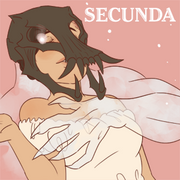
“Mr. Worthington bought her the finest wedding gown; she looked like an angel in all her white lace and bonnet. As she looked in the mirror, she thought, If only I could wear this gown to marry my one true love…”
There were tears in Esther’s eyes as she pictured the scene. Meanwhile Afton, spurred on by her eager audience, told the story with flourishes, forgetting to be reserved or in any way conscious of her speech impediment.
“I shall not marry him! Miss Criswell declared to herself. I cannot be unfaithful to my true love! I’d rather die! But the next moment, her father came in, and led her away to the altar. There was nothing the poor girl could do. The ceremony went on as planned, and by sunset, the two were wed. There were tears in the young girl’s eyes as the virgins led her to the bridal chamber. She knew what she had to do…”
Esther was leaning forward, her emerald eyes wide. “She didn’t…”
“It took some time to gather her courage. But, hearing the footsteps of her husband coming up the stairs, she took from the sleeve of her wedding gown the poison vial which she’d bought from an old herb-woman, and—”
“No!”
Afton mimed drinking the poison, then collapsed into her chair like a dead woman.
“Oh, it’s too horrible! Poor Miss Criswell! Poor Mr. Hawthorne!”
“Yes, indeed.” Afton sat up. “Poor Mr. Hawthorne. To return home a hero, wealthy and ready to marry his sweetheart, only to learn… When the girl’s father told him the tragic news, he went to the cemetery, fully prepared to take his own life and die upon her grave. But when he got there and found her gravestone, what do you think it read? Here lies Mrs. Worthington, beloved wife.”
“Oh, oh,” Esther cried, heartbroken.
“Seeing his beloved thus named, something hardened in Mr. Hawthorne’s heart. What do you think was in his mind? She should have done it sooner! Before the wedding vows had ever been said! If only she’d remained faithful to her first love, and refused to go to the altar, then he might have joined her in death! But because she was already married to Mr. Worthington, even if Mr. Hawthorne were to take his own life…it would be for nothing. Even in death, their two spirits would wander, never to be united…”
“Oh, Mr. Hawthorne. Poor Mr. Hawthorne!”
“So, Mr. Hawthorne remained a bachelor, as you might well imagine. No woman could move his heart, no matter how beautiful, or how sincere in her devotion. Ten years passed. Till one day…I happened to meet him on a lonely country road…”
Esther was practically falling out of her chair with eagerness to hear this part of the story.
“We were all alone together, with no one around for miles. He wore a black coat and a high-crowned hat. It fit low over his eyes, shading them almost completely. In his gloved hand, he carried his walking stick, though he hardly needed it…”
“Yes? Yes?”
“Now, you must bear in mind that we had never spoken two words to one another. I knew him only from the rumors, and glimpsed him only occasionally at services, for it was his habit to come late and leave early, and stay always in the back pew. Still, I thought it impolite not to greet him, and said, Good day, Mr. Hawthorne. And? What do you think he said to me?”
Esther shook her head eagerly in the negative.
“He said—” Afton lowered her voice to affect a more masculine tone, “Good day, Miss Green. A very pretty hat you have on.”
“Thank you, sir, says I. You look as though you have walked a long way. For he had mud splattered up to his knees. I am just come back from the seaside, says he. But sir! says I. Tis seven miles to the seaside—and seven miles back! - So it is, says he. Then, you have walked fourteen miles! Whatever for? At this, Mr. Hawthorne stopped and looked at me. I immediately wished I had not asked, for it was certainly none of my concern where Mr. Hawthorne had walked, or why, and I thought perhaps I had offended him. I wanted to see it, says he at last. That was all; he offered no other explanation. But I felt certain…”
“Yes,” Esther breathed. “It must have reminded him of her.”
“Of her eyes,” Afton said with certainty, though she had no cause to be certain. “I am sure someone said they were gray-blue, as changing as the sea.”
“And he must have proposed to her there.”
“Oh, yes, I am sure he did. He must have walked to the place where they pledged their undying love to one another!”
“And? What happened then?”
“Well,” Afton frowned at the recollection, her truest account of Mr. Hawthorne thus far. For indeed, though it was rumored that he’d had a sweetheart before going off to sea, and that she had married another while he was away, in truth Afton had taken a few small liberties with their tragic tale, and embellished it just a little for the sake of entertaining her new friend. “We walked on for a short way. After a little while, he said, And where are you going, Miss Green? - Home, sir, says I. Alone? says he. Yes, sir, says I. Then I shall walk with you. - But, sir, you have already walked fourteen miles! - One or two more will make no difference.”
“And?” Esther was squirming to hear the rest, but in truth, there wasn’t much to tell. It was one thing for Afton to make up dramatic stories for the lives of those around her, but quite another to imagine herself the heroine in such a tale.
“He walked me home. He talked of his apple trees. When we reached my gate, he took off his hat and said, Good day, Miss Green. And then he walked away.”
“That is all?”
Afton hesitated.
“Well…no.”
Esther seized her hand. “I knew it!”
“He said—” Afton felt strangely foolish now, for her heart was beating furiously as she recounted this part, “He said, You ought not walk these roads alone, Miss Green. This world is not always as kind as it ought to be to pretty young girls.”
Esther sighed, her eyes fluttering at this, and Afton looked down at her hands.
“I have remembered those words ever since.”
“Of course you did! How romantic! Oh, I would die if I ever had such a romance. Just think of it…”
And think of it she did. Indeed, the girls spent the rest of the morning imagining even grander romances, sharing their favorite Gothic novels and confiding in one another their most secret and treasured fantasies…









Comments (1)
See all