
Chapter 1 – The Secret of Nibiru
In the farthest reaches of the cosmos, beyond the gaze of human telescopes and the reach of even the most ambitious spacecraft, there drifts a planet that should not exist. It is neither bound to the familiar harmony of our solar system nor completely detached from it. Instead, it follows a path so strange, so elongated, that it brushes close to our Sun only once in thirty-six centuries. To ancient astronomers, it was a phantom world, a celestial traveler that appeared like a specter and then vanished into the abyss of stars. Its name, whispered through fragments of old myths and buried tablets, is Nibiru.
Unlike the planets known to mankind—Mercury through Neptune—Nibiru does not keep to the polite symmetry of orbits we teach in schools. Its journey is vast and perilous, a long exile into darkness followed by a dramatic return. Every thirty-six hundred years, as Earth civilizations rise and crumble, Nibiru’s shadow looms again at the edge of perception. And with its arrival, legends claim, something else always follows: chaos, revelation, and gods who walk among men.
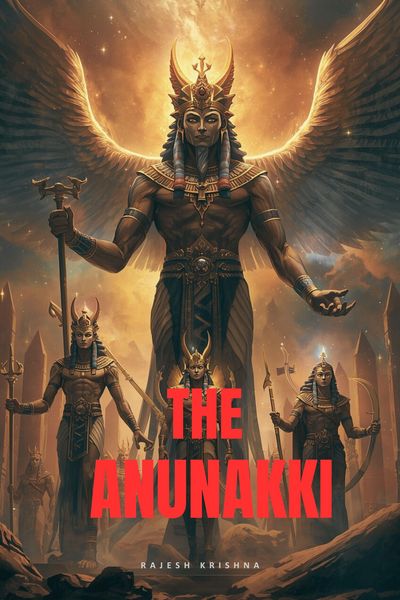
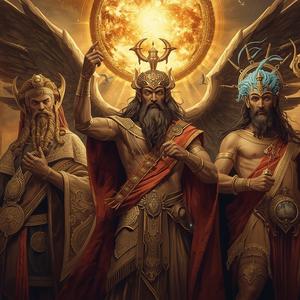
For centuries, the existence of this hidden planet remained the domain of myth. Sumerian clay tablets, older than most known histories, carved in the wedge-like strokes of cuneiform, spoke of a world “from beyond” and beings who descended from it. They called these beings the Anunnaki—those who came from heaven to Earth. The tablets told of how these gods arrived in shining vessels, bearing knowledge, fire, and the gift of civilization itself.
Archaeologists, when they first uncovered these stories, dismissed them as allegory. After all, every culture had its gods, its tales of creation and descent. But the Sumerians were different. Their knowledge was uncanny, too precise for the time in which they lived. They charted the movements of the planets with accuracy. They spoke of worlds not yet discovered by modern astronomy. They recorded the orbit of Nibiru with such detail that some scholars still puzzle over how such information could have been known six thousand years ago.
But the Sumerians were not alone. Across continents, civilizations that never touched one another carried stories that echoed the same refrain: beings from the sky who came to Earth and changed mankind forever. In Egypt, they were gods with falcon heads and radiant eyes, descending from the heavens. In Mesoamerica, the Maya spoke of shining serpents and teachers of knowledge who arrived from the stars. In India, ancient Vedic texts described flying crafts—the Vimanas—that carried divine travelers across the skies. And yet, at the heart of these diverse myths, one thread tied them together: the visitors came from above, and they left behind a legacy far greater than myth.
Modern science has always struggled with these stories. Some dismissed them as coincidence, the universal human tendency to invent gods in the image of the unknown sky. Others, however, wondered: what if these stories were not inventions at all? What if they were records, distorted by time, of a truth humanity had forgotten?
The mystery of Nibiru lives in this uneasy space—between science and legend, between what we can measure and what we can only suspect. To some, Nibiru is a ghost planet, a body so far beyond our reach that no telescope has yet confirmed its existence. To others, it is the missing piece of our forgotten history, the home of the gods who shaped mankind.
And if Nibiru truly exists, then so too might the beings who came from it.
The story begins not in ancient Sumer, nor in the silent march of the stars, but in the present day—in a world flooded with information, yet starved of certainty. Astronomers, searching for anomalies in the orbits of distant bodies beyond Neptune, have long suspected the presence of something massive, something unseen tugging at the fabric of our solar system. They call it “Planet Nine,” a cold, mathematical placeholder for a mystery. But in the forgotten languages of the past, it already has a name: Nibiru.
The orbit they suspect is elongated, tilted, and strange, much like the path described on ancient tablets. Could it be that what modern scientists call Planet Nine is the very same world that the ancients worshipped as the seat of the gods?
If so, then the implications are staggering.
For if Nibiru is real, its return is inevitable. Thirty-six hundred years may seem like eternity to human lives, but to the cosmos, it is a single breath. Civilizations rise and fall in the time between their visits. Empires are born, flourish, and collapse before its orbit completes. And each time it returns, the Earth is no longer the same world it was the last time it beheld.
The last time Nibiru swept close to our sun, mankind was scarcely climbing out of the Bronze Age. Now, should it return, it would find us wielding satellites, telescopes, weapons that can shatter cities, and machines that fly faster than sound. Yet with all our advancements, we are still blind to the oldest mystery of all—the gods who came from the stars, and what they intended for us.
On nights when the sky is clear and the stars burn bright, one might wonder: what lies beyond the glittering veil? Our ancestors, staring at the same heavens, believed that gods watched them from above. Today, we call it science, physics, and astronomy. But perhaps both are true. Perhaps science and myth are two sides of the same forgotten story, waiting for Nibiru’s return to be revealed.
For hidden in the endless black of the cosmos, Nibiru waits, silent and patient. Around it whirl its moons, some said to be home to strange seas and molten cores. Upon its surface, legends whisper, cities once glowed with light, and beings of immense knowledge gazed outward toward the stars. From that world, they came to Earth, carrying with them tools and secrets. To some, they were saviors, to others conquerors. To all, they were gods.
But what they left behind was more than temples and myths. They left behind humanity itself—changed, guided, perhaps even created.
The secret of Nibiru is not just about a planet. It is about us. Who we are, where we came from, and what destiny may yet await when the planet once more cuts across the heavens and its shadow touches Earth.
For Nibiru is not only a celestial wanderer. It is the key to the story of mankind.
And its return may not be as far away as we think.








Comments (0)
See all