

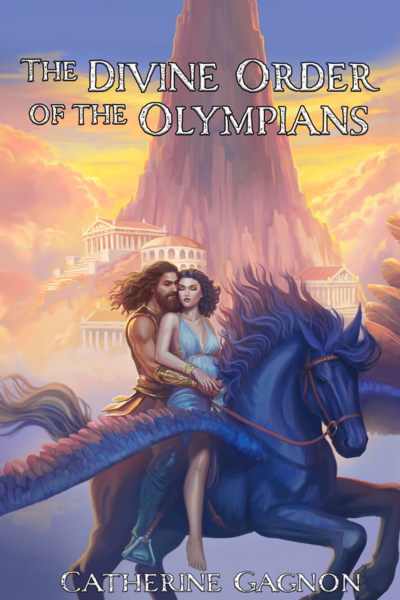
In Olympia, twelve Olympian gods and goddesses ruled from their thrones high above the clouds of Atlantis, on the one and only Mount Olympus. The mountain rose like a pillar at the far edge of the Atlantean city, its majesty unmatched across realms.
Once, these gods had meddled freely in the lives of mortals, shaping destinies and demanding devotion. But the corruption of humankind soon wearied them. Tired of endless vices and betrayals, the Olympians turned away, choosing instead the pleasures of their eternal city, its beauty, its intrigues, and its endless revelry. From then on, they remained largely apart, content to feast, scheme, and plot their games from a safe distance.
The eldest Olympians were the children of Cronus, the Titan king of time and destruction, and Rhea, the eternal mother whose power gave birth to generations. Foremost among them was Zeus, King of Olympus and ruler of the skies. His brothers held dominion over their own realms: Poseidon commanded the seas, while Hades ruled the shadowed Underworld. Hera, sister and wife to Zeus, reigned as queen of marriage and the stars. Beside her were Demeter, goddess of the harvest and the earth’s bounty, and Hestia, the virgin goddess who kept the hearth alight.
The children of Zeus made up the greater part of the pantheon. Athena, goddess of wisdom and warcraft. Apollo, god of prophecy and healing, and his twin sister Artemis, huntress of the wilds. Hermes, the clever messenger. And finally Dionysus, god of wine and ecstasy, who was last to ascend to Olympus. With Hera, Zeus sired Ares, the feared and hated god of war, and Hephaestus, the lame yet brilliant god of the forge. Aphrodite, the dazzling goddess of love and beauty, was not their child at all, but the daughter of Uranus and the Titaness Dione.
Though Hades and Poseidon held palaces as grand as Olympus in their own domains, they often returned when summoned to the council of their brother. Yet even Olympus shifted. When Dionysus was admitted to their ranks, Hestia gave up her seat, for thirteen gods at the table was said to draw ill fortune. Demeter too abandoned Olympus, sickened when Zeus allowed Hades to steal her daughter Persephone into the Underworld.
But it was Thetis, queen of the Nereids, who would alter the course of destiny. A sea goddess with the gift of shapeshifting, Thetis carried a prophecy upon her shoulders: she was fated to bear a child greater than his father. Such a son could one day overthrow even mighty Zeus, just as he had once usurped Cronus. To prevent that fate, Zeus and Poseidon schemed to bind her to a mortal man, Peleus. The sea gods captured her as she slept, chaining her to keep her from escaping in fire, in flood, in lion’s rage or serpent’s coils. At last, subdued, she consented to wed him. Their union, celebrated by all the gods, brought forth a son, Achilles.
Thetis spent his life calling upon every divine favor she possessed to shield him from doom. Yet even she could not protect him forever. When Achilles fell in the Trojan War, her grief turned bitter. No longer willing to accept the fate forced upon her, Thetis began to plot. She had been denied the prophecy once, but she would not be denied forever. She would see her vengeance carried out, and ensure that the child promised by the Fates, born of her and Zeus, would one day come to be.









Comments (0)
See all