
August 30th. It’s late, after ten. I help my wife Maja to the hill just beyond our lonely Montana home. She wears a coat, though it’s still warm by my estimation, and a red pompom hat. I’ve already prepared a blanket for us, a lantern and small basket with cold cuts, cheese and crackers, nestled in beside two lukewarm strawberry wine coolers.
“It’s not much,” I say apologetically.
“It’s perfect.”
I help Maja get settled before coming to sit beside her.
The wind from the distant mountain pines is cool and refreshing. Above us, the great bowl of sky twinkles with stars and the thinnest crescent moon. There’s not another light for miles, not a cloud in sight.
“I worried the weather wouldn’t cooperate,” I confess.
“You worry too much.”
I check my watch. “Shower should begin in about fifteen minutes. You hungry?”
“A little.”
I prepare a small plate for Maja, removing the broken crackers and irregular cheese squares, and taking them for myself. She watches me do this with a little smile.
“I don’t know why you go to such trouble. You’re the picky eater, not me.”
“I’m picky that you should have the best.”
She reaches over to caress the side of my face lovingly. I catch her hand to kiss the tips of her fingers, and we share a warm look.
I can’t tell her. I can’t say how much I’d like to kiss her in other places right now, or how I ache to run my fingers once more through her thick black hair and hold her close to me. To lay her back on the woolen blanket, and make love to her beneath the open sky…
“Did you say you bought wine coolers?” she asks.
“Yeah…”
I crack one open and we share it. Maja makes a face.
“Too sweet.”
“Way too sweet…”
“Feels nostalgic,” I remark later as I sit with my hands behind me, gazing up at the stars. “The last time we saw a meteor shower was back in Serbia. Remember?”
“Of course I remember. Baba’s balcony, cold burek for dinner…”
“God, I miss burek.”
“She told us that old story she was so fond of…about the dragons in space… Zmaj u svemiru,” Maja trails off, suddenly weary. I sense she wants to lay back on the blanket, and I help her, setting her barely nibbled snack aside and making a pillow for her with my flannel overshirt.
“Remember it, Žarko? The night we met…” she says wistfully.
“Of course,” I say, voice cracking. “Of course I remember…”
They lived among us once, the zmaj. The dragons.
Powerful and full of majesty, among God’s creatures, they had no equal. Even Noah, when he took them aboard the ark, knew they were special, and while they were upon the waters, he tended them first, and fed them even before the lions and the bears. And when the ark touched the mountain, when Noah and his family left the boat, the dragons followed first, and accompanied man as he went out to repopulate the earth.
Yes, humans and dragons, side by side, we shared this world together for a thousand years. They served us with their healing magic and more, for their scales could grant any wish. Humans brought them gifts of thanksgiving in return for these scales, gold and jewels, treasures from every corner of the earth. But perhaps unsurprisingly, peace between us was not destined to last.
Greedy humans were no longer pleased to pay for the dragons’ miracles, and would take them by force. To turn their fellow man against the dragons, they told slanderous tales, accused them of stealing livestock and even people, of burning cities and committing every sort of barbarous act. So the people banded against the dragons, being justified in their own minds as they raided their benefactors, hurting the ones that would not comply, ripping off their scales by force, even slaughtering them, and reveling in their slaughter.
So the dragons came to understand what God had meant when he said it was in man’s heart to do evil continually. Like God, the dragons wished they could flood the whole earth once more, and purge it of all evil. But this was not in their power. Until the Ancient One destroyed the earth himself with fire, man’s evil would continue.
But the dragons could no longer abide it.
They left this world. One by one, they flew up into the heavens to be with God until such a time as he would be pleased to create the new earth, one without sin, where they could live freely amongst the humans once more. And there they wait still, in the sky, in the farthest reaches of space, touching the edge of heaven. Gone forever from our world, though they have not forgotten us. In fact, among their number are those who yet love our kind, though that love is reserved only for the pure in heart. To these, their chosen ones, it is even said they still give gifts.
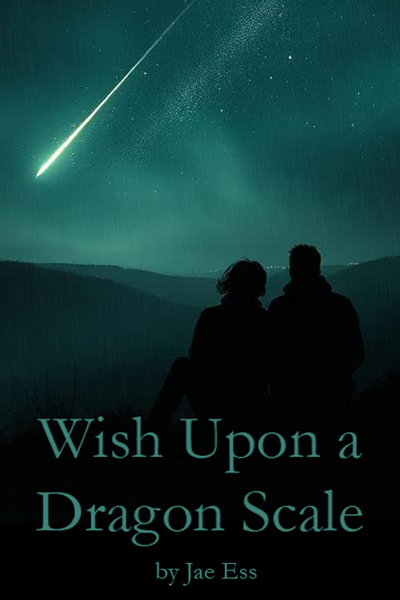
So it is, by day or by night, if you see a shooting star, it is a dragon, shedding one of its marvelous scales for some lucky soul to find. And if, by a miracle, that lucky soul who finds the dragon’s scale happens to be you, know that your prayer has been answered.
Your wish will surely come true…
***
Yugoslavia
1999
Mostly, I remember sirens blaring. They went off every fifteen minutes, it seemed, accompanied by the sound of planes roaring overhead.
The man on the radio said they were targeting the bridges and dams. Then the radio went silent. They took out the station in an effort to curb communication, and any organized attempt at resistance.
NATO called it ‘Operation Allied Force,’ but to us, that spring was just, ‘The Bombing.’ Mama said it was happening because our country’s military was in Kosovo, and the rest of the world wanted us out. But all of that meant very little to a ten year old child.
Fleeing north from Belgrade, we went to stay with her Kuma, a woman I’d never met before named Branislava who lived in a small town outside of Novi Sad. This was supposed to be a safe place with no military targets; we didn’t learn until later that the Yugoslavian army had stashed tanks and anti-aircraft guns in the nearby forest.
“I can’t stay,” Mama said to me that night. “My friend knows a man who’s making tee-shirts with targets printed on them; we will all wear them and protest on the bridge. NATO won’t bomb bridges with civilians on them…”
I didn’t know it then, but it was there in the living room of her Kuma, that I said goodbye to Mama for the last time…
Branislava was Mama’s age, with dyed blonde hair and worn down teeth yellowed by coffee and cigarettes. She had six children, from age nine to one and a half. Her husband Stanko was big and intimidating, but her mother, the one the children called Baba, was kind.
When the sirens went off, Baba herded us all down to the cellar. I remember it was cold, and being dressed only in jeans and a tee shirt, I shivered till my teeth chattered. The younger children were crying and clinging to Baba’s apron, but the oldest girl with thick black hair brought me a blanket. The pair of us settled down underneath it in the corner of the cellar. She told me her name was Maja. Reluctantly, I introduced myself as Žarko.
“Where are you from?”
“The capitol.”
“Since you’re here, that means the bridge isn’t out yet. Tata says it would be best for the economy if they don’t get all the big bridges. Of course, if they do destroy the bridge to Belgrade, you won’t be able to go back…”
I bristled at her observation. “I told Mama that, but she swore it was safer here…”
Before she could reply, Baba’s voice drifted to us as she reassured the frightened children.
“Now, why these tears, my little ones? Are you afraid of the airplanes in the sky? I know a creature that flies even higher than airplanes, all the way up in space. Can you imagine what it is?”
By this time, she had the sniveling childrens’ attention.
“Let me tell you a story my father told me, of the dragons in space. They lived among us once, the zmaj…”
I listened closely to her tale, though the drone of the allied planes and the sirens competed noisily for my attention. All the while Maja sat beside me, dark eyes wide as she took in the old woman’s tale.
“Someday, I’ll tell stories like that,” she said to me later, when the sirens finally died away and we all lumbered back up the stairs. “I’ll write them down in books and draw pictures for them, too. Baba says I’m a wonderful artist, the best she’s ever seen. I’ll show you my paintings if you like…”
Perhaps she really liked me from that first meeting, or perhaps she just felt sorry for me; either way, Maja took it upon herself almost from the beginning to care for the lonely, friendless boy they’d dumped in her lap. I really don’t know why she bothered. God knows she was busy enough, helping Baba around the house, acting as a second mom to her younger siblings while Branislava sat at the kitchen table with her Turkish coffee, reading translated American romance novels and chain smoking till the air was so thick I could hardly breathe.
For my part, I was resistant to Maja’s kindness, and indeed, the kindness of all those around me. I refused to play with the other children, refused to look at her paintings. I wanted to go outside, but it wasn’t safe to leave the house. I wanted to watch TV, but whenever it was on, Branislava had it turned to the news, which displayed images of bombed out buildings and bridges, and a rising civilian death count.
I hated every minute of it. I didn’t want to be there, in that strange house that reeked of cigarette smoke, surrounded by half a dozen noisy kids, some of them still in diapers. I wanted to be home in my Belgrade apartment with Mama, watching Ninja Turtles or Dragonball Z while the smell of cooking sarma wafted from the kitchen.
I guess I mentioned it huffily to Maja one day, and she must have told Baba. That night, the old woman fixed sarma for dinner.
I sat down at the table with the other children, my place crowded in between Maja and her younger brother. I felt somehow indignant when Baba served me the cabbage roll with mashed potatoes on the side. Sarma was my Mama’s specialty. As if I’d settle for this old woman’s second-rate efforts to recreate her dish.
At the head of the table, I watched as Stanko crossed himself with three fingers and made us bow our heads to pray over the meal, though I kept my eyes open the entire time.
While everyone else started to eat, I stayed with my head bowed, just staring at the food.
“Aren’t you hungry, Žarko?” Baba said after a few minutes, noticing my refusal to eat. “Maja said it was your favorite.”
I wasn’t hungry. I had no appetite. All I could think was that I wanted Mama to come back from her protest already, and take me away from this place.
“It smells spicy. Mama knows I don’t like it spicy…”
Baba smiled sympathetically. “I understand it may taste a little different to what you’re used to, but—”
“Where’s my mom?”
The grownups at the table exchanged glances.
“She was only supposed to be gone a day or two, just until the protest ended. Where is she?”
“We don’t know,” Branislava finally answered truthfully. “We haven’t heard from her.”
“She’ll call when she can,” Stanko said gruffly. “Until then, tough it out. You’re a man, aren’t you? Now eat your dinner.”
“Eat,” Maja whispered to me. “He’ll spank you if you don’t…”
After that I poked at my sarma, unrolling the cabbage leaf to spread the meat around my plate. I tried a bit and it was too spicy, as I’d predicted. Baba used too much hot paprika.
Fortunately Stanko was too busy with the paper to monitor my progress, so I went to bed with an empty stomach and no spanking. Before I could fall asleep, however, I heard a sound like someone beating down the front door.
It was the neighbor. He’d come to advise us not to stay in Branislava’s house. The last raid had dropped bombs less than a mile away, and it could be assumed those attacks would only get closer. So all of us packed up that night, and went to stay with the Jovanović family, who lived on the opposite side of town. I don’t remember much about them, except that they were rich, with a big house and a car, a green ‘96 Volkswagen Golf. And, they had a geriatric dalmatian.
Half blind, its jowls were drooping and drooling constantly. He was not accustomed to having children around, and he attacked at the slightest provocation. We struggled to keep the baby away from him. That night, when he toddled over to pet the doggie, the dalmatian attacked, and sliced the flesh of his forearm down to the bone.
Around eleven, Mr. Jovanović drove Branislava, Stanko and the baby to the hospital in Novi Sad. At twelve, the sirens went off.
We all hid in the basement together with the snarling dog. The younger children huddled around Baba, who sang to them and told them if they ever found a dragon scale, to make a wish, and anything they dreamed would come true.
Once more I found myself hunched down in the corner with Maja, only this time we didn’t have a blanket.
I was tense. My nerves were all screwed up from the sirens and the drone of the planes, the weeping children and the snarling dog. I was cold and tired, hungry and scared. I missed my mom.
Then, a soft voice to my right.
“What would you wish for, Žarko, if you found a dragon scale?”
“Come on,” I scoffed. “You don’t actually believe in space dragons.”
“Well…” she said, and I heard a little tremor in her voice that made me look up. I wasn’t really surprised to see the tears that had started down her cheeks, though she did her best to hide them, wiping her face on her sleeve. “Sometimes, you know, when things are bad, it’s kind of nice to pretend…they were a little better…I don’t know…”
She was crying again, still doing her best to hide it. I watched her a minute, feeling somehow responsible for her tears though I knew they weren’t my fault.
“America,” I said at last, looking forward quickly so Maja wouldn’t see me watching her when she looked up. “I’d wish to move to America, with Mama. She says there’s so much space, people there have houses with ten kilometers on every side.”
“Ten kilometers?” She was breathless at the thought. “But, how do they get to the market?”
“They take their trucks,” I said confidently. “In America, everyone has a pickup truck, with a bed in the back. You could fit your whole family in it!”
Distantly, we heard a sound like a falling bomb, and a bit of dust rained from the ceiling. Maja sucked a sharp breath and huddled a little closer to me, shivering. A few feet away, the dalmatian barked furiously.
“If I ever found a space dragon scale, I’d wish to go to America,” I said, instinctively putting an arm around the smaller girl, both warming her and seeking her warmth. “Nothing bad ever happens in America…”





Comments (3)
See all