

INTRODUCTION
I didn’t have very long to wait before another trip was being planned. Once again Fred and Elizabeth had decided to go to Africa. This time they planned to go back to Kenya and visit the orphans at Ithumba once more. However, in a change from the normal timetables, they wanted to go in September – the very end of the dry season in much of Kenya and very different from the green we had become used to in December visits.
In three and a half weeks or so, we would spend time at several locations managed by the Sheldrick Trust, then venture further afield with a trip to Amboseli before heading north to visit Lake Nakuru and Lake Baringo. This time it would be just the three of us travelling together.
I’d been working hard and, although it seemed such a short time between trips, I was more than keen to renew my acquaintances with the orphans I had met on my first trip. I wondered how different the countryside would be in the dry season. Would we see more or less wildlife this time around.
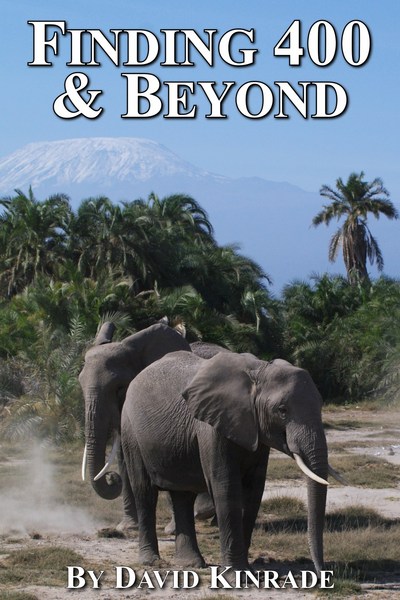
When Fred asked what I wanted to see, I had a simple request: “A nice photo of elephants with Kilimanjaro in the background would be perfect.”
“I know we’re lucky,” he said. “But nobody is really that lucky! We’ll be in Amboseli for three nights and you’ll just have to take your chances.” Well, two full days does maximize the chance of seeing the mountain clear of cloud, but would it really be enough. Apart from that simple request, we were all keen to see a little more of Kenya and enjoy some different national parks and wildlife.
LANDING & VISITING
As always, once you arrive in the country there is a bit of planning and general organisation that needs to be done. The first half of our trip was to be spent at three different locations all managed by the David Sheldrick Wildlife Trust. We would be returning to Ithumba to visit our orphan friends, but before that we were to spend some time at their Umani Springs facility near to Kibwezi and a couple of days at their retreat on the Athi River, Saa Nane House.
All three locations were to be effectively self-catering, although one would always find that the staff preferred to look after us and keep us out of the kitchen if possible.

This means a certain amount of shopping, organising our driver, checking all our kit and visiting the orphanage in Nairobi to make sure that all the plans and people were organised. To this end, Fred had booked us in for a couple of nights at a small lodge/campsite located in the city, close to shops and just a short drive from the locations we needed to visit in the city.
Our early morning landing time was as much a curse as a blessing. It’s nice to travel in overnight, but the traffic in Nairobi during the morning rush-hour – well at any time really – was manic. It took more than two hours to travel the 20km or so from the airport to the lodge and we were all more than a little frayed by the time we arrived.
That didn’t stop us settling in quickly and wandering around to scour the grounds for the first birds of our trip. Fred is a keener bird-watcher than I will ever be, even though if asked he will deny the addiction. He had set a target of seeing 300 species on the trip and was keen to get the tally started as soon as we landed at the airport. For my part, it’s nice to unlimber the camera and the trusty long lens and just check that everything is in working order.
Our task for the afternoon was to head out to Nairobi National Park and visit the Sheldrick Trust. Angela was ready for us and our plans were soon checked and confirmed. We were introduced to Dixon, our driver for the next couple of weeks, and then given a chance to go and meet the youngest orphaned elephants.
The weather was overcast and hazy, cool for Nairobi, despite the sun being directly overhead. The orphans seemed almost to be huddling together to keep warm. These really are the little ones, once they reach three or four years old, they head out to Ithumba or Voi to be rehabilitated back into the wild.
They are deeply connected to their keepers and these dedicated men pretty much live and sleep with their charges for years. The young orphans also find comfort and friendship among their peers. These friendships act like the family bonds of wild elephants and they will tend to stay with their friends forever, even once released and roaming wild in Tsavo.
I love meeting with the little ones. They can be a little wary in the first few moments, but once one bolder member of the group comes forward for a sniff or a scratch, then they’ll be all around you in an instant jostling for attention like puppies. Well, 300kg puppies! They are intelligent, curious and above all friendly creatures with the long memories that elephants are renowned for evident from a young age.

Sadly, many of these emotional and intelligent creatures have undergone horrific and traumatic experiences, many losing their mothers or entire families to poachers. It takes time, just like with people, for these emotional wounds to heal and the DSWT work tirelessly to give as many of these orphans as possible a good life and a future, however uncertain that may be in the larger world.
By visiting them, they gain as much from the transaction as we do ourselves. Staying with the trust and using their driver and vehicle in not an inexpensive undertaking, but we’ve always been happy to make our contribution to such a worthwhile cause. From our generosity, we gain the experiences that only this close proximity to elephants can provide. Because of their memories and ours, we also gain life-long friends who will know us when we return to visit them once more.
Day two gives us a chance to relax a little and explore some of the smaller wildlife attractions in and around Nairobi. I always have a mixed view of Nairobi. In some ways it is typical of most African cities. It’s brash, bustling, overcrowded and bogged down in a traffic nightmare. It has rampant petty crime and a seemingly mostly ineffective police presence. The people, however, are mostly friendly, open and helpful. Sadly, it is one of those cities where you never feel entirely safe on the streets.
Our final morning in the city is a chance to do our shopping and load up the vehicle with Dixon’s help. We arrange to meet him at the supermarket. It’s just a couple of hundred metres up the road from the camp and we are quite happy to walk this short distance along the main road.
Elizabeth is keen to have some local currency, and there is a convenient ATM right next to the supermarket entrance. The experience of using it, however, is quite unlike anything we are used to in the Isle of Man. Firstly, the machine itself is housed in its own little enclosed conservatory-like glass bubble. Secondly, standing on either side of the doors into this conservatory there are uniformed men with automatic rifles and fixed stares.
As Fred and Elizabeth approach, one of the men smiles briefly and opens the door for them to enter. Their transaction completed successfully, he opens the door once more to let them out. Tellingly, he watches them as they come back to join me, watches me collect a shopping trolley from the rack and then continues to watch as we move across the car park and into the supermarket, hand on the strap of his gun the whole time.
For someone who lives in one of the quietest and safest countries in the world, it’s all a little unnerving. Is this city really as dangerous as that?









Comments (0)
See all