
WORKING OUT – KIPLOMBE
Our hosts had suggested the nice walk up the Kiplombe stream as a possible activity for us and it didn’t sound too bad. Walk up the stream to look at the waterfall, then visit the village at the top of the valley before walking back down again. There were sure to be woodland birds that we hadn’t seen on the rest of the trip, and the scenery sounded interesting.
I’m no geologist, but the area looks like a small collapsed caldera. From the main road, it appears as a steep escarpment, intersected by narrow ravines, one in particular seeming to break through the ridge.
This pass turned out to be our destination. The day was hot and sunny, not the best for climbing at this altitude for people used to sea level. Still, we had committed ourselves to the walk and we were ready for almost anything. James parked the vehicle at a local orphanage and church. As the centre of the community, they were to provide us with a guide and see us safely back at the end of the day.
We set off steadily, it was still early morning and not too hot as we walked a short distance up the dusty road and turned off down a narrow track towards the base of the valley. Our initial progress was steady, the path was reasonable and the shrubs and trees on the sides of the steep ravine offered a nice bit of shade.
As we moved deeper into the valley, the route became steadily more demanding, eventually turning into a serious scramble over bare rock that we all found a little difficult. Still, our guide was helpful and patient and James – who had decided to come along with us – was really helpful as well.
In such a dry time of the year, the waterfall was something of a disappointment, but I could see that, given even a little more water, it could be quite a sight. It was not the end of our climb though and we forged on up into the crater and the tiny village that houses the people who live and farm within.
By the time we had made it back to the orphanage, it was mid-afternoon, the temperatures were pushing forty degrees again and we three were exhausted. James had gone on ahead and brought the van to the head of the road, to save us the last kilometre of walking down the road, but we all needed a few minutes rest before heading to camp.
Looking on Google Earth as I write, it becomes clear to see the reason for our fatigue. The walk is only about five kilometres, but the climb is roughly 300m from a starting height of almost 1800m. There really isn’t enough air up there for me – I’m just not used to the altitude and a think the others are much the same.
When all is said and done, I still enjoyed the walk. I just knew that my legs would ache the following day.
NAIVASHA – ONE MORE LAKE
All too quickly, our last day had arrived. Our flight home would leave Nairobi late in the evening, giving us plenty of time to drive back south at a relaxing pace.

Fred and I had brought the bird list up-to-date and as far as we could tell, we were just five or six species short of our 300 birds target. I could tell it was playing on Fred’s mind a little, and when James suggested we go for a boat-ride as we passed Lake Naivasha, I suggested there may be a few water birds on the lake to add to the total.
Lake Naivasha is a bit of an enigma, one of the larger lakes in the central rift, it is enclosed, like Lake Nakuru, in a national park that covers the whole surface of the lake and its shore. The waters are shallow and there can be a considerable growth of weed, reeds, papyrus and lotus lillies.
The water is used by numerous businesses along the shore. They grow vegetables and cut flowers under huge poly-greenhouses, mostly for export by air to Europe.
What animals are found in the park are mostly the remnants of a number that were captured and brought to the area for movie production. There are plenty of hippos in the lake though and the area is a haven for many water birds, both migratory and resident.
I found the boat ride to be both relaxing and enjoyable. The narrow, canoe-like wooden boats can move quickly, yet still give a fairly stable and safe platform for photography and bird spotting.

The highlights for me were getting out of the boat to walk among the waterbucks and giraffes, a yawning hippo as we returned to the dock and the feeding of an African fish eagle. I didn’t quite capture the moment of the fish being grabbed, but I was still struggling with the damaged lens and had to just try and capture whatever I could.
Most importantly for our trip, there were indeed plenty of birds to be seen and a number of species brought our list safely over Fred’s target.
AN EPIC JOURNEY
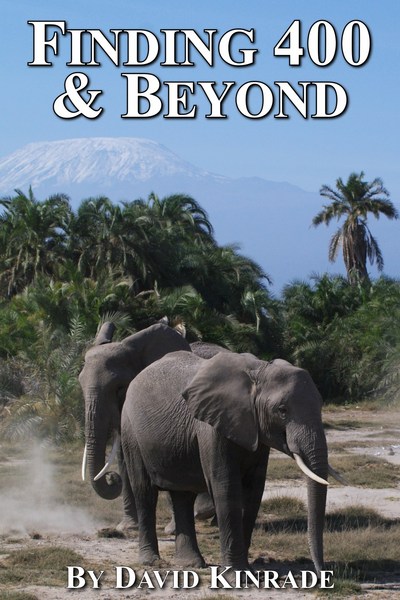
I enjoyed my trip to Kenya greatly. We saw new sights, met great people and encountered plenty of wildlife and more than 300 bird species. Of course, the elephants had once more been at the centre of the trip and we had enjoyed wonderful – almost life-changing – encounters with the wild bulls and the orphans at Ithumba.
I was beginning to think that I was getting to know elephants now. Each hour spent with them was bringing a little more understanding of their character and their emotions. Their intelligent eyes draw you into their hearts and souls. They have that occasional look of total understanding, that almost knowing gaze that shows a similarity of thought and emotion. My quest for a better understanding of these creatures would surely not come to an end now.
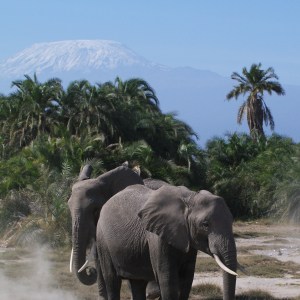
I also had my dream photos of Kilimanjaro and had seen some wonderful – and sometimes surprising – scenery on our journey around the country.
The mixture of wildlife had been exciting, but I now longed to get a better view of the painted wolves that I had been so lucky to see at Ithumba. There’s always one more animal to be spotted and that means there’s always at least one more trip to be taken.







Comments (0)
See all