
The sheet of paper trembled in my hand.
It wasn’t because of the cold. It was something else, that feeling you get just before a fall.
As if the world around you was holding its breath along with you.
Yuki approached from behind, saw what I was holding, and said:
— Chosen children? For what?
— I don’t know… but seeing this place… I have a bad feeling.
The words came out before I could rationalize. Because some part of me already knew.
Then I heard it.
The laugh.
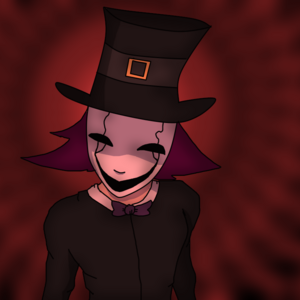
That same distorted, childish, grotesquely familiar laugh — Takeuchi Masanori’s.
Yuki heard it too. Our eyes met for a second that felt like it stretched forever.
— I think we need to hurry. — I said, looking around, trying to trace where the laugh came from.
— Who do you think could be here?
— No idea. But you can feel it… we’re not welcome here.
Yuki went serious. She wasn’t pretending to be brave — she just wore it like a thin armor, about to crack. The fear was there, clear. But she didn’t step back. She just drew her gun and followed.
We crossed the hallway to a room just behind the counter. My hand pushed the door slowly. Old wood, the smell of expired medicine and mold. The room looked organized, almost too organized.
And strangely empty.
But the kind of emptiness that makes noise inside your head.
There was a shelf full of medicine. But none of it was common use — all hospital stuff. Some weren’t even used anymore — or weren’t even approved. Expired products. Forbidden products.
What the hell was going on here?
Yuki called me. Her voice carried that mix of disgust and curiosity.
I went to her, and then I saw it.
A symbol painted on the wall.
It was strange.
A symbol painted in graffiti on the wall. I didn’t know it, but it didn’t look like the work of vandals or anything like that. Yuki took a picture as evidence.
I moved closer to the medicine shelf and just stared… what kind of orphanage needs these kinds of medicines?
Before I could think further, I heard something.
Footsteps.
Upstairs. Running.
I froze.
Yuki looked at me. The discomfort was mutual. It was written all over our faces.
— We better go back. Otherwise, we won’t get out.
My words came out quieter than I intended. But they didn’t need to be loud. Yuki understood.
I opened the door carefully. Sweat ran down the back of my neck.
I was ready for the worst. But there was nothing.
Nothing visible, at least.
We continued. Reached the stairs. The drops kept falling, insistent, as if marking the time we had left.
Each step creaked.
Old wood, rotten memories.
We went up.
We reached the room, and for a moment, my feet seemed stuck to the floor. The air grew heavy.
The mayor’s body… was no longer there.
That wasn’t just strange — it was impossible. But “impossible” had become the rule here. Yuki froze beside me. Her voice came out trembling, but firm enough not to break.
— Where did the body go and…
— Yuki, that’s why I asked you to take a picture. Nothing in this place is normal.
— You used the mayor’s body as bait?
— Maybe. But now our suspect isn’t far, that’s for sure — I lit a cigarette, inhaling the smoke like oxygen — Let’s go. He must still be nearby.
She looked at me with a mix of irritation and disbelief. Frowning, eyebrows raised.
The kind of expression that says “I should punch you,” but, in the end, it’s just Yuki being Yuki.
I walked to the door and opened it, without ceremony. No caution. Maybe part of me even wanted to face whatever it was.
But what I saw paralyzed me.
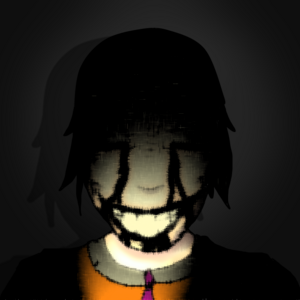
More than forty people, all adults, inside the orphanage. Some were playing with dolls, others throwing balls or playing tag. All behaved like children in a world that had stopped working. But the worst… were their eyes and mouths.
That black slime.
All infected.
Yeah. I think now we can call it that.
And then it happened.
They all stopped playing. At the same time. And stared at us. They opened huge smiles, almost unnatural, as if their mouths could tear open, and after staring at us with those smiles, they all started laughing.
The same laugh.
That laugh.
Corrupted. Childish. One single voice coming from many mouths.
As if they were all one.
As if they had forgotten what it meant to be human.
And at that moment, I understood.
Getting out of there…
Wasn’t going to be as easy as getting in.



Comments (0)
See all