
Chapter Seven
The train ride to the countryside was quiet. Too quiet for someone grieving. Too quiet for someone not. Malachai stared out the window, hands clasped in his lap, wrists tense beneath the cuffs of his too-formal coat. The fabric itched. He didn’t fix it. The trees blurred past in green and grey. Somewhere out there was the field Claris had once described: “Sheep outnumber people. Buses are a rumor.” Mal tried to picture it. But all he saw was the inside of a hospital room lit orange by the fading sun. He’d gone back once, after it happened. Just to clean the windowsill. The musk mallow was still there, leaning gently toward the sun. No one had touched it.
No one but him.
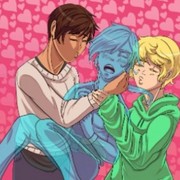
The funeral was small. Claris had left behind very little—no siblings, no parents. A couple of elderly neighbors, a childhood friend or two. A vicar with a paper-thin voice. Mal stood near the back. Alone. The only one not from here. The only one with his face. The sky was, uncharacteristically, a brilliant blue.
Mal hated it for that. Why, on an autumn day in England would it decide to be sunny? He deserved to be sad and Claris deserved to be mourned.
Everyone spoke kindly of Claris. Said he was bright. That he loved colour. That he’d bring little wildflowers to old Mrs. Deely on Thursdays. He called the local cat “Your Majesty” and sang to plants. No one mentioned the hospital. No one said he’d died with a tube in his throat. No one talked about how he’d pressed a bloodstained hand to Malachai’s chest as he fought to breathe.
They didn’t know.
They didn’t know about the kiss. Mal had told himself it was just a peck. A reckless, fleeting thing. But now he remembered it differently—more certain, more real. Claris’s hand on his jaw. The softness. The silence after. How they’d stared at each other, scared and breathless, like two people standing at the edge of something they couldn’t name. He remembered the way Claris had said, “You’re mine now,” and meant it.
And how he’d said, “Good,” and meant it more. Mal turned away from the service, just for a moment. Long enough for the tears to break. He didn’t cry aloud. He wasn’t built for drama. But his shoulders trembled, and he clenched his fists into his coat, and he couldn’t stop seeing it—the blood, the panic, the silence. He was a doctor now. He was supposed to catch it. To know.
But he hadn’t. And the disease—the same disease that had taken his mother, brutal and rare and merciless—had taken Claris too. Like fate had been waiting to remind him who was really in charge.
He hated it. Hated it all. The illness. The timing. The silence. Himself. Every missed sign. Every moment he spent thinking they had more time. The arrogance of hope.
If he had known—But he hadn’t. So now he stood in a field with a flower pressed between his fingers and grief blooming in his chest like something toxic, and he couldn’t tell if he wanted to scream or curl into the earth and disappear. He stayed long after the others left. He stared at the gravestone, fingers cold, body aching.
The memory of Claris humming to the pot, something tender and wistful in his eyes came to Mal in that moment. The sweet, innocent and deep care for the little rosy buds is what made Mal fall for him.
“You didn’t deserve this,” he whispered. “You were supposed to have time. You were supposed to… choose.” The wind didn’t answer. The flowerpot in his arms shifted slightly with the breeze. And Malachai Bennett, for the first time since he held a scalpel, felt like he had failed utterly.






Comments (0)
See all