
It was hot. The kind of heat that clung to your skin. The humidity made everything sticky and uncomfortable. Even with the AC blasting, there was no escaping the climate. And we felt it. After years in a colder, wetter place, that sweat-provoking weather was brutal. I spent most of my days behind a grill, but even I couldn’t stand how bad it was.
“We’ll make this work. It’s not all on you,” Nick said as we pulled up to my father’s house.
Dad had moved. I didn’t recognize the new place. From the outside, it looked smaller than the one I remembered—single-story, beige vinyl siding, a satellite dish bolted to the roof like a wart. The yard was patchy, sunburnt grass with a plastic flamingo half-buried near the porch. A faded Ford Taurus sat crooked in the driveway, and the mailbox leaned like it had given up.
There were already a bunch of cars parked out front, so I had to leave ours down the street.
“I know,” I said, cutting off the engine.
“They’ll probably try to make you feel guilty. Belittle what we’ve made for ourselves. But try to remember—we’ve been okay. We might’ve struggled, but we’re not drowning,” Nick said as we walked up the street.
“I know,” I repeated.
“I know you know. But being here could make it easy to forget.”
“You’re scared shitless, aren’t you?” I asked.
“I’m about to meet your dad. Of course I’m scared.”
There was a moment when I thought about holding his hand. I considered putting an arm around his shoulder, walking behind him, beside him, or on a diagonal. The thought of being seen together as “together” scared me. How was it so easy for those old fears to come rushing back?
When we reached the front door—a heavy wood slab with a brass knocker shaped like an eagle—I knew Nick could feel the awkwardness just as much as I did.
“You made it!” River said after opening the door. He must’ve been waiting for me.
Nick and I were past the point of no return.
“You didn’t leave much of a choice,” I said.
River had made it clear how much everyone "supposedly" missed me. I had to see it for myself.
As we stepped inside, I was hit by a wave of cold air and the smell of barbecue chips, cologne, and old carpet. The living room was packed with people nearly shoulder to shoulder, standing around a bulky entertainment center with a TV playing a muted baseball game.
Quickly, I moved. The walls of a hallway I ducked down were covered in framed photos. I might have been in a few, but I wasn’t surprised to be absent from most.
The Stout family was small. Outside of my brothers and dad, I could hardly count five relatives I knew growing up—and none of them were there that night.
“Why are all these people here?” I asked River before he could leave me.
“No one’s seen or heard from you in two years. I told a few of your old friends you were coming back, and they told people who told more people.”
Peeking my head around a corner to inspect the livingroom, I did my best not to be exposed. Ultimately, I'd already been noticed by a few faces when I walked in, so hiding wouldn't work for long.
“Do they know...” I asked in a whisper.
River laughed. “Know what?”
“Don’t play dumb,” I snapped.
“No, no one told them about your boyfriend. But I guess now you have to,” he said, with both smug indifference and glee. I could see through his "nice act." My brother was itching to see a fly struggle in a web. He left me standing there before I could think of something to say.
God, was it too late to go back?
I turned around, expecting Nick to be close, but he’d already gotten lost somewhere in the house. I was by myself.
The night went painstakingly slow. Though I remembered plenty of people, I wasn’t ready to face most of them. Guys from football, a couple of girls I dated, even my old coach—they were eager to see me. But the conversations were shallow.
Cindy Hail was even there. She looked different in a way, but somehow the same. I wanted to catch up, but I couldn’t explain why I had dropped off the face of the earth for two years. I kept my distance from her like a bunch of other people I refused to get too close to, but I couldn't avoid everyone.
There were rumors.
People thought I had joined the army. Some thought I went overseas. A few honestly believed I’d been in rehab. Everyone had a theory. But no one tried to reach out. It wasn’t like I changed my phone number. They thought I needed space and time. They feared I was fragile. I wasn’t. I was desperate, but I could forgive them for not recognizing the difference.
Maybe I had lost and fucked up so many times I needed something—anything—to work. But I didn’t think I had let people see. My cracks must’ve been on full display back in high school, and they were beginning to surface again that night.
Everyone treated me like I’d gone through a life crisis. In every conversation, they subtly found ways to ask the same questions, over and over again. Was I okay? Had I still been drinking? Had I still been fighting or getting into dumb shit? My old friends were nice, careful about making their concerns known—but they were concerned.
Was I really so fucked up? Had I fucked up so royally no one knew I missed them?
No one knew how much a phone call would’ve meant. No one knew how much a phone call might’ve helped. And worse—because they were too afraid to approach me—they created stories and assumptions about how terrible I must’ve been.
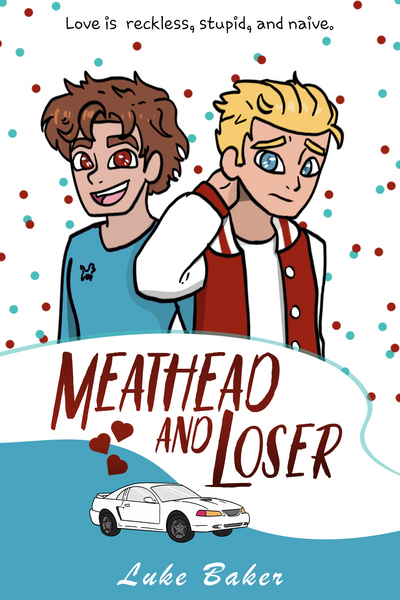
To be fair, they had cause. Had I remained the Meat Head I was in high school, I might’ve been worse than all their assumptions. But no one knew how much I had changed. No one knew why I was different. It was my hope, a desperate one, that I had actually changed.
No one knew about Nick.
I always assumed I distanced myself when I got with him. But had I already been driving wedges between myself and everyone else?
It was my dad’s birthday, but I hadn’t seen him yet.
Where the hell had Nick gone?
River and Alex started moving people toward the kitchen. It was time to sing Happy Birthday and cut the cake. The kitchen was cramped—linoleum floors curling at the edges, a fridge covered in magnets and expired coupons, a microwave with a digital clock stuck at 12:00. My dad had moved into a new house, but it felt old. Not in a nostalgic way. His home felt aged, like it belonged to an older person. It was so... unfamiliar. Even though I could recall trinkets that had made it through the move from one property to the new one, its all felt off.
I didn’t belong there.
While everyone else moved around, I stood in place, searching for my boyfriend.
What I found was the exact opposite.
“I think we should talk,” my father said.
We stood, finally, face to face.
He looked the same as I remembered. Same Devil’s Sharp suit in blue—because everyone loved blue. He was older, but his face was mature, not saggy. His hair wasn’t what it used to be, but for a man turning forty-seven, it could’ve been worse.
But that crippling glare I always saw in my head—it wasn’t there. There wasn’t any hostility. All I could see was sadness, even as he offered his signature dealership smile.
Who was that man standing in front of me?
He wasn’t the villain that motivated my fears and ambitions. He was just a man happy to see his son. Maybe, just maybe, he was sad that it took so long.





Comments (0)
See all