
I. The Dreaming
The prophet smiled at Ezra.
He lingered at the edge of the temple, his gaze following her as she laughed, tilting her head just so—entirely unaware of him.
Every movement he made echoed hers, from the subtle shift of his weight to the pauses between her words, as though he were learning a dance meant for no one else to see.
He remembered her favorite things, laughed at jokes that meant nothing to him. Each gesture was deliberate, a step carefully placed toward the necklace gleaming against her collarbone.
When she finally looked at him, expecting warmth in return, he gave it to her—measured, exact.
He spoke of unity and destiny, of how priestesses and prophets had always walked side by side.
Ezra ignored her mother’s warnings—the quiet wish that her daughter might escape a fate that had already claimed too many before her.
She did not know this when she agreed to marry him. He did not tell her that his devotion belonged elsewhere.
A dark-haired woman, marked by a scar beneath her left eye. Shinma-born—of the mountains, sharp-eyed and bound to the earth.
Ezra might have realized it when his fingers traced the curve of her collarbone, lingering over the shell. His gaze flickered then with something like hunger—not for her, but for what the sea had chosen to leave in her keeping.
When the necklace vanished, the visions followed.
At first, Ezra mistook the silence for fear or exhaustion. Her two loyal servants Auren and Faz discovered that her future bridegroom had taken the one thing the sea had ever truly given her, her necklace.
By the time betrayal named itself, the sea had already begun to turn.
Ezra changed as coastlines do—slowly, and beyond repair. What desire lingered in her was swallowed by something colder: vengeance.
______________________________________________________________________________________________________
II. The waking
The scent of wet coats and dust filled the lecture hall. Evan slid into his seat just as Professor Emre Aydın began speaking, his voice already blurring into a low hum.
““In ancient Telmessos,” Professor Aydın continued, “dreams weren’t dismissed as subconscious noise. They were messages—warnings, sometimes even prophecies—believed to come from Apollo himself.”
He rested his cheek against his arm. The edge of his notebook pressed into his skin.
His dreams showed seawater crashing this time.
Something rattled his desk.
“Evan.”
He jolted awake, blinking hard. Joseph leaned over him, green eyes bright with mischief, hair still damp from the rain.
Mira stood just behind him, arms crossed, unimpressed as ever.
“You were snoring,” Joseph said.
“I was not.”
“You absolutely were,” Mira replied.
Joseph grinned. “It was very poetic. Like a dying seagull.”
Mira hid her chuckle.
Evan sat up, rubbing his face. “What is it?”
“Library meeting,” Mira said. “After this session, we have to work on the Cultural Studies project, remember.”
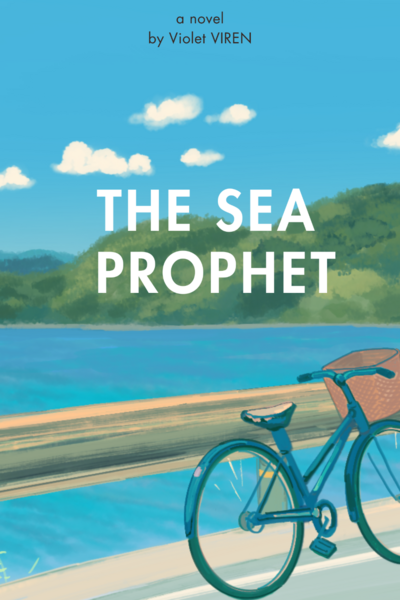
“The sea prophet myth,” Joseph added quickly. “You agreed yesterday. Before you say no.”
Evan frowned. “I did?”
Mira raised an eyebrow. “Unless you’d like me to carry the project alone.”
He sighed. “Okay.”
____________________________________________________________________________________
3:40 a.m.
The rain had softened by the time they reached the library, tapping gently against the tall windows.
As they walked in, Joseph and Evan could see their childhood memories play out.
This place had once been Joseph’s grandmother’s rented library Fethiye İlçe Halk Kütüphanesi. It was where Evan’s mother had spent most of her time.
They spread their books across a long table near the back. Mira was already scribbling notes, glasses sliding down her nose.
“The betrayal is the most interesting part,” she said. “Some versions say the prophet cursed the sea. Others say the sea cursed him.”
“I heard the story spans different eras,” Evan said. “It isn’t documented linearly.”
Joseph was distracted, playing with his marker.
“The Muhien people suffered greatly from floods and war, which led to their obsession with the arrival of the sea prophet,” Mira read aloud.
“After the priestess’s shocking betrayal, the village of the Muhien was suspiciously engulfed in fire because of a volcano eruption.”
Joseph leaned back in his chair. “My grandmother used to say the sea prophet betrayed the priestess.”
Mira paused. “Your grandmother’s version is similar to the research Viviane Adlaire did; she said the prophet lied about his identity, claiming to be just a fisherman.”
The three of them took notes in silence; only the sound of pens scribbling filled the room.
A faint intercom crackled once in Turkish, then faded back into silence.
A bell chimed softly above the door as they stepped inside.
“Joseph?”
The woman at the front desk looked up from a stack of returned books. Silver threaded her dark hair, her eyes already kind with recognition.
“Ms. Zehra,” Joseph said, stopping short.
She smiled. Her gaze lingered on his face.
Joseph’s mouth twitched. “Hi.”
“how is your grandmother?” Zehra asked gently.
“She traveled, she went back to her people,” he replied. “Five months ago.”
Zehra nodded. “Of course she did.” Her voice softened. “And your mother Ez—”
“Excuse me,” a man said suddenly, appearing at the desk with a book clutched to his chest. “I’m looking for the coastal migration records. Third floor, I think?”
Zehra blinked, the moment folding itself away. “Yes—C rafı. Let me check the call number for you."
She turned back to the counter, fingers already moving through the catalogue.
Joseph stepped aside, the space between them closing before it had finished opening.
A minute later, Zehra returned, lowering her voice. “You said you’re working on a project?”
Mira nodded. “Cultural Studies. The sea prophet myth.”
Zehra hesitated, then reached beneath the desk. She pulled out a thick, salt-worn book and slid it across—not to Evan, but to Joseph.
The Tides and Their Gods.
“Your mother helped catalogue this,” she said quietly. “Before…”
Her sentence dissolved as another patron cleared their throat behind them.
“Sorry,” a woman said, holding out a library card. “I need to renew these.”
Zehra’s professionalism snapped back into place. “Of course.”
As she stamped the books, she added without looking up, “You can use it here. Don’t copy the poem. It’s sacred—”
“Poem?” Evan asked.
But Zehra was already turning to the next customer.
Joseph opened the book anyway.
Near the center, a page had been folded until it felt soft as cloth. Ink curved across it in an old, careful hand.
_____________________________________________________________________________________
Hour VI
Who would avenge this fiery love? —
That eats away the stars
Who would cure this burning shove? —
And still name you duende
The only difference between me and the seaGods
Is that I drown in every blessing,
And mourn every ache, diving and confessing
Into your silver-lit Yemanjá ocean.
The seashell burns amber in your hand,
It binds our fate with vows and flame above.
I’m a priestess of secrets you will seek to uncover,
The cosmic curves you will stay to discover.
The endless void of losing me
Will haunt your dreams.
And in—
______________________________________________________________________________________________
The lines ended there. The rest of the page lay bare.
“Is that it?” Mira whispered.
Joseph closed the book slowly. “For now.”
Somewhere beyond the shelves, the rain pressed harder against the windows.
Evan flipped through a brittle manuscript, fingers careful. His camera lay beside him, lens cap off.
“So the nameless priestess?” Joseph asked quietly.
Mira looked up. “What about her?”
Evan read his notes. “The priestess of the Muhien people was said to be imprisoned in the lighthouse.”
Mira questioned, “I wonder—if she was betrayed, why was she imprisoned?”
“It is said that she might have cursed the sea prophet, or even started the fire that caused the deaths of many of the Muhien people,” Evan responded.
Joseph’s smile faded a notch. “Some myths don’t survive their endings.”
Thunder rolled distantly.
"it's strange" Mira closed her notebook, “She’s the only one without a name.”
Joseph looked up. “What do you mean?”
“All the other priestesses are recorded: Maya, Silya,” Mira replied.
Joseph frowned at the poem on the page.
“Wait,” he said. “What’s duende?”
Mira hesitated. “It’s… complicated.”
Evan looked up from his notes. “It’s a Spanish term,” he said. “But it doesn’t translate cleanly.”
“Try,” Joseph said.
Evan tapped the margin of the book with his pen. “Lorca described it as a force. Not inspiration—something darker. Something that comes from pain.”
Mira checked the dictionary and read briefly. “From the earth, specifically. Not the sky, not divinity. It’s said to rise from blood, grief, the knowledge of death.”
Joseph glanced back at the poem.
“So it’s not a blessing.”
“No,” Mira said quietly. “It’s closer to a wound that sings.”
Evan stared at the page in front of him. The margins were crowded with certainty—dates, accusations, conclusions written by hands that had never seen her.
If history remembers you as a monster, he thought, does the truth matter anymore?
He shut the manuscript.
Somewhere far beyond the windows, the sea answered with another low, restless sound.



Comments (0)
See all